Fort Saint-Jean, Marseille: Fort, Gardens & MuCEM Bridge (2026)
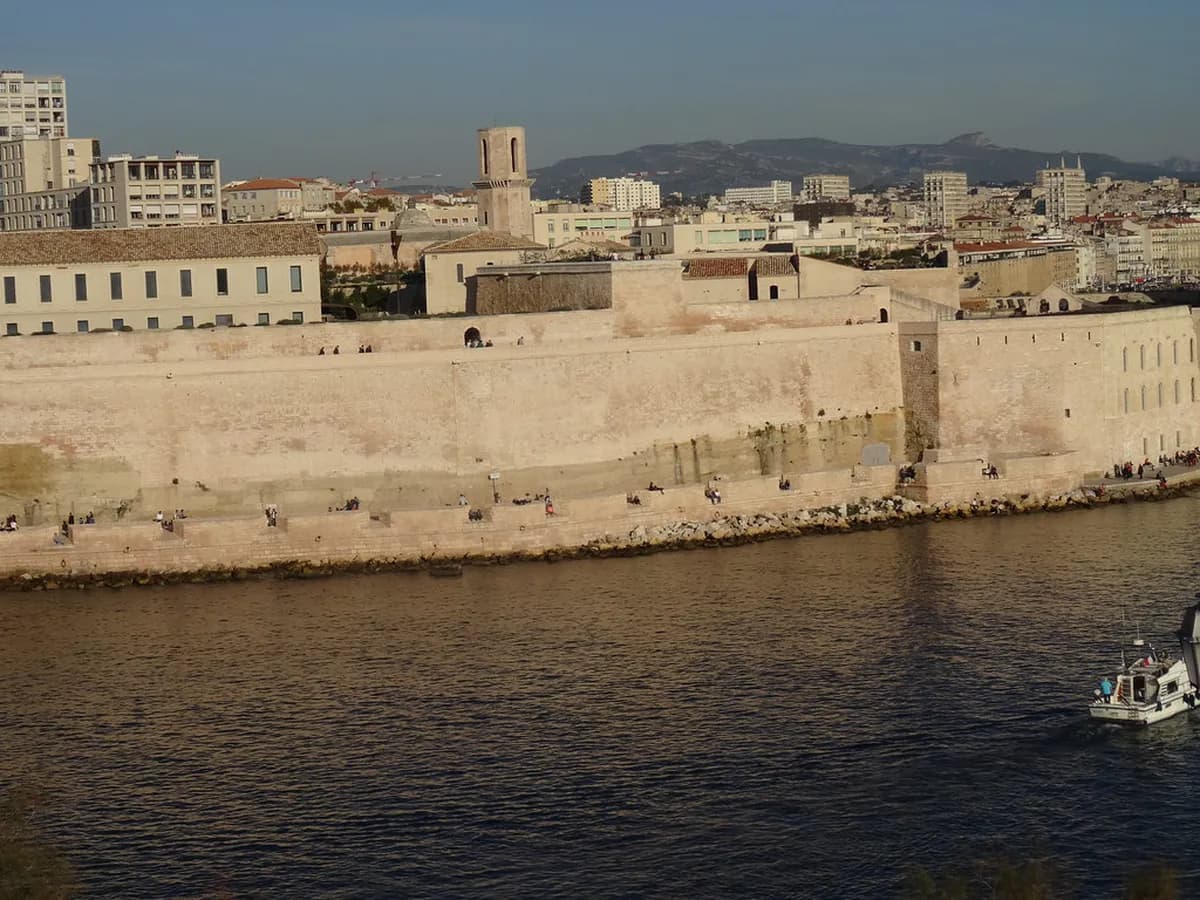
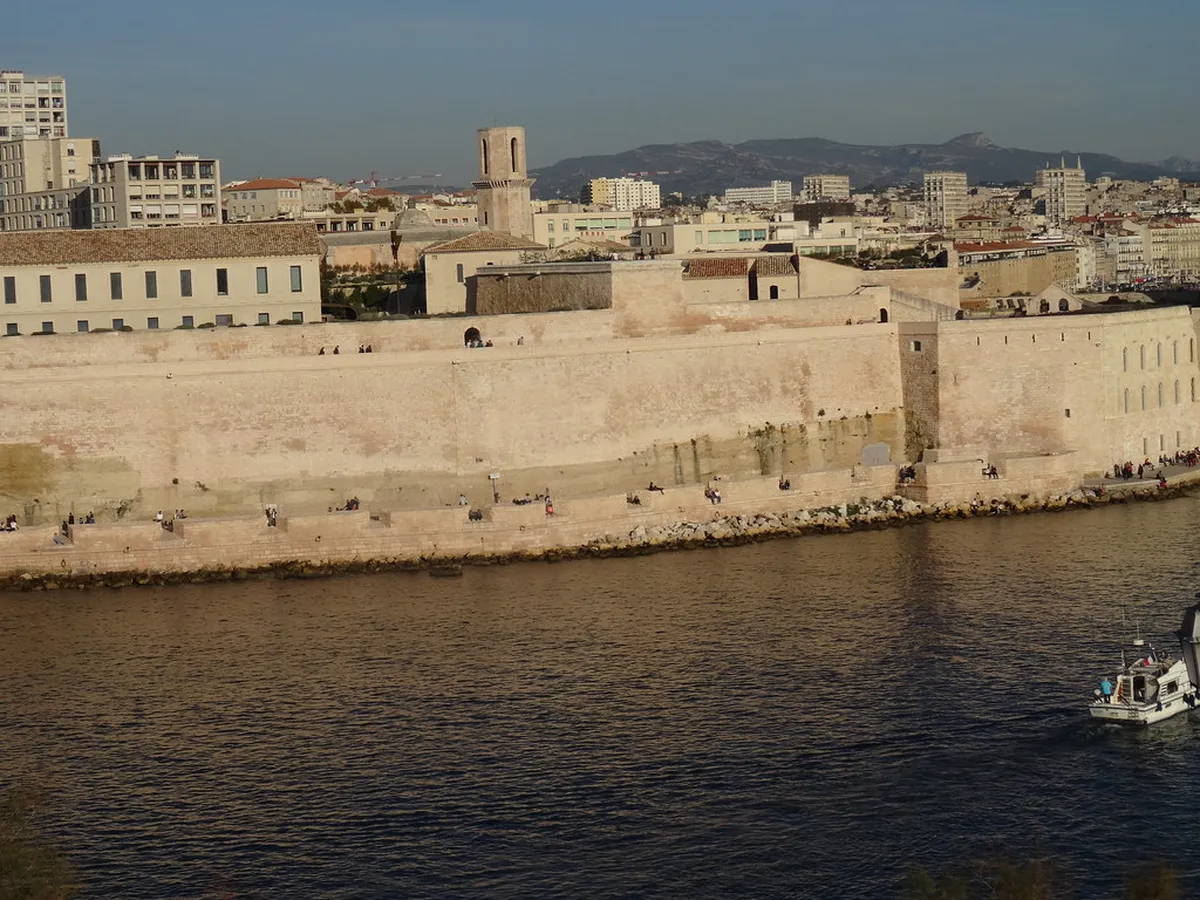
Fort Saint-Jean guards the northern mouth of Marseille's Vieux-Port, a squat 17th-century fortress of pale stone that has watched over the harbour entrance for more than 350 years. Once a royal stronghold and later a barracks and prison, it was restored and reopened in 2013 as part of the MuCEM, and today it is one of the most rewarding free visits in the city. Two slender footbridges sweep out from its ramparts — one across the harbour channel to the MuCEM's J4 building, the other over the road to the Panier and the Église Saint-Laurent. Its terraced Mediterranean gardens, open courtyards, and rampart walks are free to enter, with some of the best sea views in Marseille. This 2026 guide covers the history, the gardens and ramparts, the footbridges, and how to get there.
History (1660s)
Fort Saint-Jean stands on a strategic spur of rock at the very entrance to the Old Port, a site long associated with the Military Order of the Knights Hospitaller of Saint John — the order from which the fort takes its name. The medieval Commandery and the 15th-century watchtower of King René still survive within the walls, but the fort as you see it today is the work of Louis XIV, who ordered its construction in the 1660s and had it built between roughly 1668 and 1671.
The story behind it is telling. After a 1660 revolt by the citizens of Marseille against royal authority, Louis XIV had two forts raised at the harbour mouth — Saint-Jean and, across the water, Saint-Nicolas — and famously had their cannons pointed inward, toward the rebellious town, rather than out to sea. For the centuries that followed the fort served as a garrison and military depot, and during the Revolution and the 20th century it was used variously as a prison and barracks. A munitions explosion in 1944 caused serious damage, and the fort languished until a long restoration culminated in its 2013 reopening as the historic heart of the MuCEM.
Gardens, Ramparts & Views
The great pleasure of Fort Saint-Jean is that you can wander most of it for free. The restoration turned the fort's terraces and former parade grounds into a sequence of open-air spaces threaded with gardens — and the centrepiece is the Jardin des Migrations, laid out along the upper ramparts. It is a living collection of Mediterranean plants gathered from the different shores of the sea: olives, figs, vines, aromatic herbs, and hardy species that thrive on this sun-baked rock, arranged to tell the story of the crops and plants that have travelled across the Mediterranean over the centuries.
From the rampart walks the views are exceptional. Looking out, you see the Frioul islands, the Château d'If, and the open Mediterranean; looking back, the Cathédrale de la Major, the rooftops of the Panier, and the masts of the Vieux-Port. Paths wind between the old guardrooms, the King René tower, and shaded courtyards, and the whole fort works as a quiet, breezy escape from the busy quayside below — best in the soft light of late afternoon, when the stone turns gold and the sea glitters toward sunset.
The MuCEM Footbridges
Since 2013, Fort Saint-Jean has been stitched into the modern waterfront by two dramatic footbridges that are themselves part of the experience. The longer of the two, around 115 metres, springs straight from the fort's ramparts across the harbour channel to the rooftop of the MuCEM's J4 building — Rudy Ricciotti's concrete-lattice museum — so you can cross from a 17th-century rampart onto a 21st-century roof terrace in a single walk, high above the water.
The second bridge, about 70 metres long, links the fort over the road to the Esplanade de la Tourette and the historic Panier district, depositing you beside the Romanesque Église Saint-Laurent. Together the bridges turn the fort into the hinge of the whole MuCEM site, letting you move freely between the old city, the fortress, and the museum without ever leaving the elevated walkways. Fort Saint-Jean remains an integral part of the MuCEM and hosts some of its galleries and exhibitions, but the gardens, courtyards, ramparts, and bridges are all free to enjoy on their own.
Getting There & Hours
Where it is: Fort Saint-Jean sits at the northern mouth of the Vieux-Port, beside the MuCEM at 13002 Marseille. From the old port it is a 10-minute walk along the waterfront past the Cathédrale de la Major; you can also enter from the Panier side via the footbridge near the Église Saint-Laurent. By metro, take Line 1 to Vieux-Port or Line 2 to Joliette, both about a 10–12 minute walk, or use the tram and buses to the Fort Saint-Jean / Major stops.
Hours (2026): The fort follows the MuCEM calendar and is open every day except Tuesday (also closed 1 May and 25 December), with seasonal hours: roughly 10:00–19:00 in spring and autumn, longer in summer (about 10:00–20:00 in July and August), and shorter in winter (around 10:00–18:00 from December to April). Last entrance is about 30 minutes before closing.
Cost: Access to the fort's outdoor gardens, ramparts, courtyards, and footbridges is free during opening hours. You only pay if you go into the indoor MuCEM exhibition galleries housed within the fort, which are covered by the standard MuCEM ticket (about €11 full-rate, €7.50 reduced). For the museum side of the visit, see our Marseille museums and MuCEM guide.
Frequently Asked Questions
Is Fort Saint-Jean free to visit in 2026?
Yes. The fort's outdoor areas — the Jardin des Migrations, the ramparts, the courtyards, and the footbridges to the MuCEM and the Panier — are free to wander during opening hours. You only pay if you enter the indoor MuCEM exhibition galleries inside the fort, which need a standard MuCEM ticket (about €11 full-rate, €7.50 reduced).
How is Fort Saint-Jean connected to the MuCEM?
Two footbridges link the fort into the MuCEM site. A 115-metre bridge crosses the harbour channel from the ramparts to the rooftop of the MuCEM's J4 building, and a 70-metre bridge connects the fort to the Panier district beside the Église Saint-Laurent. The fort has been an integral part of the MuCEM since 2013 and hosts some of its galleries.
When was Fort Saint-Jean built and who built it?
Fort Saint-Jean was built for Louis XIV in the 1660s — construction ran from about 1668 to 1671 — on a rocky spur at the entrance to the Vieux-Port once held by the Knights Hospitaller of Saint John, from whom it takes its name. Its cannons were famously pointed inward at the town after the 1660 revolt rather than out to sea.
Explore More of Marseille
- Things to Do in Marseille — the full city guide.
- Marseille Museums & MuCEM Guide — how the fort fits into a museum day.
- MuCEM — the museum across the footbridge.