
Maison Kammerzell, Strasbourg: Renaissance House Guide (2026)
Maison Kammerzell, Strasbourg: an ornate 1427/1589 half-timbered house on Place de la Cathédrale, now a brasserie and hotel. Free to admire.
On this page
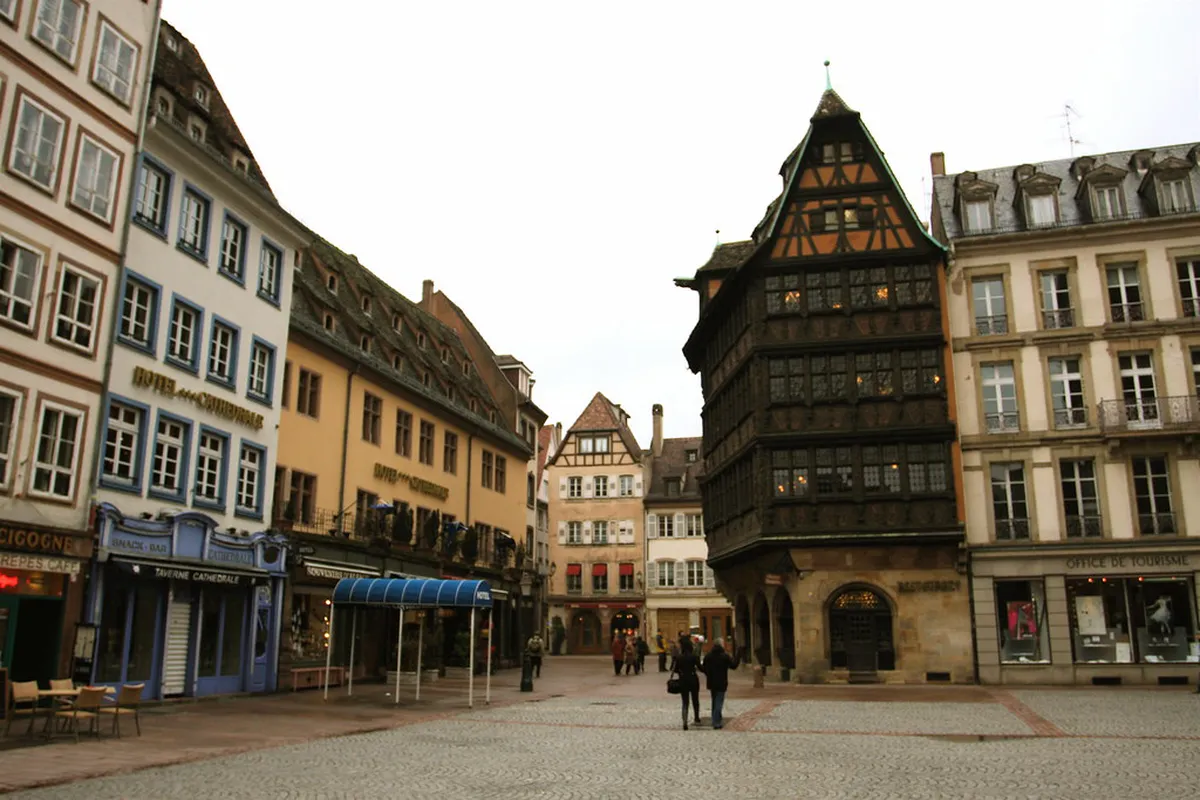
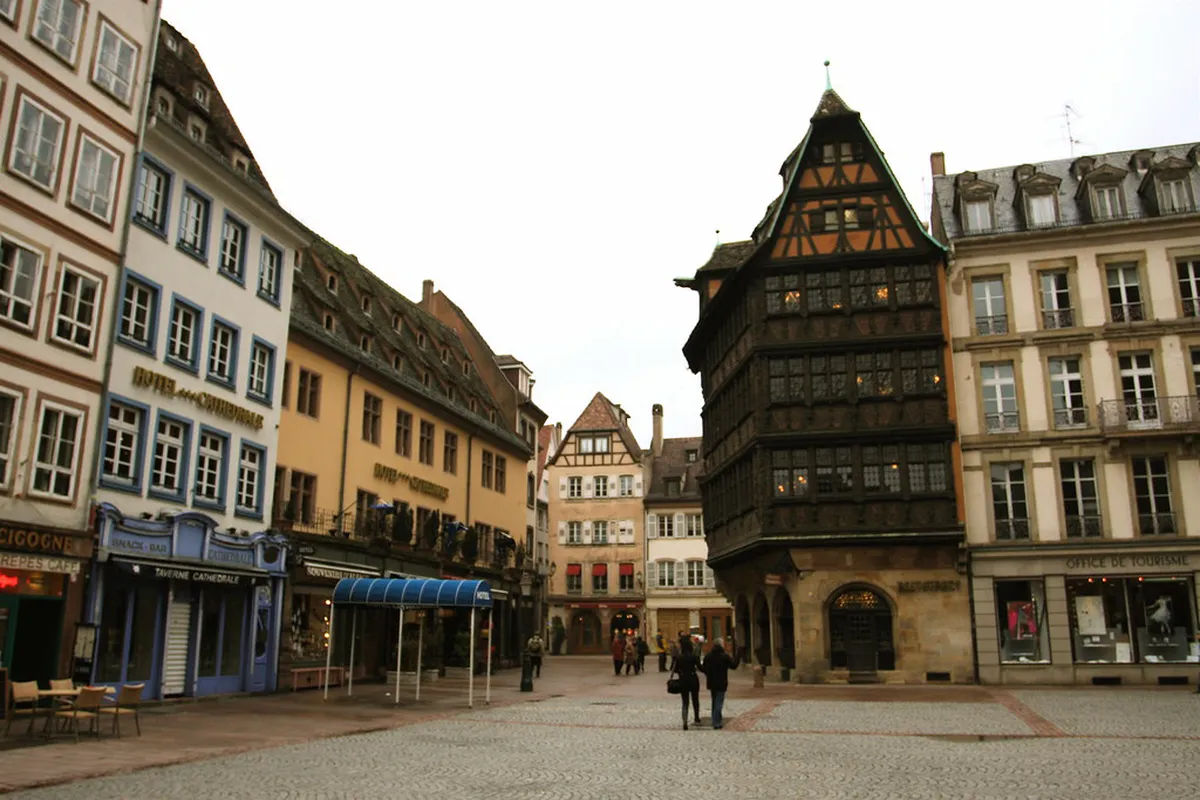
Maison Kammerzell is the most photographed house on Strasbourg's cathedral square — and one of the most ornate late-Gothic and Renaissance merchant houses left in France. Its stone ground floor dates from 1427 (reworked in 1467), while the spectacular corbelled 1589 upper floors, carved in dark oak and dotted with round bottle-glass windows, were added by the cheese merchant Martin Braun. Standing right beside Strasbourg Cathedral on Place de la Cathédrale, it is free to admire from the square at any hour; inside, it now works as a celebrated Alsatian brasserie and a small hotel. It is a must-see on any list of things to do in Strasbourg. This 2026 guide covers its history, the carved façade, visiting and dining, and how to get there.
History (1427/1589)
The site of Maison Kammerzell has been built on since the late medieval period. The stone ground floor dates from 1427 and was rebuilt in 1467, when it gained the solid masonry base and Gothic arched openings you still see at street level. The building takes its present form from 1589, when a wealthy local cheese merchant, Martin Braun, kept that stone ground floor and crowned it with three corbelled timber storeys, each oversailing the one below. The result belongs to the German Renaissance yet stays rooted in the black-and-white Rhineland half-timbered tradition.
The house is named after Philippe-François Kammerzell, a grocer who owned it in the 19th century. It was classified as a listed historic monument (monument historique) in 1929 and has belonged to the Fondation de l'Œuvre Notre-Dame — the body that also maintains the cathedral — since 1879. The interiors were decorated across all floors with vivid frescoes by the Alsatian painter Léo Schnug (1878–1933). As part of Strasbourg's Grande Île historic centre, the house lies within a UNESCO World Heritage zone.
The Carved Facade
The façade is what stops people in their tracks. Across the corbelled oak upper floors, the timber is densely carved with a programme of figures and symbols that show off the cultural ambitions of a rich 16th-century merchant:
- Historical and biblical figures. The carvings mix secular and religious sources — including likenesses associated with rulers such as Julius Caesar and Charlemagne — alongside allegorical and symbolic motifs typical of Renaissance Strasbourg.
- Round bottle-glass windows. Dozens of small cul-de-bouteille (bull's-eye) glass panes catch the light across the upper storeys, giving the front its distinctive honeycombed, glittering look.
- The corbelled, oversailing floors. Each timber storey projects out over the one beneath, a structural flourish that maximised floor space and let the carvers fill every beam, bracket and sill with decoration.
Because the ornament is concentrated on a single tall front facing the square, the whole house reads as one continuous panel of carved wood rising above the stone arcade.
Visiting / The Restaurant
Admiring Maison Kammerzell from the outside is completely free and possible at any hour — there is no ticket, and the square in front gives you a clear view of the full façade. The best light falls in the morning, when the sun reaches the front of the house and brightens the carving and bottle-glass without harsh shadow.
To go inside, the building today operates as a brasserie and a small 3-star hotel. The restaurant serves classic Alsatian and French cooking — including its famous fish choucroute (sauerkraut with three fish) — across atmospheric rooms decorated with Léo Schnug's frescoes; reservations are recommended for the best tables, and you can check current opening times and menus on the official site. The hotel above offers a handful of rooms right on the cathedral square. There is no separate museum visit: the interior is experienced as a guest of the restaurant or hotel, while the carved exterior remains the free, headline attraction.
Getting There
Maison Kammerzell sits at the corner of Place de la Cathédrale, directly beside Strasbourg Cathedral in the heart of the pedestrianised Grande Île, so you will reach it on foot. From Strasbourg's main train station (Gare de Strasbourg) it is a flat 12–15 minute walk east into the old town, or one stop on the tram (lines A or D to Langstross-Grand'Rue, then a short walk). The historic centre is car-free, so drivers should use a perimeter car park such as Parking Austerlitz or the Place du Château underground garage and continue on foot.
It pairs naturally with the rest of the cathedral quarter. The cathedral and its astronomical clock are literally next door, and the lanes around the square are lined with places to eat — see our pick of the best restaurants in Strasbourg if you would rather dine nearby. From here it is a short stroll into the wider Grande Île island; for that whole UNESCO core, see our guide to the Grande Île.
Frequently Asked Questions
Is Maison Kammerzell free to visit?
Yes — viewing the exterior is completely free, with no ticket or opening hours, and the cathedral square gives a clear view of the carved façade. To go inside you visit as a guest of the brasserie or the hotel that occupy the building today; there is no separate museum entry.
When was Maison Kammerzell built and who built it?
The stone ground floor dates from 1427 (reworked in 1467), and the richly carved timber upper floors were added in 1589 by the cheese merchant Martin Braun. The house is named after a 19th-century owner, Philippe-François Kammerzell, and was listed as a historic monument in 1929.
Where is Maison Kammerzell and how do I get there?
It stands on Place de la Cathédrale, right beside Strasbourg Cathedral in the pedestrian Grande Île. It is a flat 12–15 minute walk from Strasbourg train station, or one tram stop plus a short walk; the centre is car-free, so park on the perimeter and walk in.


