Maison Pfister, Colmar: Renaissance Landmark Guide (2026)
Maison Pfister in Colmar: a 1537 Renaissance landmark with painted murals, wooden gallery and octagonal turret. Free to admire from the street.
On this page
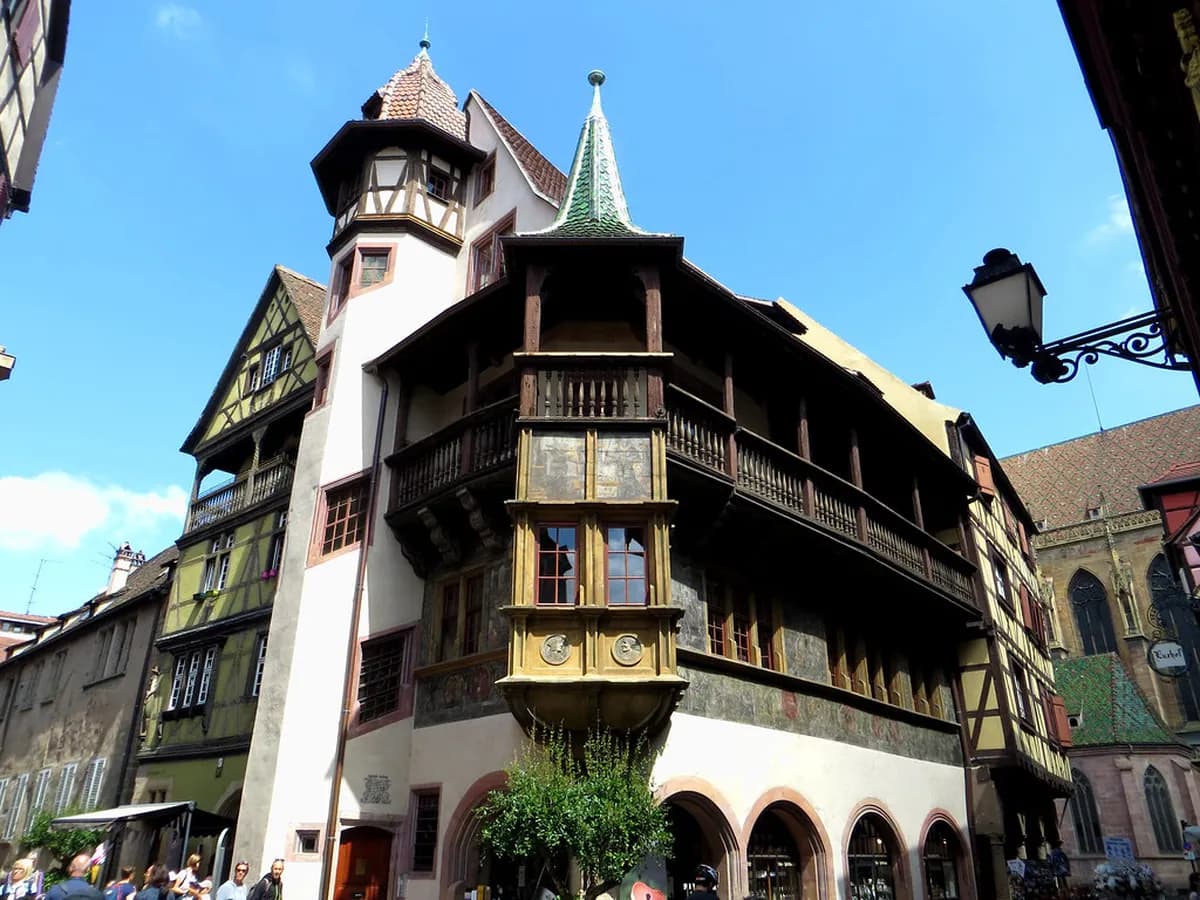
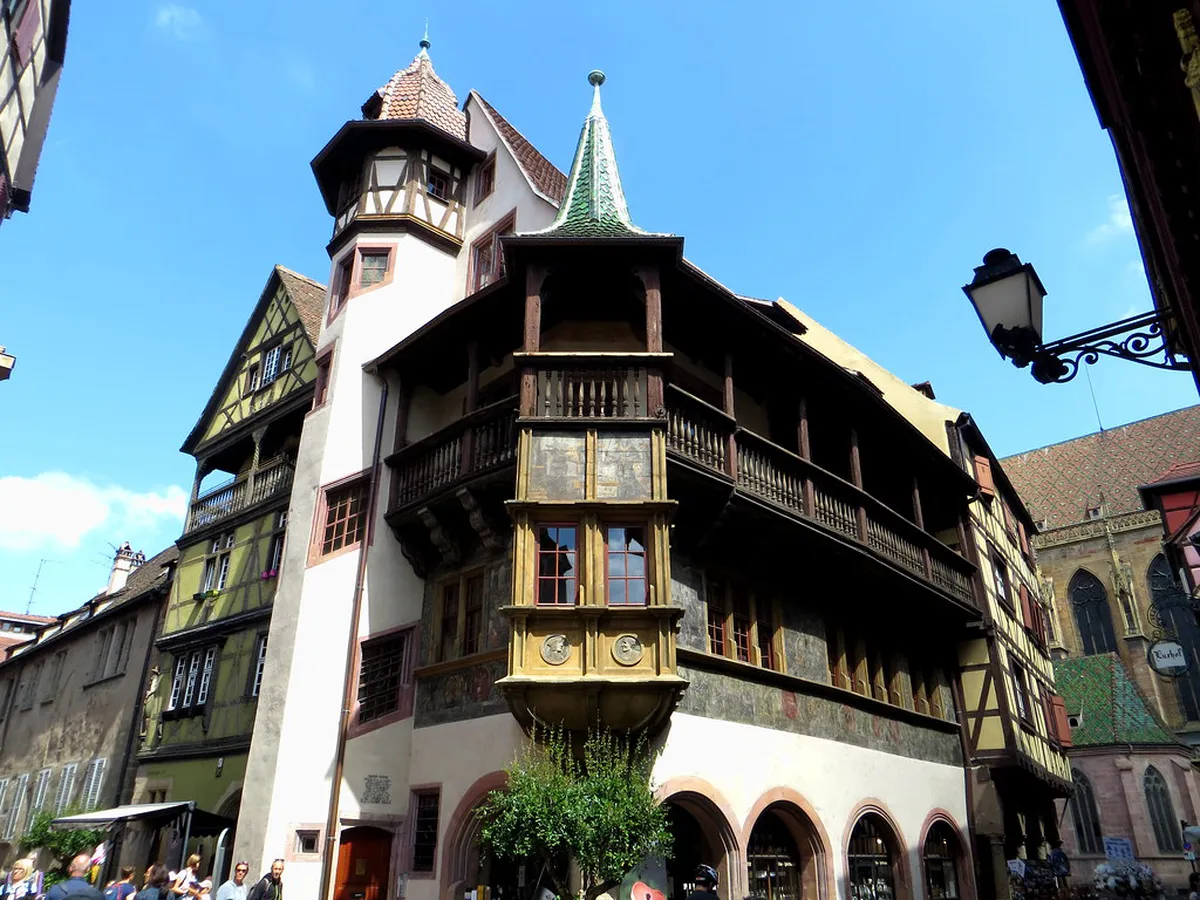
Maison Pfister is the single most photographed house in Colmar — and arguably the most beautiful Renaissance townhouse in all of Alsace. Built in 1537 for a wealthy hatter, it fuses late-medieval and early-Renaissance design into one extravagant corner building: a two-storey painted oriel, a long wooden gallery, an octagonal stair turret and façades covered in biblical and allegorical murals. You can admire the whole thing for free from the cobbled street below — the ground floor houses a private shop and the upper floors are not open to visitors, so this is an exterior landmark to be enjoyed from outside. It is one of the unmissable stops on any list of things to do in Colmar. This 2026 guide covers its history, what to look for, the best photo angle, and how to get there.
History (1537)
Maison Pfister was completed in 1537 for Ludwig Scherer, a hatter from Besançon who had made his fortune in the silver trade of the Val de Lièpvre. The date is still inscribed on a window of the staircase turret. Despite a handful of lingering medieval features, the house is recognised as the first example of Renaissance architecture in Colmar, replacing an older building once known as "the Red Rooster."
The frescoes that make it famous were added around 1577, attributed to the painter Christian Vacksterffer. The house takes its present name from the Pfister family of merchants, who owned it in the mid-19th century (from 1841). It was classified as a listed historic monument (monument historique) in 1927, restored in 1971 — in the same spirit as Strasbourg's Maison Kammerzell — and given a full façade-and-roof restoration in 2012, so what you see today is in excellent condition. Its original address on Rue Mercière is now 11 Rue des Marchands, at the corner with Rue des Marchands and Rue Mercière in the historic centre.
What to Look For (Murals, Turret, Gallery)
Built in yellow Rouffach sandstone and wood, the house rewards a slow, head-tilted look. The standout details are:
- The painted murals. The façades are covered with a cycle of frescoes: medallions of 16th-century Germanic emperors in bas-relief, the coats of arms of the Empire, of Colmar and of Upper Alsace, the Four Evangelists, the Fathers of the Western Church, scenes from the Book of Genesis, and allegorical figures such as Faith and Justice.
- The octagonal corner turret. The spiral-staircase turret has an octagonal plan and is crowned with a distinctive bulbous cupola — the silhouette that makes the building instantly recognisable from the end of the street.
- The two-storey oriel and wooden gallery. A carved, two-storey corner oriel (bay window) projects over the street, while a long covered wooden gallery runs along the upper floor — a rare survival that softens the stone façade and frames the painted panels.
Because the decoration is concentrated on the corner, the building reads as a single ornate column of art when viewed from the junction below.
Best Photo Spot
The classic shot is taken from the corner where Rue des Marchands meets Rue Mercière, standing a few steps back on the opposite pavement so the octagonal turret, the oriel and the painted gallery all line up in one frame. A slight upward angle captures the cupola against the sky and avoids the shopfront at street level.
For light, mid-morning works best, when the sun reaches the corner and brightens the murals without harsh shadow. The lane is narrow and gets busy, so arriving early — before the tour groups — gives you a clean, people-free composition. Late afternoon golden hour is the other strong window, warming the yellow sandstone. The pedestrian street is flat and easy to stand in, but step aside for the constant flow of foot traffic.
Getting There & Nearby
Maison Pfister sits in the heart of Colmar's pedestrianised old town at 11 Rue des Marchands, so you will reach it on foot. From Gare de Colmar it is a flat 12–15 minute walk east into the centre; the old town is car-free, so drivers should use a perimeter car park (such as Parking Lacarre or Parking Rapp) and continue on foot. Viewing the exterior is free and possible at any hour, though the murals are best seen in daylight.
It is also one of the easiest landmarks to combine with the rest of the centre. Just along Rue des Marchands you will find the Maison du Pèlerin and the Musée Bartholdi (birthplace of the Statue of Liberty's sculptor), while the canals of Little Venice are a short stroll south. For full walking routes through the quarter, see our Little Venice & Old Town guide and our pick of the city's quieter corners in hidden gems in Colmar. Fans of Renaissance façades should also seek out the nearby Maison des Têtes, Colmar's other great decorated house.
Frequently Asked Questions
Is Maison Pfister free to visit?
Yes — viewing the exterior is completely free, with no ticket or opening hours. Maison Pfister is admired from the street; the ground floor is a private shop and the upper floors are not open to the public, so this is an exterior landmark.
When was Maison Pfister built and who built it?
It was built in 1537 for Ludwig Scherer, a hatter from Besançon who grew wealthy in the silver trade. It is considered the first example of Renaissance architecture in Colmar and was listed as a historic monument in 1927.
Where is Maison Pfister and how do I get there?
It stands at 11 Rue des Marchands (formerly Rue Mercière) in Colmar's pedestrian old town. It is a flat 12–15 minute walk from Colmar train station; the centre is car-free, so park on the perimeter and walk in.