Collégiale Saint-Martin, Colmar: Gothic Church Guide (2026)
Dominating the Place de la Cathédrale at the heart of Colmar's old town, the Collégiale Saint-Martin is the largest church in the city and one of the finest Gothic monuments in Alsace. Built between 1234 and 1365, it is so vast that locals and visitors alike often call it "Colmar Cathedral" — even though Colmar was never the seat of a bishop. With its 71-metre steeple, its rare ambulatory, and a baroque Silbermann organ case soaring above the nave, the church is a free, ten-minute stop that anchors almost every walk through the medieval centre. This 2026 guide covers its history and architecture, what to see inside, current opening hours, and how to get there.
History & Architecture
Saint-Martin's was raised between 1234 and 1365 as a collegiate church — a church staffed by a college of canons rather than a monastic order — dedicated to Saint Martin of Tours, the soldier-saint who shared his cloak with a beggar. The long building campaign carried it from the late Romanesque transition into the full flowering of High Gothic, and the result is the principal Gothic monument of Colmar: a soaring nave, pointed arcades, and a luminous choir wrapped by an ambulatory, a walkway that is unusual among Alsatian churches.
Its great height and ambition earned it the everyday nickname "Cathédrale Saint-Martin," but Colmar never held a bishopric, so the church is correctly a collégiale. A devastating fire in the south tower in 1572 destroyed the framework and roofs; rather than rebuild the lost Gothic spire, the masons crowned the tower three years later with a distinctive lantern-bulb cupola, which still gives the silhouette its slightly off-balance, unmistakable profile. The steeple rises to about 71 metres above the square. The church has been protected as a monument historique since 1840, one of the earliest listings in France.
What to See Inside
Step through the west doors and the eye is pulled straight down the tall, narrow nave to the choir. The single most striking object is the organ: a richly carved baroque organ case of 1755, originally built by Johann Andreas Silbermann of the famous Alsatian organ-building dynasty. Its mechanism and pipework were completely renewed in 1979, so the instrument you hear today is modern, but the gilded, theatrical case is genuine 18th-century craftsmanship; a separate choir organ was added in the 20th century for accompanying services.
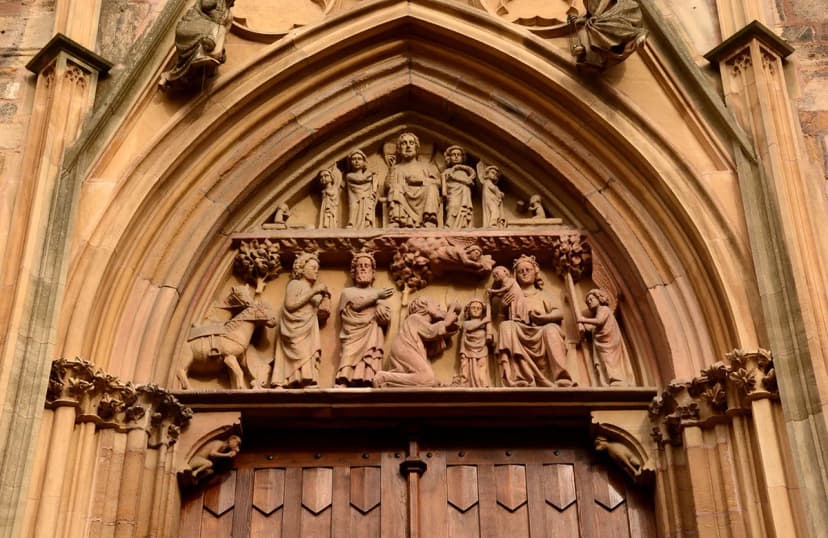
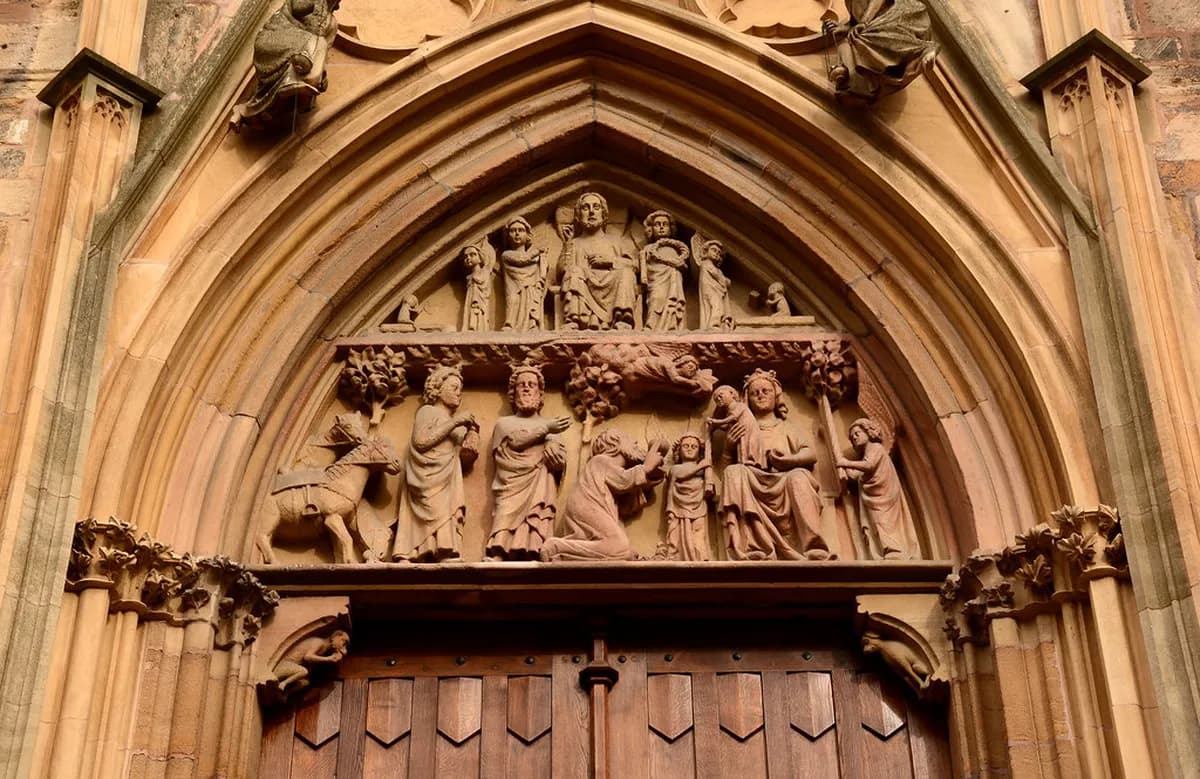
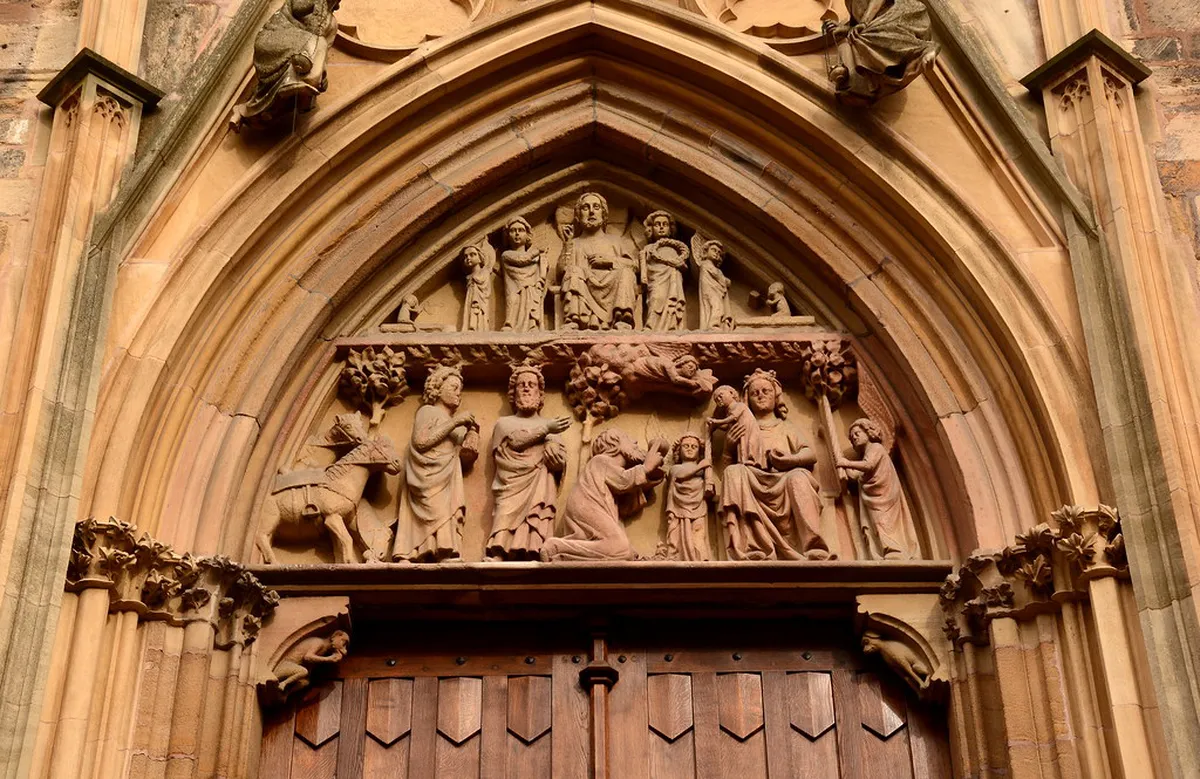
Around the ambulatory and the radiating chapels you will find an unusually rich collection of medieval art for a parish church — carved altarpieces, Gothic statuary, and stone tomb effigies. Look up to the stained glass, which includes precious 13th- and 14th-century fragments, among them a rare medieval head of a beardless Christ. Other highlights include a life-sized Late-Gothic carved Last Supper and the sculpted Saint-Nicolas portal on the south side. Because the church is dim and contemplative, give your eyes a moment to adjust before exploring the side chapels.
Visiting Hours & Entry
Entry is free — there is no admission charge, though a donation toward the upkeep of the building is always welcome. As of 2026, the collegiate church is generally open daily, roughly from 8:00 to 18:45 Monday to Saturday and from 10:00 to 19:00 on Sundays. These are sightseeing hours for an active place of worship, so access can be restricted during Mass, weddings, funerals, and concerts; hours also tighten in winter and around major liturgical feasts.
As with any working church, visitors are asked to dress modestly, keep their voices low, and avoid wandering during services. Photography without flash is normally fine. Because Saint-Martin's is free and central, it makes an easy first stop before the ticketed museums — pair it with the nearby Musée Unterlinden or the Bartholdi house to round out a half-day in the old town.
Getting There
The collegiate church stands on the Place de la Cathédrale (18 Place de la Cathédrale, 68000 Colmar), dead-centre in the pedestrianised old town. From the Colmar train station it is a flat 12–15 minute walk east, and from the Koïfhus (Ancienne Douane) or the Little Venice canals it is only two or three minutes on foot through the lanes. The square itself is car-free, so drivers should leave the vehicle in one of the central garages — Parking Rapp or Parking Lacarre are both a short walk away — and continue on foot.
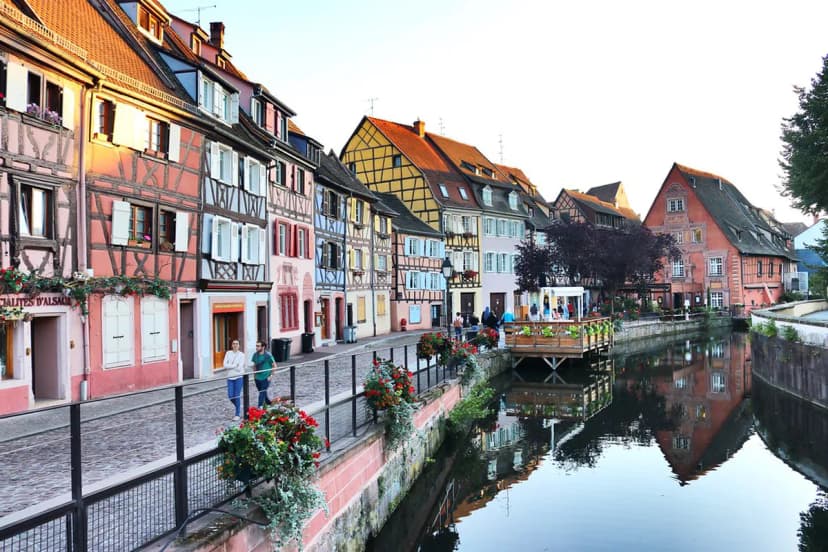
The church sits at the centre of the sights covered in our Colmar Little Venice and old town guide, and because it costs nothing to enter it features on our list of free things to do in Colmar. Just around the corner you will find another old-town landmark, the Koïfhus (Ancienne Douane). For the wider trip, start with our complete things to do in Colmar guide.
Frequently Asked Questions
Is the Collégiale Saint-Martin in Colmar free to visit?
Yes. Entry to the collegiate church is free, with donations welcome toward its upkeep. There is no ticket required to walk through the nave, choir, and ambulatory, though access may be limited during services and concerts.
Why is it called Colmar Cathedral if it is a collégiale?
Because of its sheer size and importance, people often nickname Saint-Martin's "Cathédrale Saint-Martin" or "Colmar Cathedral." Strictly speaking it is a collegiate church — a church run by a college of canons — since Colmar was never the seat of a bishop.
What are the church's opening hours in 2026?
In 2026 the church is generally open daily, roughly 8:00–18:45 Monday to Saturday and 10:00–19:00 on Sundays. As it is an active place of worship, hours can change for Mass, weddings, concerts, and the winter season, so check locally before visiting.