Maison des Têtes, Colmar: House of Heads Guide (2026)
The Maison des Têtes — literally the "House of Heads" — is one of the most photographed facades in Colmar, and once you stand beneath it you understand why. Built in 1609 in the lavish German Renaissance style, its richly carved frontage is covered with 106 grotesque human heads and masks, crowned by a three-storey oriel window and a copper-clad gable. Today the building is a five-star hotel with a Michelin-starred restaurant, but the exterior remains free for anyone to admire from the cobbled street. This 2026 guide covers its history, the famous heads and Bartholdi's rooftop cooper, what it's like to visit, and how to find it at 19 Rue des Têtes in the historic centre.
History (1609)
The Maison des Têtes was built in 1609 for Anton Burger, a wealthy Colmar merchant who later served as stettmeister (chief magistrate) of the town from 1626 to 1628. The design is attributed to the architect Albert Schmidt, who also worked on the former Protestant presbytery and the house of the Knights of St John in Colmar. Completed just before the upheavals of the Thirty Years' War, it stands as one of the finest surviving examples of German Renaissance domestic architecture in Alsace — a region that swung between French and German rule for centuries, which is exactly why its grandest houses borrow so freely from across the Rhine.
The street it sits on, the Rue des Têtes, actually takes its name from the building rather than the other way around. In 1898 the house became home to the Colmar Wine Exchange (Bourse aux Vins), which used it as a trading hall and meeting place. Decades later it was sensitively restored and converted into the boutique hotel and restaurant you can visit today, so the address has spent more than four centuries as a symbol of Colmar's mercantile wealth.
The 106 Heads & Bartholdi's Cooper
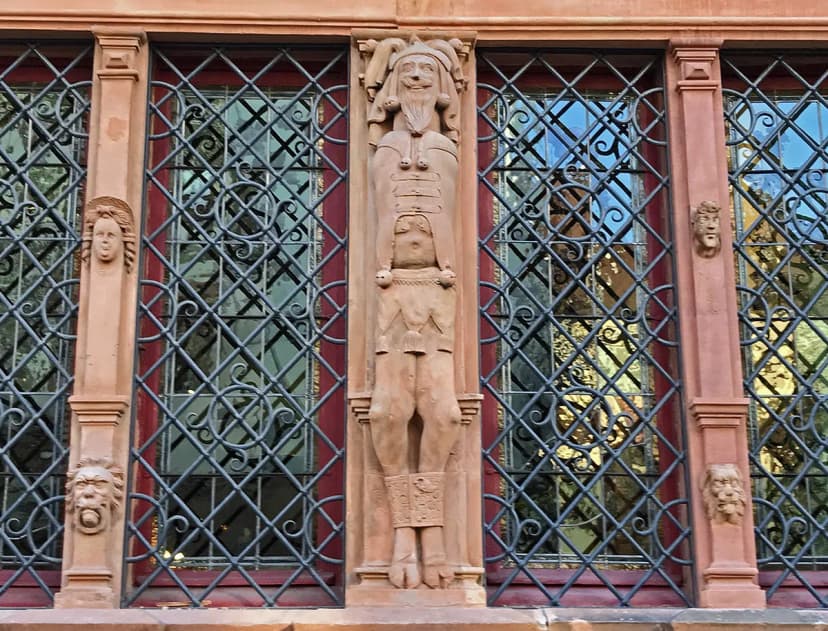
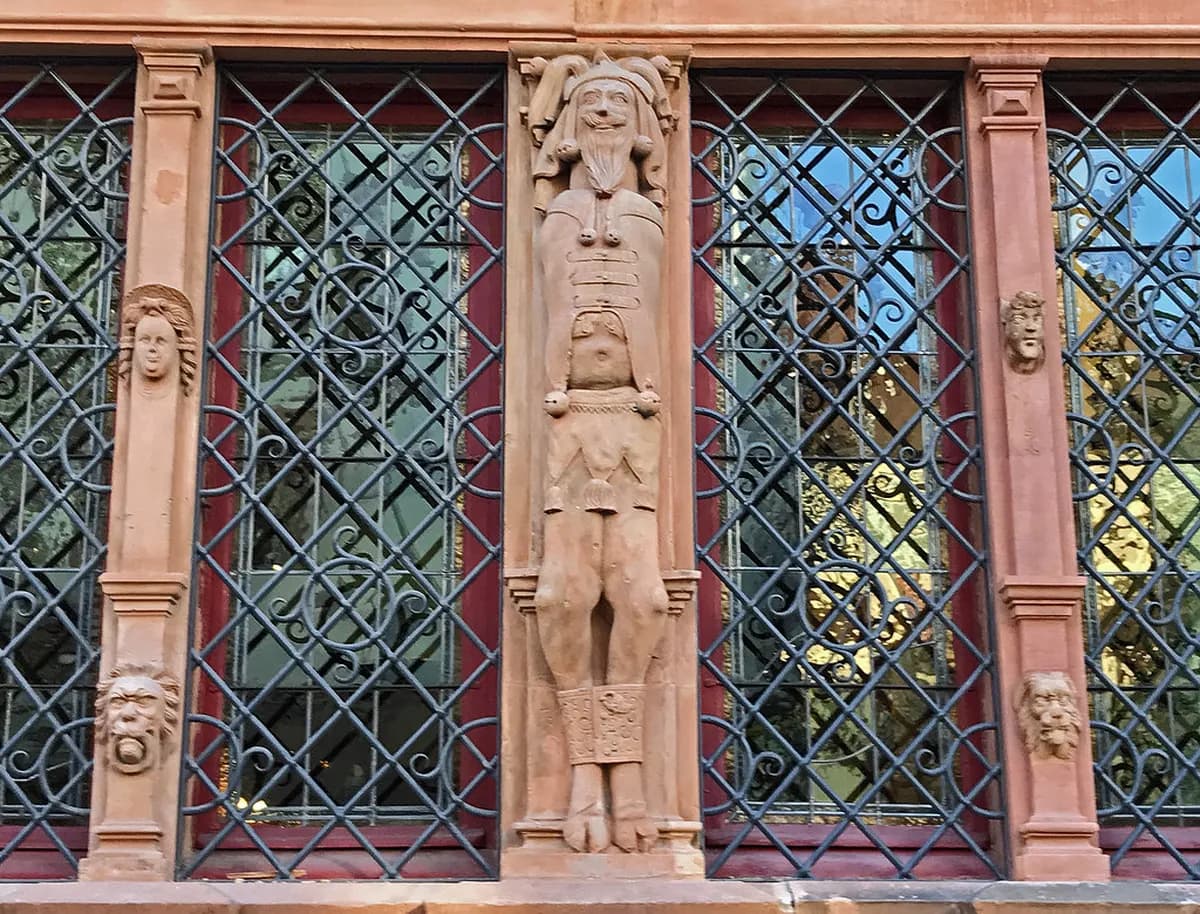
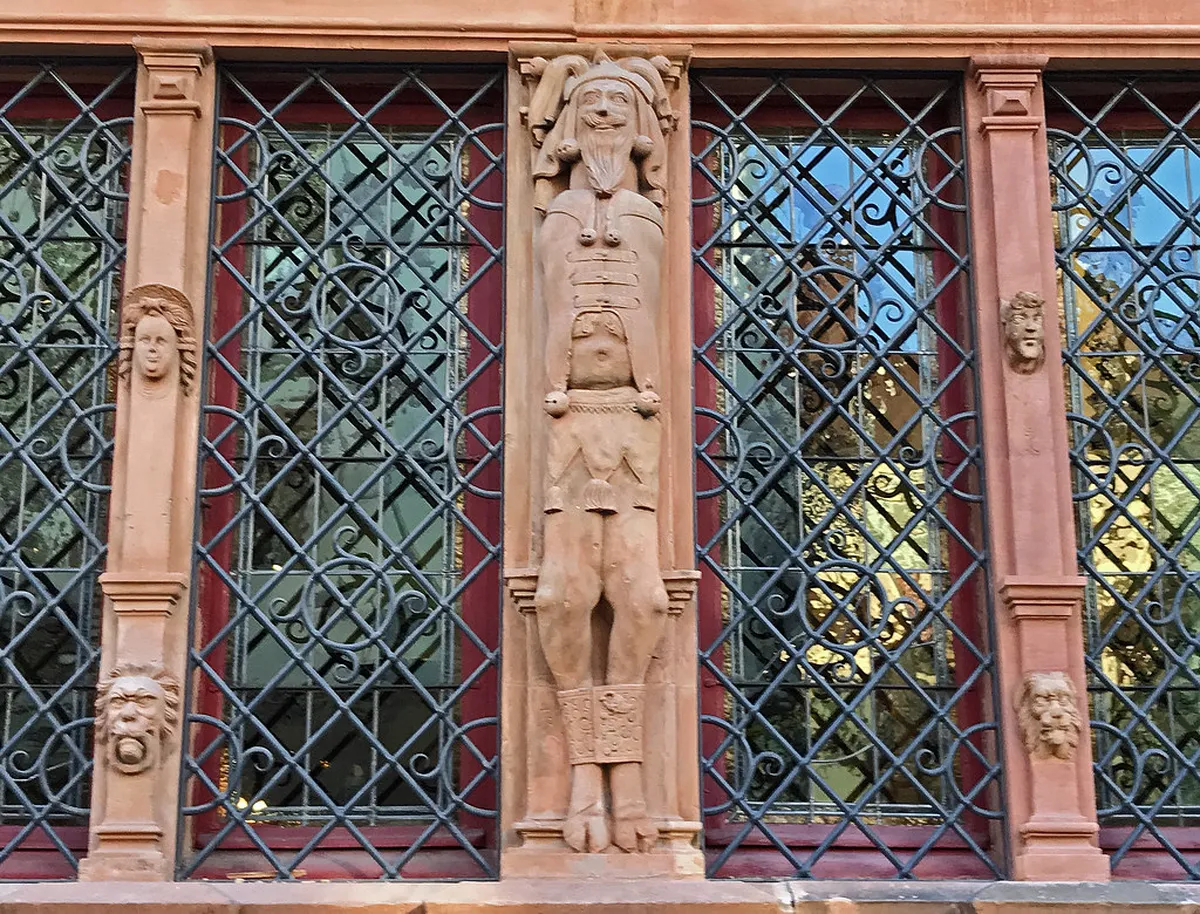
The building's defining feature is the swarm of carvings across its sandstone facade: 106 small human heads and grotesque masks, each one different, peering out from between the windows and along the cornices of the elaborate oriel window. Look closely and you'll spot exaggerated grimaces, leering faces, and theatrical expressions — typical of the playful, slightly unsettling decoration that wealthy Renaissance owners used to show off both their taste and their pocketbook. Counting them all is a fun challenge, and the figure of 106 is the one quoted by Colmar's tourist office and local heritage records.
Crowning the gable is a later but equally famous addition: a statue of a cooper (a barrel-maker), sculpted in 1902 by Auguste Bartholdi — the Colmar-born artist who created the Statue of Liberty. The cooper was commissioned by the Wine Exchange that had moved into the building, a fitting nod to Alsace's wine trade. If you've already explored Bartholdi's connection to the town, you'll recognise his style instantly; for the full story, see our guide to the Statue of Liberty and Bartholdi in Colmar.
Visiting (Hotel & Restaurant)
The exterior is free to view, any time. The Maison des Têtes faces a public street in the heart of Colmar's old town, so there's no ticket and no opening hours for simply standing in front of it, photographing the heads, and admiring the gable. It is right next to the Unterlinden Museum, making it an easy stop on any walk through the centre.
The interior is private, run as a five-star hotel with around 21 individually styled rooms blending Alsatian character with modern comfort. The building also houses a celebrated dining room — the Restaurant Girardin, which holds a Michelin star — alongside a more casual brasserie. You don't need to be a hotel guest to eat there, but a reservation is strongly advised, especially for the gourmet restaurant and during the December Christmas-market season when Colmar is at its busiest. If you simply want to peek inside, the reception and courtyard are usually accessible to diners and guests; out of courtesy, don't wander the hotel if you're not visiting one of its venues.
Getting There
The Maison des Têtes stands at 19 Rue des Têtes, a short, pedestrian-friendly walk from almost anywhere in Colmar's compact historic centre. From the Place de l'Ancienne Douane (Koïfhus) or the Little Venice canal district it's roughly a five-to-ten-minute stroll; from Colmar train station, it's about a 15-minute walk or a quick taxi. The whole old town is best explored on foot, so leave the car at one of the signed car parks on the edge of the centre. While you're in the neighbourhood, pair it with the Maison Pfister, another spectacular Renaissance house just a few streets away. For a wider itinerary, start with our full guide to things to do in Colmar.
Frequently Asked Questions
Is the Maison des Têtes free to visit?
Yes — the exterior is completely free to view. The Maison des Têtes faces a public street in Colmar's old town, so you can admire the facade, count the heads, and photograph it any time at no charge. The interior is a private five-star hotel and restaurant, which require a booking.
Why is it called the House of Heads?
It is named for the 106 carved human heads and grotesque masks that decorate its 1609 German Renaissance facade. The street itself, the Rue des Têtes, takes its name from the building.
What is the connection to Bartholdi and the Statue of Liberty?
The cooper statue on the building's gable was sculpted in 1902 by Auguste Bartholdi, the Colmar-born artist who also created the Statue of Liberty. It was commissioned for the Wine Exchange that occupied the house at the time.
Explore More of Colmar
- Things to Do in Colmar — the full city guide.
- Hidden Gems in Colmar — lesser-known corners of the old town.
- Statue of Liberty & Bartholdi in Colmar — the artist behind the rooftop cooper.
- Maison Pfister — another iconic Renaissance house nearby.