Statue of Liberty Colmar: A Guide to Bartholdi's Masterpiece
Discover the history of the Statue of Liberty in Colmar, France. Visit the Musée Bartholdi, see the 12-meter replica, and explore the sculptor's hometown.
On this page
Statue of Liberty Colmar: A Guide to Bartholdi's Masterpiece
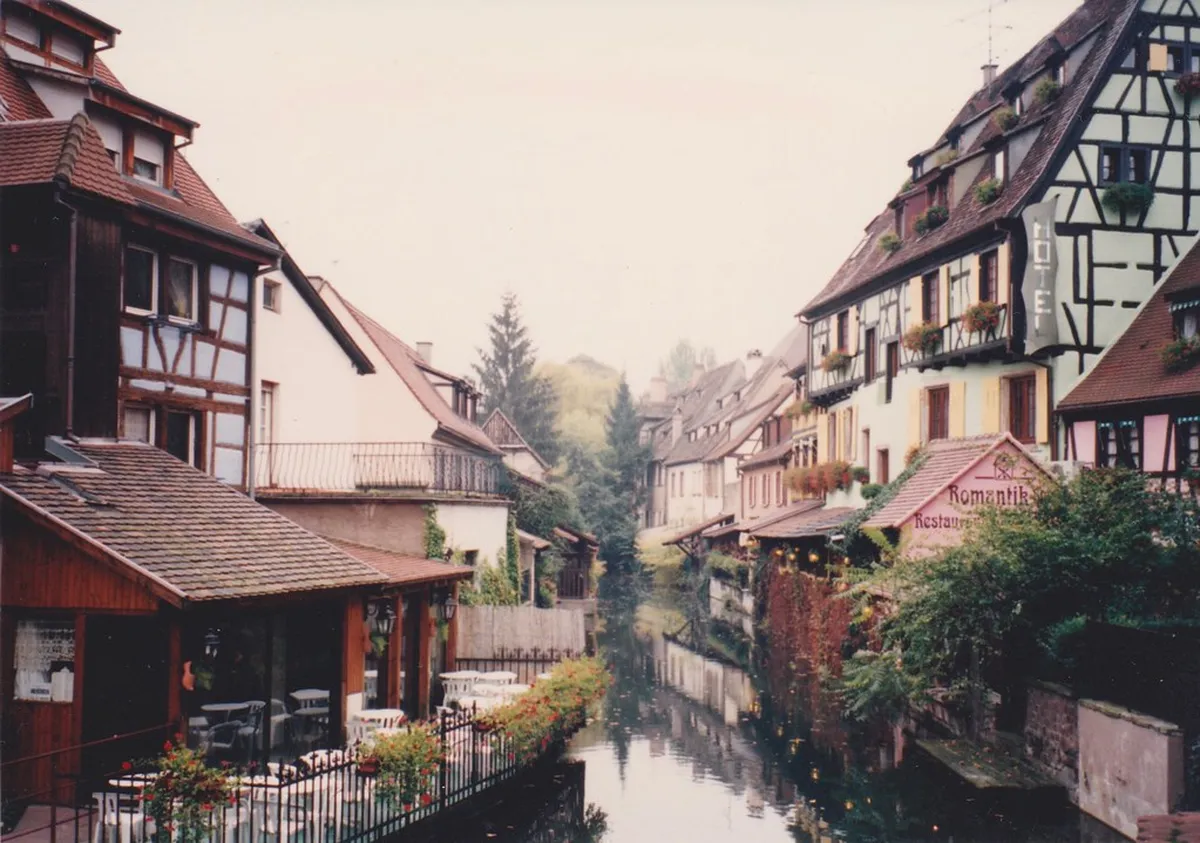
Colmar is a picturesque city in the Alsace region of eastern France that attracts thousands of visitors every year for its charm. Many travelers are surprised to find a massive green figure standing at the northern entrance to the city.
This monument is the iconic Statue of Liberty replica, which serves as a tribute to the city's most famous son. The sculptor Frédéric Auguste Bartholdi was born in this very town before creating his world-famous masterpiece.
Understanding the deep connection between this French village and the New York Harbor icon enriches any visit to the region. This guide covers the history, the museum, how to reach the replica safely, and every other Bartholdi monument scattered across the old town.
Free guide: France's Hidden Gems
12 under-the-radar places across Provence, Alsace & Occitanie — with the best season to visit each and a local tip you won't find in the guidebooks.
The History of the Statue of Liberty in Colmar
The story of Liberty Enlightening the World did not begin in New York. It started at a dinner party in Versailles in 1865, where the French historian Édouard de Laboulaye proposed gifting a monumental statue to the United States as a symbol of shared republican values. Bartholdi, already a rising sculptor, was at the table and left the evening convinced this was his life's commission.
What many visitors do not know is that the statue's silhouette has an even older origin. Bartholdi had already designed a colossal lighthouse figure holding a torch for the entrance to the Suez Canal in Egypt. That Egyptian commission was never built, but the robed female form he had drafted became the foundation for Liberty Enlightening the World — connecting Colmar, the Nile Delta, and New York Harbor in one continuous creative line.
Bartholdi's original designs were shaped by his upbringing in the historic streets of Alsace, and you can see those early inspirations reflected in several other 12 Best Things to Do in Colmar (2026): A Local Guide throughout the old town. The statue was ultimately inaugurated in New York Harbor in 1886, a gift from France to the United States funded through public subscriptions on both sides of the Atlantic.
The city of Colmar honored this heritage by installing a permanent replica in 2004 to mark the centenary of Bartholdi's death. It stands at the northern entrance and serves as a daily reminder that the world's most famous symbol of freedom came from a small Alsatian town.
Frédéric Auguste Bartholdi: The Visionary Sculptor
Frédéric Auguste Bartholdi was born in Colmar on 2 August 1834. His father, an adviser at the local prefecture, died just two years later, and his mother moved the family to Paris while keeping the family home on the rue des Marchands. That Colmar house — where young Auguste spent every school holiday — eventually became the museum bearing his name.
In Paris, Bartholdi studied at the Lycée Louis-le-Grand and trained in the workshops of sculptors Antoine Etex and Jean-François Soitoux. His first major commission came in 1854: the statue of General Rapp for Colmar's Place Rapp, completed in 1856 and displayed at the Paris Universal Exhibition before being shipped home. That same year, a trip to Egypt transformed his sense of scale. The pyramids and temples convinced him that monumental art could speak to entire nations.
You can learn more about his life and early career at the Bartholdi Museum in the heart of the city. His later career produced national works across France — statues of Champollion, Rouget de l'Isle, and Diderot — before Liberty became his global calling card.
Bartholdi spent years designing the structural elements of the statue alongside Gustave Eiffel, whose iron framework made the copper skin stable enough to survive Atlantic storms. Their collaboration proved that art and engineering could create something genuinely eternal. Bartholdi died in Paris in 1904, and his widow donated the Colmar house to the city.
Inside the Musée Bartholdi: Birthplace of an Icon
The Musée Bartholdi sits at 30 rue des Marchands in Colmar's pedestrian old town, inside the house where the sculptor was born. The city opened the museum in 1922, eighteen years after Bartholdi's death. It is classified as a Musée de France, which means its collections meet the same preservation and access standards as national institutions.
Three floors of exhibits trace his entire career, from the preparatory clay maquettes and plaster models for the Statue of Liberty to personal letters, photographs, and scale models of his other major commissions. The most arresting room holds full-scale casts of Liberty's ear and hand — physical proof of the engineering challenge of translating a small model into a 46-metre copper colossus. Visitors can check the official Musée Bartholdi website for current 2026 opening hours.
The museum is open Wednesday through Monday from 10:00 to 12:00 and 14:00 to 18:00; it closes on Tuesdays and throughout January. Admission in 2026 is approximately €8 for adults, with reduced rates for students and children under 12 entering free. Plan at least 90 minutes to do the collection justice.
The Musée Bartholdi is located at 30 rue des Marchands in Colmar's historic old town. It opens 10:00–12:00 and 14:00–18:00 Wednesday through Monday (closed Tuesdays and all of January). Adult admission is €8 in 2026; students and children under 12 are free.
Walking through the internal courtyard feels like stepping into the 19th century. It is one of the most rewarding stops in the city for anyone who wants to understand how one Alsatian artist shaped the visual identity of two continents.
Finding the Statue of Liberty Replica in Colmar
The Colmar replica was inaugurated in 2004 and stands 12 metres tall on a plinth at the Route de Strasbourg roundabout — the main northern entry point into the city. Arriving from Strasbourg by the N83, you cannot miss it. The statue is cast in tinted resin rather than copper, but the colour echoes the green patina of the New York original.
The Statue of Liberty replica stands at the Route de Strasbourg roundabout on the northern entrance to Colmar. It is exactly 12 metres tall, free to view from the public pavement on the north side of the roundabout. Safe viewing is from the north-side pavement—do not attempt to cross the traffic lanes to reach the base.
Many visitors wonder whether Colmar is worth visiting just for the statue, but it is one highlight in a much richer city. At 12 metres you are close enough to read every detail of the crown, the tablet, and the torch without a telescope or a ferry ticket. The face is a faithful reproduction of the original Bartholdi mould.
The table below compares the replica with the New York original at a glance.
| Feature | New York Original | Colmar Replica |
|---|---|---|
| Total height (statue + base) | 93 metres | 12 metres |
| Material | Copper over iron framework | Tinted resin |
| Year inaugurated | 1886 | 2004 |
| Location | Liberty Island, New York Harbor | Route de Strasbourg roundabout |
| Admission | Ferry + monument ticket required | Free to view from public road |
A Walking Tour of Bartholdi's Other Colmar Monuments
The replica is not the only Bartholdi work in Colmar. Small bronze triangles bearing the sculptor's profile are set into the pavement throughout the old town, forming a self-guided "Bartholdi Trail." Following the markers takes about an hour on foot and is one of the more satisfying 12 Best Things to Do in Colmar 2026: A Fairy Tale Guide for those who want to move beyond the postcard squares.
The trail begins naturally at the General Rapp Statue on Place Rapp — Bartholdi's first major commission, cast in bronze and installed in 1856. Rapp was a Colmar-born general under Napoleon, and the pose is commanding enough to make clear why the Egyptian trip had such an impact on the young sculptor.
From there, the Bruat Fountain on Place du Champ-de-Mars (1864) honours Admiral Bruat, another Colmar native, with a four-figure basin that doubles as a working fountain. A few minutes' walk brings you to the Schwendi Fountain on Place de l'Ancienne Douane (1898), which features Lazarus von Schwendi holding a vine branch — a deliberate nod to the importance of Alsatian wine culture.
The trail ends with the Monument dedicated to Bartholdi himself in the Champ de Mars park. The city erected it in 1907, three years after his death, and it depicts the sculptor surrounded by allegorical figures representing his most famous creations. Standing here completes a circuit that tells the full story of how one man turned his hometown into an open-air sculpture museum.
Essential Tips for Visiting the Colmar Statue
The roundabout on the Route de Strasbourg carries heavy traffic throughout the day. Do not attempt to cross the lanes to reach the statue's base — there is no pedestrian crossing on the roundabout itself, and the approach is genuinely dangerous. The safe viewing position is the pavement on the north side of the roundabout, where you can frame the statue cleanly against the sky.
If you are driving, the easiest option is to park at the commercial center immediately adjacent to the roundabout. The car park is free and puts you about 50 metres from the viewing pavement. You can find fuller details on downtown options in our Colmar Parking Guide: 8 Essential Tips for Stress-Free Parking.
Visitors without a car can take Trace Line 1 from Colmar's main train station toward the northern edge of the city. The stop is called Statue de la Liberté and the journey takes around 15 minutes. Buses run from early morning until late evening on both weekdays and weekends in 2026.
For photography, early morning before 08:00 gives you the clearest light and the least traffic. The resin surface catches the low sun particularly well from the north-east. Evening is also worthwhile if the statue is illuminated — check local event listings, as the lighting is not always active outside summer months.
See the Musée Bartholdi attraction page for hours and tickets at a glance.
Frequently Asked Questions
Why is there a Statue of Liberty in Colmar?
Colmar is the birthplace of Frédéric Auguste Bartholdi, the sculptor who designed the original Statue of Liberty. The city installed the 12-meter replica in 2004 to honor his legacy and mark the centenary of his death. It remains a major part of the things to do in Colmar for history enthusiasts.
Where is the Statue of Liberty replica located in Colmar?
The replica stands at the northern entrance of Colmar in a large roundabout on the Route de Strasbourg. It is situated near the Colmar Airport and is easily visible to anyone driving into the city from the north. Visitors can park at the nearby shopping center to view it safely.
Is the Musée Bartholdi worth visiting?
Yes, the museum is highly recommended for anyone interested in art history or the origins of the Statue of Liberty. It is housed in Bartholdi's childhood home and features original models that you cannot see anywhere else. The exhibits provide deep insight into the sculptor's technical genius and personal life.
How tall is the Statue of Liberty in Colmar?
The Colmar replica is exactly 12 meters (about 39 feet) tall from its base to the tip of the torch. While it is significantly smaller than the 93-meter New York original, it is a perfect scale model. The size makes it easier to appreciate the artistic details of the face and crown.
The Statue of Liberty in Colmar is more than a roadside curiosity. It is the physical endpoint of a creative journey that passed through a dinner table in Versailles, an unrealized Egyptian lighthouse, a Parisian workshop, and New York Harbor before looping back to this Alsatian town.
Whether you spend an hour at the roundabout, a morning in the Musée Bartholdi, or an afternoon following the bronze trail markers through the old town, Colmar gives you the full story of Liberty that New York can only half tell. Add these stops to your Colmar 2-day itinerary for a complete cultural experience.
Plan your visit in 2026 and discover the true French roots of the world's most famous statue.
Free guide: France's Hidden Gems
12 under-the-radar places across Provence, Alsace & Occitanie — with the best season to visit each and a local tip you won't find in the guidebooks.
You might also like


Continue reading
More guides you'll find useful