Strasbourg 2 Day Itinerary: The Best Travel Guide
Plan your strasbourg 2 day itinerary with top picks, neighborhood context, timing tips, and practical booking advice for a smoother trip.
On this page
The Ultimate Strasbourg 2 Day Itinerary
Strasbourg rewards visitors who spend exactly two days here. One day is not enough to feel the city breathe; three starts to feel indulgent unless you plan a proper day trip into Alsace. Forty-eight hours hits the sweet spot between the medieval Grande Île and the grand imperial boulevards of Neustadt.
This strasbourg 2 day itinerary groups sights by neighbourhood so you walk rather than zigzag. Day 1 stays inside the historic island. Day 2 moves east toward the German imperial quarter and the European institutions district. Both days end with food, because Strasbourg is one of the best eating cities in France.
All timings assume an adult pace with comfortable shoes. The city centre is almost entirely pedestrianised, so a tram is only useful on Day 2 when you bridge the gap between Neustadt and the European Parliament.
Free guide: France's Hidden Gems
12 under-the-radar places across Provence, Alsace & Occitanie — with the best season to visit each and a local tip you won't find in the guidebooks.
2-Day Strasbourg Itinerary At a Glance
A short trip requires a smart plan to see the best of this Alsatian capital. This summary helps you visualise the flow of your two-day adventure through the city. Attractions are grouped by location to minimise travel time between stops.
Day 1 focuses on the medieval charm of the Grande Île — the island in the Ill River that UNESCO designated a World Heritage Site in 1988. Day 2 takes you to the wide boulevards of the German imperial quarter and the glass towers of the European institutions. This sequence follows the city's own historical timeline from medieval to modern.
| Day | Focus | Highlights |
|---|---|---|
| Day 1 | Medieval Grande Île and Petite France | Notre-Dame Cathedral (platform €5), Astronomical clock show (€3, Tue–Sat 12:30), Vauban dam panorama (free), Batorama boat tour (€16, 70 min), winstub dinner |
| Day 2 | Neustadt imperial quarter and European institutions | Place de la République, European Parliament (free, 09:30–17:00), Palais de l'Europe, Parc de l'Orangerie lake and stork park |
Both days are walkable at their core. Carry a city tram map for Day 2. The tourist office on Place de la Cathédrale gives them out free and opens at 09:00.
The Strasbourg City Pass (2-day €39) includes museums, the boat tour, and the cathedral platform — it breaks even if you visit 2–3 attractions. The pass does not cover the astronomical clock show or restaurant discounts. Tram single tickets cost €1.90; buy from machines at stops before boarding.
Day 1: Grande Île — Cathedral, Petite France, and the Vauban Dam
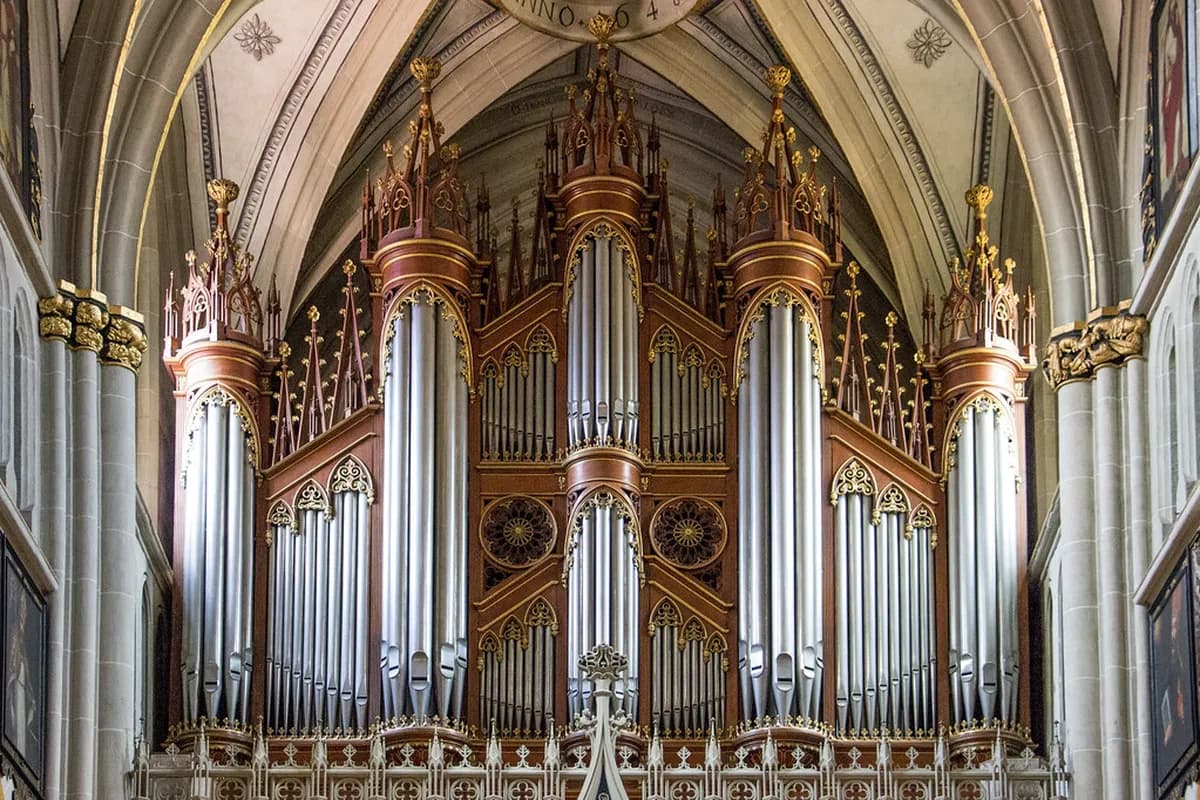
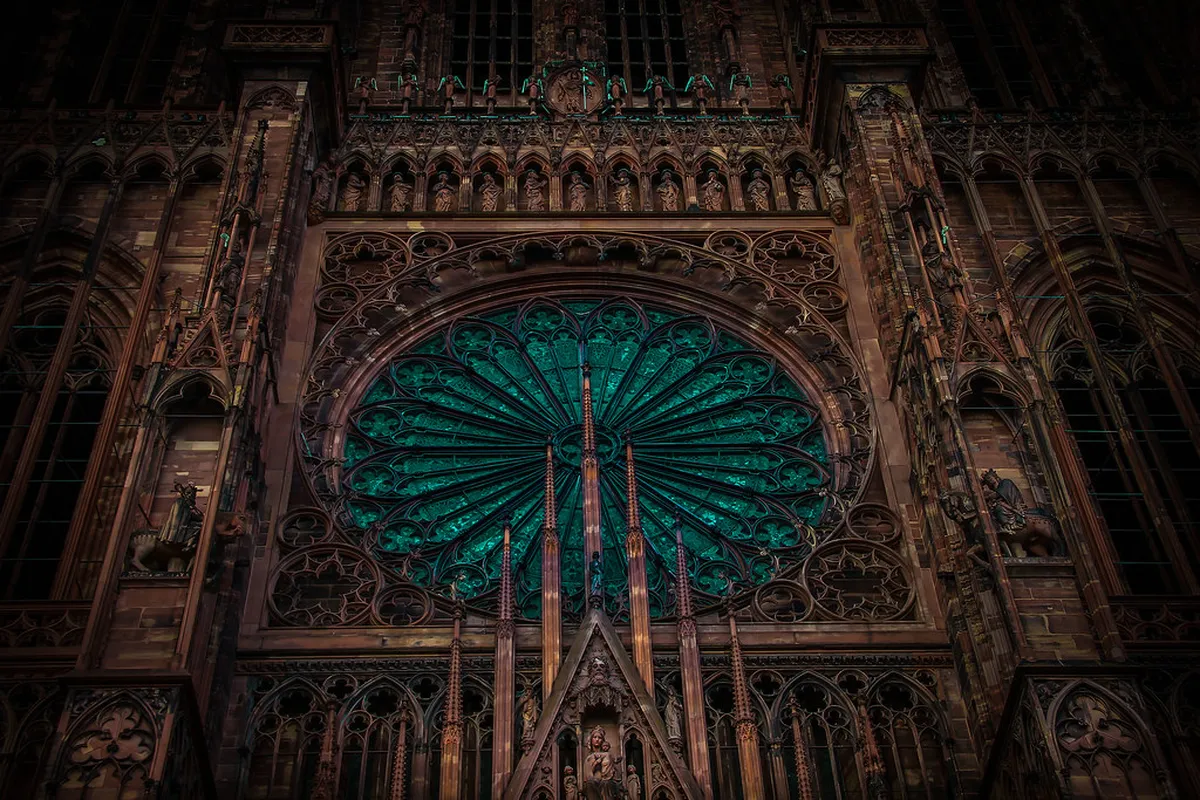
Start your morning at the Notre-Dame Cathedral on Place de la Cathédrale. Arrive at 09:00 before coach groups fill the square. The pink Vosges sandstone glows in morning light and the facade detail — carved 30 cm proud of the wall by architect Erwin of Steinbach — looks completely different depending on sun angle. Entry to the nave is free. The platform at the top of the north tower (332 steps) costs around €5 and gives clear views across to the Black Forest on a fine day.
Day 1 requires no trams — the Grande Île is entirely pedestrianised with smooth stone paving. The cathedral interior and Petite France are wheelchair-accessible, but the north tower (332 steps) is not. Wear comfortable shoes; you will walk 3–4 km at a leisurely pace.
Return to the cathedral floor by 12:00 for the astronomical clock show at 12:30. The show runs Tuesday to Saturday; buy the separate ticket (around €3) at the cathedral desk beforehand. The Musée Historique at 2 Rue du Vieux Marché-aux-Poissons is a five-minute walk and an underrated introduction to the city's medieval and mercantile past. It is included in the Strasbourg City Pass (see below).
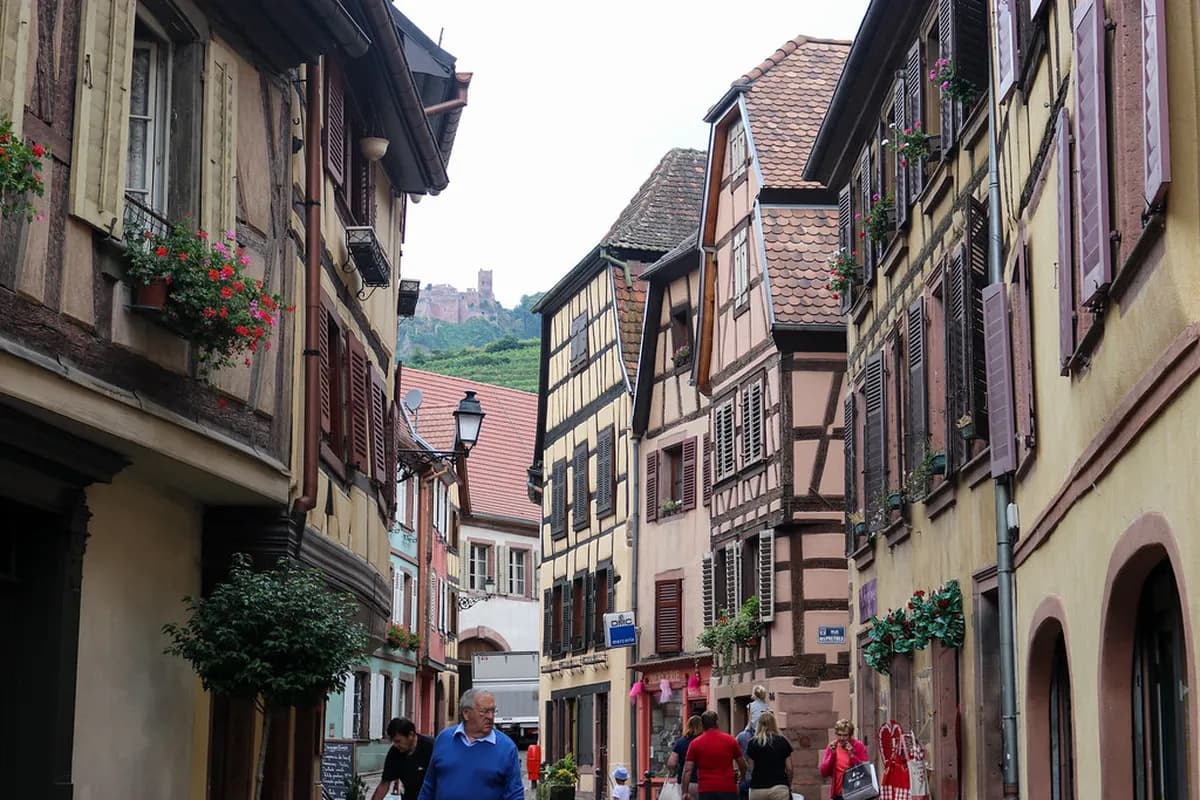
After lunch, walk fifteen minutes south-west into Petite France. The district's half-timbered houses and canal reflections are the most photographed images of Strasbourg. Rue du Bain-aux-Plantes is the street to linger on. The area is busiest between 11:00 and 16:00; if you want quiet photos, swap this to an early morning stroll and do the cathedral interior first instead.
From Petite France, keep walking west until you reach the Ponts Couverts — three medieval towers straddling the Ill River. Just beyond stands the Vauban dam, a 17th-century flood barrage with a free panoramic terrace above it. The view of the covered bridges and cathedral spire from that terrace is one of the best free viewpoints in Strasbourg. On your way, look for the wisteria-covered house beside the bridges: in late April and early May it is extraordinary, and no tour group seems to know about it.
In the late afternoon, join a Batorama river boat tour from Place du Vieux Marché aux Poissons. Tours run roughly every half-hour; the standard circuit costs €16 and lasts 70 minutes. The boat passes Petite France from the water, skirts the Neustadt, and loops back past the European Parliament — an efficient way to preview Day 2 without walking it. Book online to skip the queue in summer.
Evening on Day 1: Where to Eat in Strasbourg
Strasbourg is the capital of Alsatian cuisine and worth at least one proper meal at a winstub — the Alsatian combination of wine bar and hearty brasserie. Expect choucroute (sauerkraut with pork and sausage), flammekueche (thin-crust tart with cream and lardons), baeckeoffe (slow-cooked meat stew), and pretzel bread on every table. Wines are almost entirely Alsatian whites: Riesling, Gewurztraminer, and Pinot Gris.
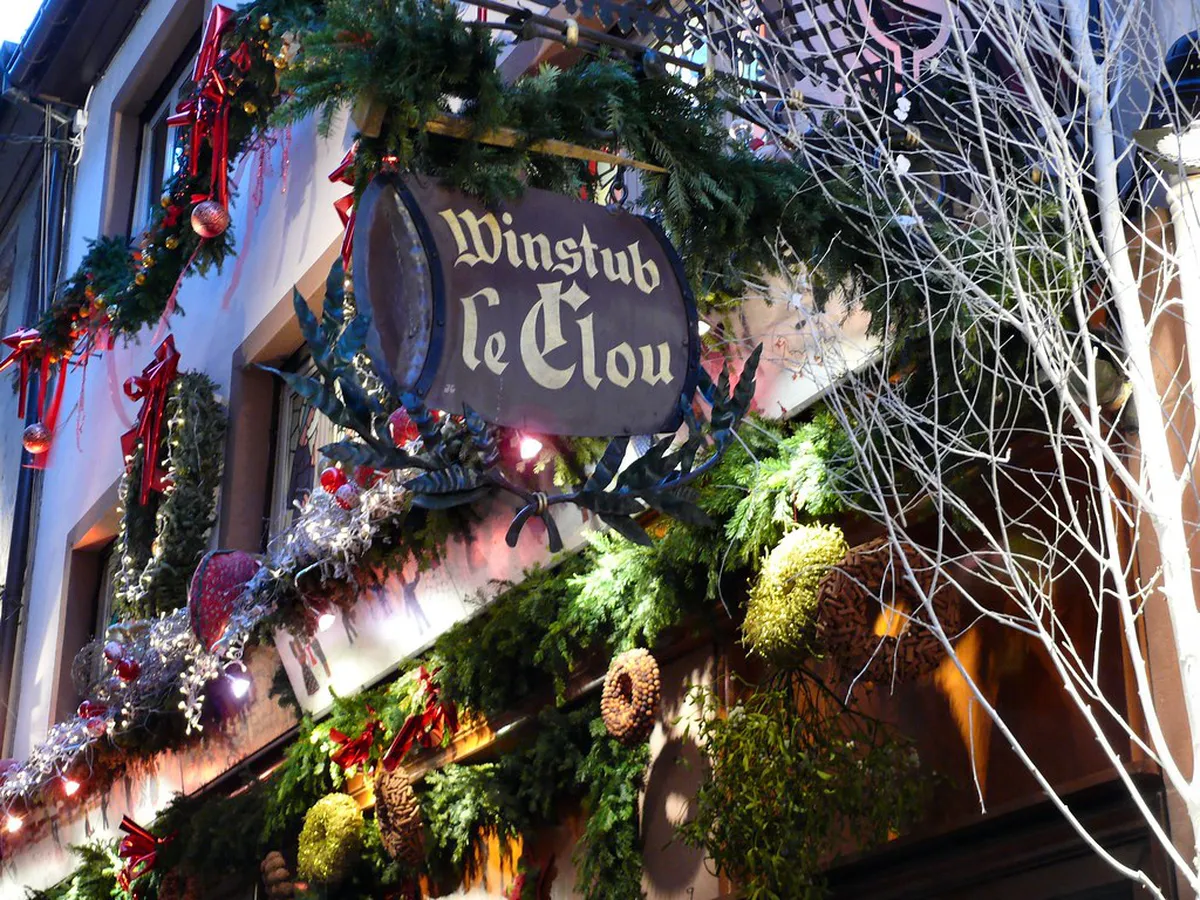
For your first evening, the neighbourhood of Finkwiller and Krutenau just south of the Grande Île has the best concentration of honest local restaurants. Winstub Le Clou at 10 Rue du Sanglier is a Strasbourg institution, small and often full so arrive by 19:30. Le Fink'stuebel at 3 Rue du Chaudron is slightly quieter and good for solo travellers. If you want to eat on the cathedral square itself, Maison Kammerzell is set in a 15th-century carved-wood townhouse and is famous for its three-fish choucroute — expensive but the room alone justifies it.
Budget roughly €18–28 per person for a main course and a glass of wine in a mid-range winstub. The starred end of the scale climbs past €60 per person, but that is optional. Most good winstubs do not take card at the table; carry some cash.
Day 2: Neustadt and the European Quarter
Begin your second day at Place de la République in the Neustadt district. This is the former German imperial quarter, built after 1870 when the Reich annexed Alsace. The scale is completely different from the medieval centre: wide Haussmann-style avenues, sandstone government buildings, and a formal grandeur that feels more Viennese than French. Around the square stand the Palais du Rhin (now a regional court), the national university library, and Strasbourg's national theatre. In spring, the magnolia trees along the square's central walkway provide a remarkable foreground for cathedral-spire photos from a kilometre away.
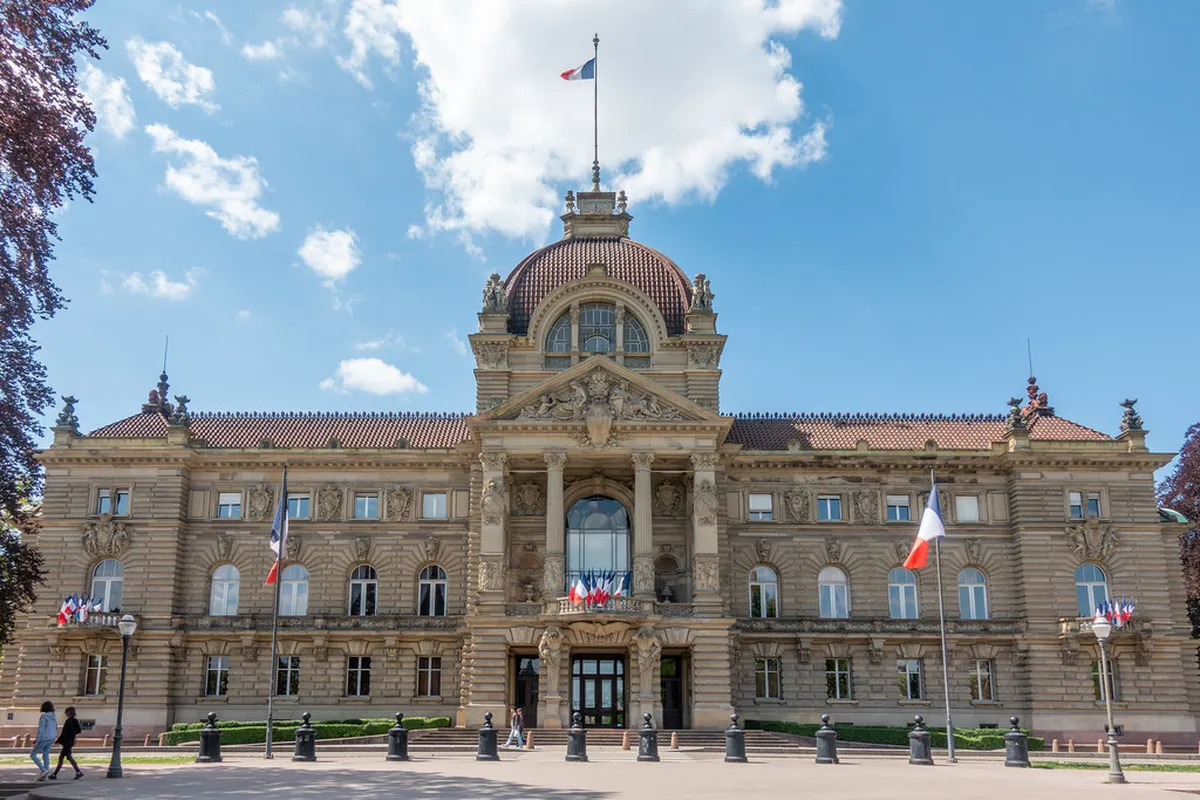
From Place de la République, walk east along Avenue de la Liberté toward the European Parliament, or take Tram E from République to Parlement Européen (about 15 minutes, single ticket €1.90 in 2026). The walking route via cité Ungemach — a 1920s garden-city enclave of pink pavilions inside the city — adds about 30 minutes but rewards the curious. Pass the Arte broadcasting building and the Palais Universitaire on the way.
The European Parliament visit is free, Monday to Saturday 09:30–12:00 and 13:00–17:00. No pre-booking required for the self-guided tour, though group tours must reserve in advance. The hemicycle chamber is genuinely impressive at 750-seat scale. The neighbouring Palais de l'Europe is the Council of Europe headquarters and can also be seen from the outside; the Court of Human Rights building alongside it, by architect Richard Rogers, is worth a look for architecture fans.
Finish the afternoon at the Parc de l'Orangerie, the city's largest park, a short walk north of the European Parliament. You can hire a pedalo on the lake, watch the resident storks in the enclosure (Alsace's unofficial mascot), or simply sit by the water with an ice cream. It is an ideal place to decompress before a return journey — the park sits five minutes' walk from the Orangerie tram stop for easy access back to the station.
Strasbourg City Pass: Is It Worth It?
The Strasbourg City Pass covers all municipal museums, the Batorama canal cruise, the cathedral platform climb, and most guided walking tours. It is available for 1, 2, 3, or 5 days. In 2026, a 2-day pass costs around €39 per adult. A 1-day pass runs approximately €25.
For a typical two-day visit following this itinerary, run the maths before buying: the Batorama tour alone is €16, the cathedral platform is €5, and entry to two or three museums adds another €12–18. If you plan all three, the 2-day pass breaks even and gives you flexibility on museum visits without watching the clock. If you only want the boat tour and the cathedral, skip the pass and pay individually — you will come out slightly cheaper.
The pass does not cover the astronomical clock show (sold separately at the cathedral desk) and does not include restaurant discounts. Buy it at the tourist office on Place de la Cathédrale or online at strasbourg.eu. The tourist office also stocks free neighbourhood maps and tram guides that are genuinely useful.
Practical Information: Trams, Tickets, and Timing
Strasbourg's tram network is clean, frequent, and easy to read. A single ticket costs €1.90 and is valid for one hour across all lines. A 24-hour pass (Passeport) costs around €5.10 and makes sense if you plan to ride more than twice. Buy tickets from machines at every stop before boarding — there is no on-board purchase. Validate at the platform machine, not inside the vehicle.
For Day 2, the key line is Tram E: it connects République (Neustadt) to Parlement Européen in about 15 minutes. For the return from Orangerie, take Tram E in the opposite direction back to the central Homme de Fer interchange, then any line to the station. The entire journey takes around 20 minutes.
The cathedral astronomical clock show runs Tuesday to Saturday at 12:30. Doors close at 12:00 for the show and the clock ticket (roughly €3) must be purchased at the desk before noon — the online booking system sometimes sells out the morning of. The cathedral nave itself is free and open from 08:15. On Sundays the clock show does not run.
Visitors with reduced mobility will find the Grande Île largely accessible: the pedestrianised centre has smooth stone paving, and the cathedral interior, Petite France streets, and Batorama boat are all wheelchair-accessible. The cathedral platform stairs are not accessible. The European Parliament has full lift and ramp access throughout. The Parc de l'Orangerie lakeside path is flat and accessible by wheelchair or pushchair.
Is 2 Days in Strasbourg Enough?
Two days is the right amount of time for a first visit focused on the city itself. You will cover the cathedral, Petite France, the Vauban dam, the European quarter, and have time for proper meals without feeling rushed. The How Many Days in Strasbourg 2026: The Perfect Itinerary question usually comes down to whether you want to leave the city at all.
If Alsatian villages are on your list — Riquewihr, Ribeauvillé, Kaysersberg, or Eguisheim along the wine route — add a third day. The train to Colmar takes 30 minutes from Strasbourg station and Colmar makes an easy day trip from Strasbourg. You can also reach Obernai in under 30 minutes by regional TER train. Neither requires a car.
If you are travelling with children, the itinerary here works well: the Batorama boat, the stork park at Orangerie, and the scale of the Vauban dam all hold genuine interest for kids. The main things to do in Strasbourg are street-level and free of charge at the entry point — the Petite France walk costs nothing. Save the museum budget for a rainy afternoon.
Where to Stay in Strasbourg
The Grande Île puts you within walking distance of everything on Day 1 and is the most convenient base for a two-night stay. Hotels here command a premium but you gain thirty minutes of extra sightseeing by not needing trams to reach the cathedral. Look at where to stay in Strasbourg for a full neighbourhood breakdown and price comparison.
Krutenau, just south-east of the island, is a local-feeling alternative with independent cafes and smaller hotels at lower prices. It is a 10-minute walk to the cathedral. Finkwiller is similar in character and puts you near the winstub strip without being in the tourist zone.
The area around the train station is the budget tier. It is safe, well-served by trams, and only a 12-minute walk to Place de la Cathédrale. Booking accommodation near the station also simplifies the departure on Day 2 afternoon if you are catching a train. Arrive via train tickets to Strasbourg from Paris in under two hours on the TGV.
Getting To and Around Strasbourg
Most visitors arrive at Strasbourg Gare Centrale. The train from Paris takes 1h47 on the TGV Est; trains run hourly from Paris Est from early morning. From Frankfurt it is around 2 hours by IC or ICE. The station building itself, with its glass canopy added in 2007, is worth a look as you exit.
From Strasbourg Airport (SXB), the shuttle train to the city centre runs every 15 minutes and takes 9 minutes — one of the fastest airport connections in France. A Strasbourg Airport (SXB) Guide: 5 Essential Travel Tips covers all transport options and the single-ticket price (valid on the tram for the onward journey with the same ticket).
Once in the city, the Grande Île is entirely pedestrianised and the tram stops at every edge of it. Day 1 of this itinerary requires no public transport at all. Day 2 uses one tram ride (Tram E, République to Parlement Européen) unless you walk the 30-minute route through Neustadt to the European Quarter, which is the more scenic option. For day trips into Alsace, use rental cars in Strasbourg or the regional TER train network — a car opens up the northern Alsace villages that trains do not reach.
Frequently Asked Questions
Is 2 days enough for Strasbourg?
Yes, two days is the perfect amount of time for a first visit. You can see the cathedral, Petite France, and the European Parliament. It allows for a relaxed pace with plenty of meals.
What is the best time to visit Strasbourg?
December is famous for the Christmas markets, but summer is also lovely. The weather is warm and perfect for boat tours. Spring offers beautiful flowers in the city parks.
Is Strasbourg expensive for travelers?
Strasbourg is moderately priced compared to Paris. Expect to pay 15 to 25 Euros for a good meal. Many of the best sights, like the cathedral, are free to enter.
Strasbourg is a city that stays with you long after you leave its streets. Its blend of history, politics, and gastronomy makes for a perfect weekend getaway. I hope this itinerary helps you plan a memorable visit to Alsace.
Whether you are here for the cathedral or the wine, you will find magic. Enjoy every moment of your two days in this stunning French gem.
Free guide: France's Hidden Gems
12 under-the-radar places across Provence, Alsace & Occitanie — with the best season to visit each and a local tip you won't find in the guidebooks.
You might also like


Continue reading
More guides you'll find useful