
Strasbourg Vs Colmar Travel Guide: Which Alsace Gem is Best?
Compare Strasbourg vs Colmar for your Alsace trip. Get neighborhood context, timing tips, and practical booking advice to choose the perfect French destination.
On this page
Strasbourg Vs Colmar: A Subjective Guide to Choosing One
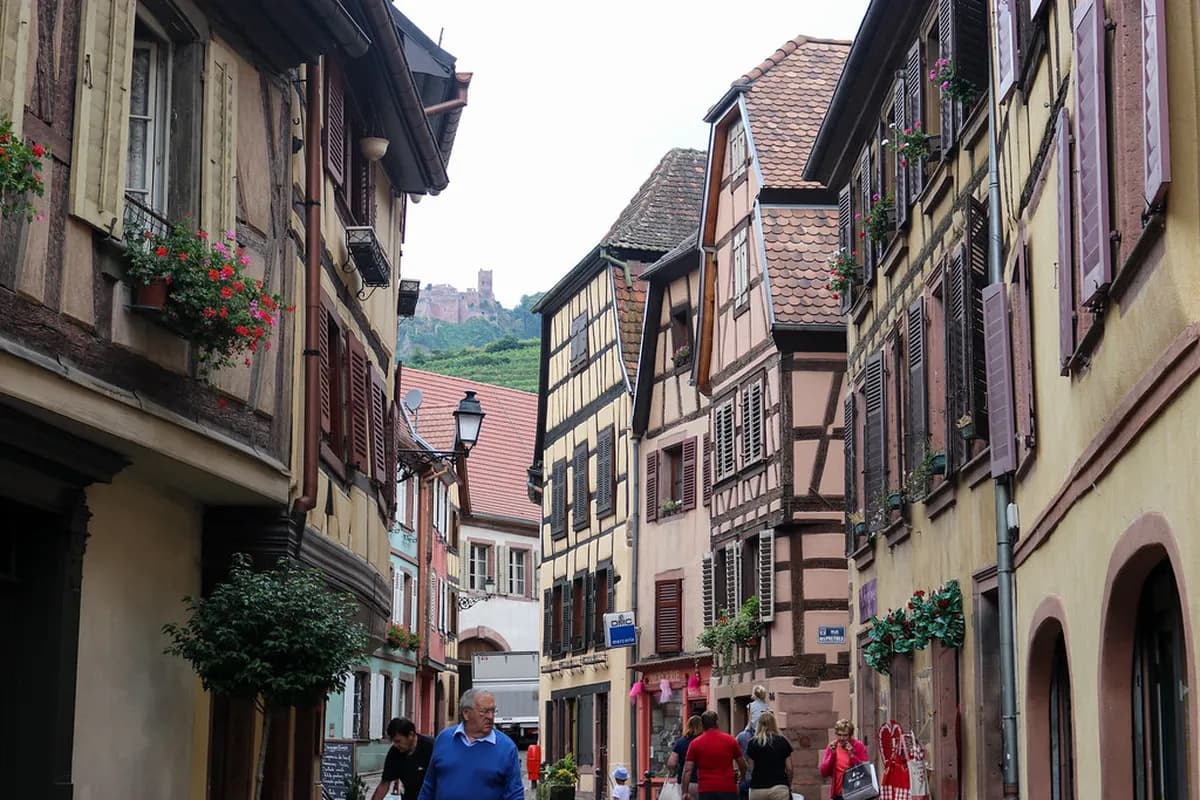
Both Strasbourg and Colmar sit in Alsace, less than 30 minutes apart by train, and both look like they were designed by a fairy-tale illustrator. But they are not the same experience. Strasbourg is a real city — home to the European Parliament, a Gothic cathedral that dominated the world skyline for 200 years, and a tram network that makes it genuinely livable. Colmar is a compact medieval town where the center is just a few streets wide and the canals run directly below restaurant terraces.
The choice between them is less about which is prettier and more about what kind of trip you want. This guide walks through each city honestly — attractions, Christmas markets, wine route access, and how to do both in a single trip if your schedule demands it.
Free guide: France's Hidden Gems
12 under-the-radar places across Provence, Alsace & Occitanie — with the best season to visit each and a local tip you won't find in the guidebooks.
Strasbourg vs Colmar: Quick Comparison
Strasbourg has a population of around 290,000 and functions as a major European hub. Colmar has roughly 70,000 residents and its entire historic center takes about 90 minutes to walk end to end. That size difference defines everything — how crowded it feels, how much time you need, how far the restaurants and museums are from each other.
Choose Colmar if you want an intimate, fairytale-postcard experience in under 24 hours with easy wine-village access. The compact old town is walkable in a single day, and the romantic atmosphere rewards a slower pace.
Choose Strasbourg if you need big-city infrastructure, museums, evening energy, and broader European connections. Plan 2–3 days to do the cathedral, museum district, and Petite France justice.
The Strasbourg to Colmar Train: 6 Essential Travel Tips runs roughly every 30 minutes throughout the day and costs around €12 each way. Most travelers who visit one also visit the other, and the logistics make that easy. The main question is which city you base yourself in and which you take as a day trip. Planning around the Best Time To Visit Colmar 2026: The Ultimate Guide changes the calculation significantly — in December the Christmas markets dominate everything, while in summer the wine route villages are the draw.
- Size: Strasbourg is a major city; Colmar is a compact town
- Time needed: Strasbourg rewards 2–3 days; Colmar works well in 1 full day
- Crowds: Strasbourg spreads them across multiple zones; Colmar concentrates them in a small center
- Best season: Both peak in December for markets; summer is better for wine route exploration from Colmar
- Train: 25–35 minutes, roughly €12 each way, frequent departures from Colmar and Strasbourg stations
Must-See Strasbourg Attractions
The Cathédrale Notre-Dame de Strasbourg is the non-negotiable starting point. Built from pink Vosges sandstone, it held the title of tallest building in the world from 1647 to 1874. The astronomical clock inside runs at 12:30 daily — arrive a few minutes early and join the crowd that gathers for the mechanical figures. Climbing the 330 steps to the platform costs around €5 and gives a clear view over the old city roofline.
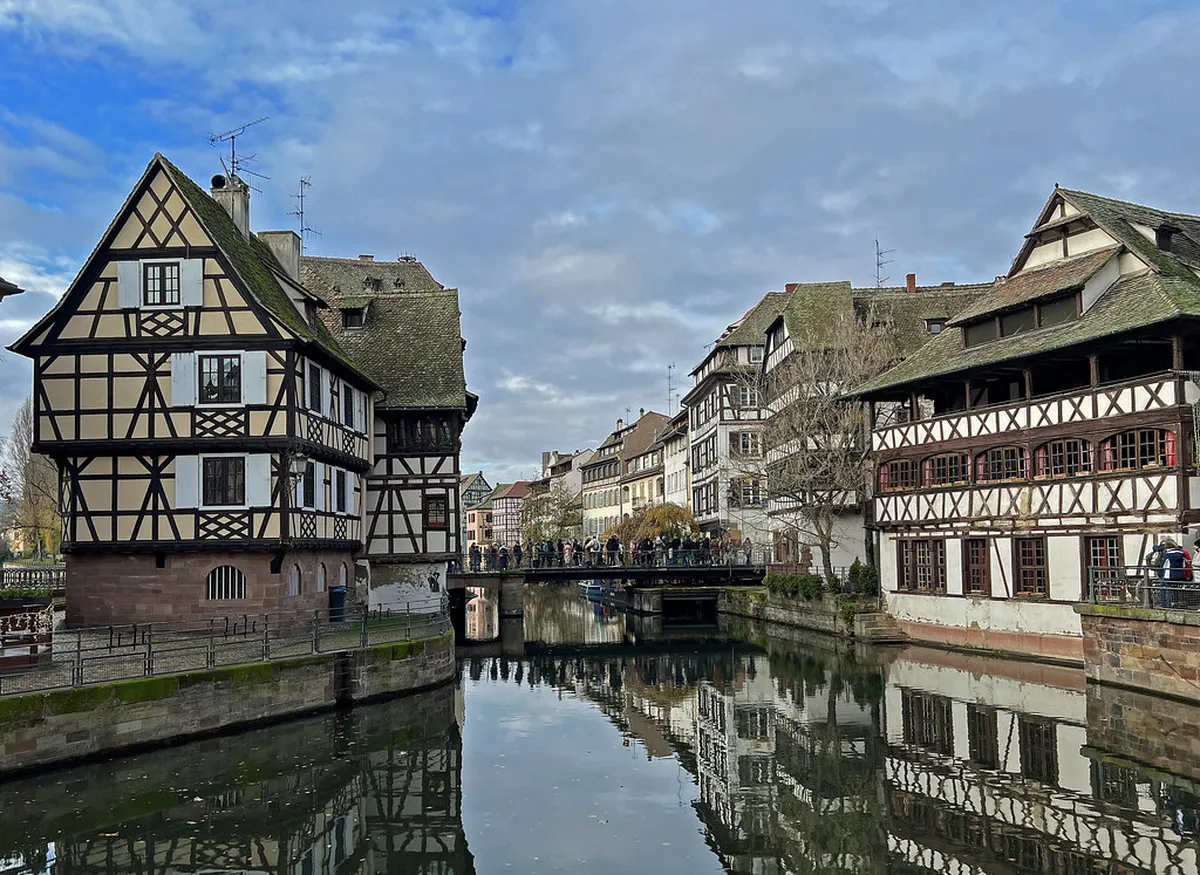
La Petite France is the most photographed neighborhood. The lock-keepers' houses date to the 16th century and sit directly on the Ill River canals. Walking through early in the morning, before the tour groups arrive, gives you the city largely to yourself. The covered bridges (Ponts Couverts) at the edge of the neighborhood mark the old fortification line and offer the cleanest view back across the water toward the towers.
Beyond the cathedral quarter, the Musée d'Art Moderne et Contemporain (MAMCS) on the riverbank holds a strong collection and is often overlooked by day-trippers. The Palais Rohan contains three separate museums — decorative arts, fine arts, and archaeology — under one roof near the cathedral square. Entry to each is around €7. Strasbourg's museum density rewards people who stay at least two nights rather than rushing through on a day trip.
Strasbourg Christmas Market and What Makes It Famous
Strasbourg claims the title of Europe's oldest Christmas market, dating to 1570, and it markets itself as the "Capital of Christmas" — a phrase that is backed by genuine scale. In 2026 the market runs from late November through 24 December across several distinct zones: Place Kléber, Place Broglie, Place de la Cathédrale, and a handful of smaller squares scattered through the old town. The Place Kléber tree is typically 30 metres tall and decorated by a local artist chosen each year.
What separates Strasbourg from most other European Christmas markets is the range. Over 300 chalets spread across the city, which means no single area becomes completely unbearable. The market around the cathedral runs later into the evening and has the best atmosphere after 18:00 when the stone facade picks up the light from the stalls below. Live concerts play regularly at Place Kléber throughout December.
The downsides are real. Security checkpoints at bridge access points slow movement between zones, especially on weekends. Crowds around the cathedral and Place Kléber on Saturday afternoons are genuinely difficult — shoulder-to-shoulder in places. The food stalls repeat more than you would expect at this price point. If you come only on a weekend afternoon, you will spend more time navigating than experiencing. A Tuesday or Wednesday visit, arriving by 10:00 or after 19:00, changes the experience completely.
Colmar Christmas Market and Why People Love It
Colmar runs six themed markets simultaneously in different squares across the old town, all within a 10-minute walk of each other. The markets at Place de l'Ancienne Douane, Place des Dominicains, and along the canals of La Petite Venise each have a different character — one focused on crafts, one on food, one purely on the visual backdrop of the water and the lit half-timbered houses. The Colmar Christmas Market Guide: 10 Essential Tips & Locations has the full dates and square-by-square breakdown.
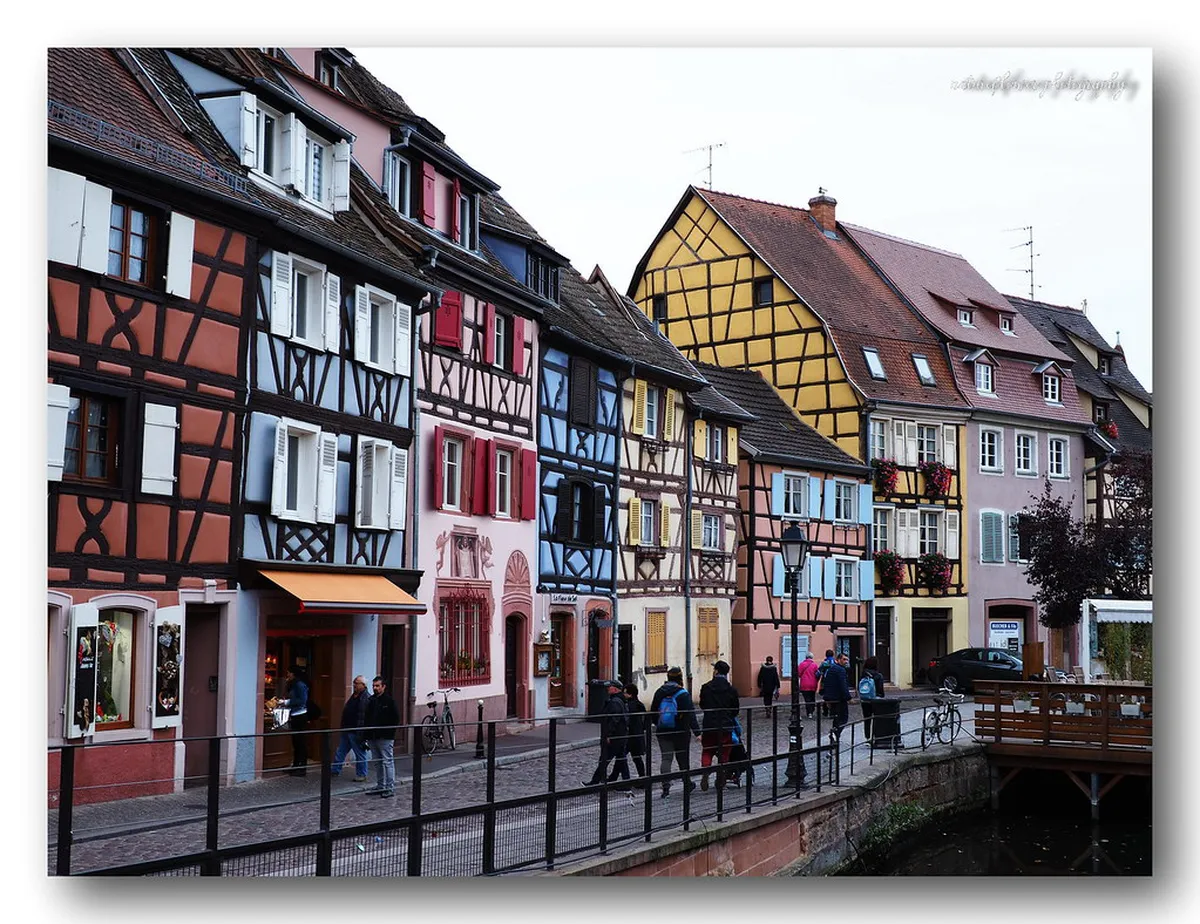
The appeal is that Colmar looks like a Christmas market set even when there is no market happening. The architecture does the work. Flower boxes and painted facades that look cheerful in summer become something completely different when strung with lights in December. Vin chaud (hot spiced wine) is sold at every corner, and the alleys are narrow enough that the stalls feel integrated into the buildings rather than placed in front of them.
The market hours are shorter than Strasbourg's — most stalls close by 20:00 or 21:00. Arriving after 17:00 on a weekend means you might only get two hours of atmosphere before things wind down. Early mornings (before 11:00) give you La Petite Venise almost to yourself, which is when the canal reflections and the lights are at their best for photos. The 10 Best Alsace Christmas Markets & Planning Guide covers the full regional calendar if you want to combine Colmar with smaller village markets like Kaysersberg (15 km away) in the same day.
Things I Don't Love About Colmar (Just Being Honest)
La Petite Venise is the most photographed spot in Alsace, which means it is perpetually crowded during peak hours. On a December weekend afternoon the canal-side path becomes a slow shuffle of people holding phones above their heads. The shot exists, but you will share it with about 200 other people simultaneously. This is not unique to Christmas — the same congestion happens on summer weekends when river-cruise passengers descend in organized groups.
The town goes quiet fast after dark outside of the Christmas market period. By 21:00 in low season, most restaurants have served their last orders and the streets are empty. If you want evening energy — wine bars, late dinners, live music — Colmar will disappoint. The nightlife infrastructure is just not there for a town of this size and tourist profile.
Accommodation pricing in the center is high relative to quality. The most desirable addresses charge a location premium that does not always translate into better rooms. Booking four to six weeks ahead for summer and Christmas dates is not optional; it is the difference between a canal-view room and a parking-lot-view room at the same price. And yes, parts of the historic center can feel theme-park polished — the facades are immaculate, the window boxes are symmetrical, and some streets have clearly been optimized for Instagram rather than actual resident life.
Things I Don't Love About Strasbourg Christmas Market
The crowd density at peak times is the main issue. Saturday afternoons between 14:00 and 18:00 in December are as crowded as Strasbourg gets all year. The area between the cathedral and Place Kléber becomes slow-moving in both directions, and the security funnels at the bridges add unpredictable wait times of 10–20 minutes during rush periods. This is not a dealbreaker, but it reframes the experience from festive strolling to crowd navigation.
The spread-out layout that gives the market its scale also means a lot of walking on cold pavement. Getting from Place Kléber to the cathedral market to the riverside section and back covers several kilometres. For visitors who want a concentrated, cosy market experience in one small area, Strasbourg asks more effort than most people budget for.
Some stall categories repeat heavily — scarves, spiced nuts, mulled wine variations — and the price points are urban rather than village. A vin chaud at Place Kléber costs around €4–5 for a small cup. The commercial feel increases on weekends when the tourist-to-local ratio shifts. The magic of Strasbourg's market is real, but it is more reliably found on weekday evenings than at the times most people actually visit.
Wine Route Access: Which City Wins as a Base
This is the angle that most comparisons skip entirely, and it genuinely changes which city makes sense depending on your itinerary. The Route des Vins d'Alsace runs 170 km from Thann in the south to Marlenheim in the north, passing through 70-odd wine villages along the way. Colmar sits almost exactly at the geographic midpoint and is the better base for the stretch most visitors actually want — Eguisheim (6 km), Kaysersberg (12 km), Riquewihr (15 km), and Ribeauvillé (17 km) are all reachable by bicycle, local bus, or short taxi rides from Colmar's center.
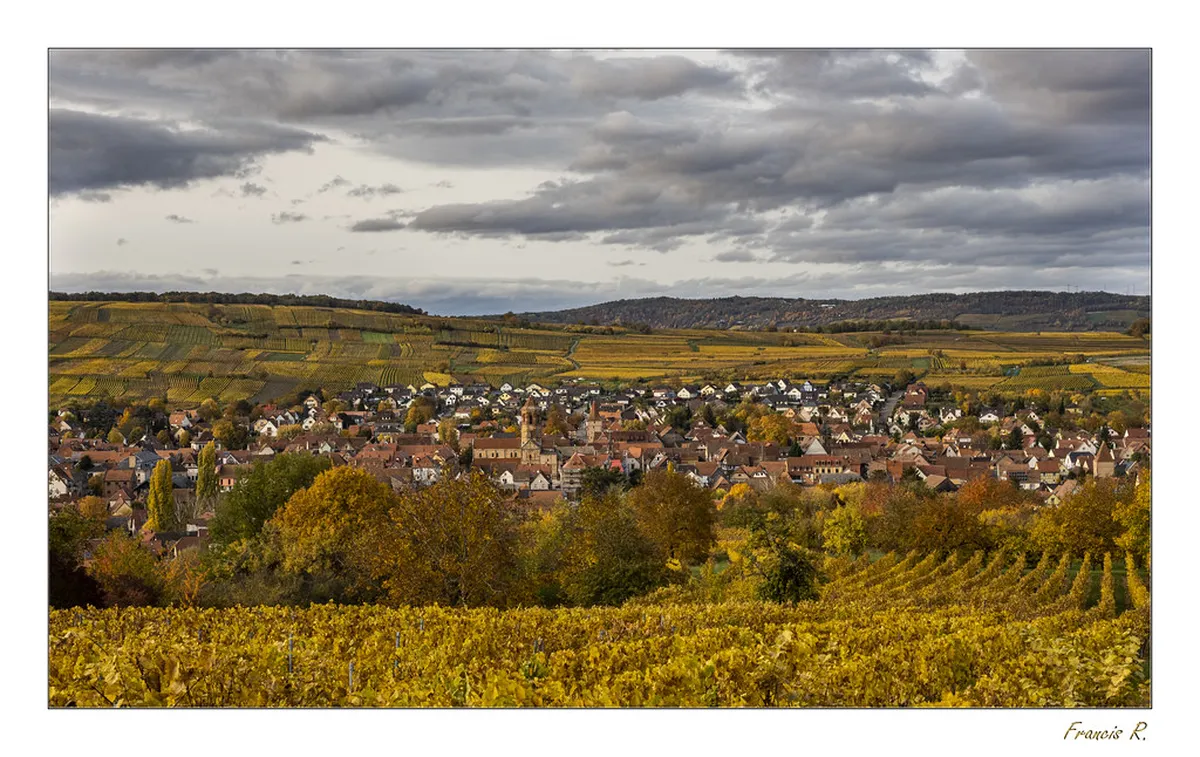
From Strasbourg, the southern wine villages require either a 40-minute train to Colmar first or a car. Strasbourg does sit close to the northern end of the route — villages like Obernai and Barr are accessible by regional train — but the southern section where the most famous villages cluster is simply more convenient from Colmar. If your Alsace trip includes more than one wine village, basing yourself in Colmar and taking the train into Strasbourg for a day is the more efficient structure.
Strasbourg wins as a base for cross-border day trips. Germany's Black Forest starts about 10 km from the city center across the Rhine. Basel (Switzerland) is 80 km south by train. For travelers using Alsace as a hub for multi-country exploration rather than deep regional immersion, Strasbourg's rail connections are significantly better. Both cities have TGV links to Paris — roughly 1h45 from Strasbourg, 2h20 from Colmar with a change.
| Factor | Strasbourg | Colmar |
|---|---|---|
| Population | ~290,000 (major European city) | ~70,000 (compact medieval town) |
| Historic Center | Sprawling; multiple neighborhoods to explore | Walkable end-to-end in 90 minutes |
| Canals & Water | Ill River with locks and locks-keepers' houses (Petite France) | La Petite Venise; canals run directly below restaurant terraces |
| Christmas Markets | 300+ chalets across 4+ squares; December 1–24; spectacle-scale | 6 themed markets in nearby squares; cosy and photogenic |
| Wine Village Access | Northern villages easier (Obernai, Barr); southern villages require day trip or car | Sits at Route midpoint; Eguisheim, Kaysersberg, Riquewihr, Ribeauvillé all within 6–17 km |
| Days Needed | 2–3 days (cathedral, museums, neighborhoods, evening energy) | 1 full day (self-contained); 1 night (romantic short break) |
| Museums | MAMCS, Palais Rohan (3 museums in one), cathedral art | Musée d'Unterlinden, regional decorative arts |
| Nightlife & Dining | Diverse restaurants, wine bars, evening energy until late | Quiets by 21:00 outside Christmas period; limited nightlife |
| Cross-Border Connections | Black Forest (10 km), Basel (80 km), Paris (1h45 TGV) | Paris (2h20 with change); primarily wine-route focused |
Can You Do Both Colmar and Strasbourg in One Day?
Yes, and many people do it. The train takes 25–35 minutes and runs frequently enough that you can structure a clean day trip in either direction. The practical question is which city you use as your overnight base, because that determines which gets your full afternoon energy and which gets the rushed morning version.
The itinerary that works best: arrive in Colmar by 09:00, walk La Petite Venise and the old town until early afternoon (the light is better for photos before 13:00), eat lunch there, then take the 14:00 train to Strasbourg and spend the late afternoon and evening in Petite France and around the cathedral. Strasbourg after dark — when the cathedral is lit and the tram network makes moving around effortless — is genuinely different from the daytime version and is worth arriving for specifically.
What you will miss doing it in one day: the museums in either city, the slower pace of a morning coffee on a canal terrace, and the experience of either place when the day-trippers have left. If you have two nights in Alsace, spend one in each city. If you have one night, base yourself in Colmar for the atmosphere and day-trip into Strasbourg — Colmar is smaller and more self-contained, which makes it better for a single evening.
Final Verdict: Which One Should You Choose?
Choose Colmar if your priority is concentrated fairytale atmosphere, wine village day trips, or a romantic short break where everything you need is within walking distance. It is the better single-night destination and the right pick if you have limited time and want the maximum visual payoff per hour. The town earns its reputation — the canals, the painted facades, and the half-timbered lanes really do look the way travel photography suggests they do.
Choose Strasbourg if you want genuine big-city infrastructure alongside Alsatian character — museums, diverse restaurants, evening energy, and easy train connections to Germany, Switzerland, and Paris. It is the better two-or-three-night destination and the right base if you are doing a broader European trip rather than a dedicated Alsace immersion. The cathedral alone justifies a full day.
For Christmas market visitors specifically: Colmar offers the more intimate and photogenic experience, while Strasbourg offers more variety and the longer historical tradition. Neither is objectively better — they solve different problems. If you can only pick one for Christmas, go to Colmar on a weekday morning and Strasbourg on a weekday evening, ideally on the same day, and experience both at their best rather than either at their worst. The train makes this practical regardless of where you are staying. You can find more on 12 Best Things to Do in Colmar 2026: A Fairy Tale Guide once you have decided to make it your base.
Frequently Asked Questions
Strasbourg vs Colmar – which is prettier?
Colmar is generally considered prettier due to its fairytale look. It has colorful houses and narrow canals that feel like a movie set. Strasbourg is grand and impressive but less intimate than Colmar.
Can You Do Colmar and Strasbourg in One Day?
Yes, you can visit both in one day by using the train. Spend the morning in Colmar and the afternoon in Strasbourg. However, you will only see the main highlights of each city.
Strasbourg and Colmar both represent the best of the Alsace region. Your choice depends on whether you want big-city culture or village charm. Both offer amazing food, wine, and history for every traveler.
I hope this comparison helps you plan your perfect French getaway. No matter which you choose, you will find something to love. Safe travels on your journey through this beautiful corner of France.
Free guide: France's Hidden Gems
12 under-the-radar places across Provence, Alsace & Occitanie — with the best season to visit each and a local tip you won't find in the guidebooks.
You might also like


Continue reading
More guides you'll find useful


