

Parc de l'Orangerie, Strasbourg: Free Park & Storks (2026)
Parc de l'Orangerie is Strasbourg's oldest and largest park, a 26-hectare green retreat laid out in the 18th century and still the favourite promenade of locals today. It sits in the city's European quarter, just a few minutes' walk from the European Parliament and the Council of Europe, which gives it a relaxed, cosmopolitan feel — you will hear half a dozen languages on a sunny afternoon. Best of all for visitors in 2026, the park is completely free to enter, and so is its much-loved little zoo. Add nesting white storks, a boating lake, a waterfall, and the neoclassical Pavillon Joséphine, and you have one of the best family days out in the city — at no cost. This guide covers what is in the park, the free zoo and its storks, the family activities, and exactly how to get there on tram E.
What's in the Park
Spanning roughly 26 hectares, Parc de l'Orangerie is the green heart of Strasbourg's European quarter and the oldest municipal park in the city. It was originally created in the 18th century and reshaped in the English landscape style, so the layout mixes formal avenues with rolling lawns, mature trees, winding paths, and a central lake fed by a small waterfall. It is open and unfenced as public parkland, with no ticket and no closing gate, which makes it easy to wander in for ten minutes or settle in for a whole afternoon.
The architectural centrepiece is the Pavillon Joséphine, a neoclassical building dating from 1804 that was once used to overwinter the orange trees that gave the park its name — and that, by tradition, is linked to the Empress Joséphine. Today the pavilion hosts exhibitions and events, and its terrace overlooking the lake is one of the prettiest spots in the park. Around it you will find shaded benches, a small lakeside café, and plenty of grass for a picnic, all just a short stroll from the gleaming European institutions next door.
The Free Zoo & Storks
One of the park's biggest draws is its small free animal park — a genuine free mini-zoo rather than a paid attraction. Over the years it has been home to deer, ibex, exotic birds, monkeys, and other animals in enclosures dotted along the paths, and in 2026 it continues to evolve, with parts of the old menagerie giving way to a hands-on animal-behaviour education space. You can walk the loop, watch the animals, and read the information boards without paying a cent, which makes it a favourite with families and a reliable rainy-or-shiny outing.
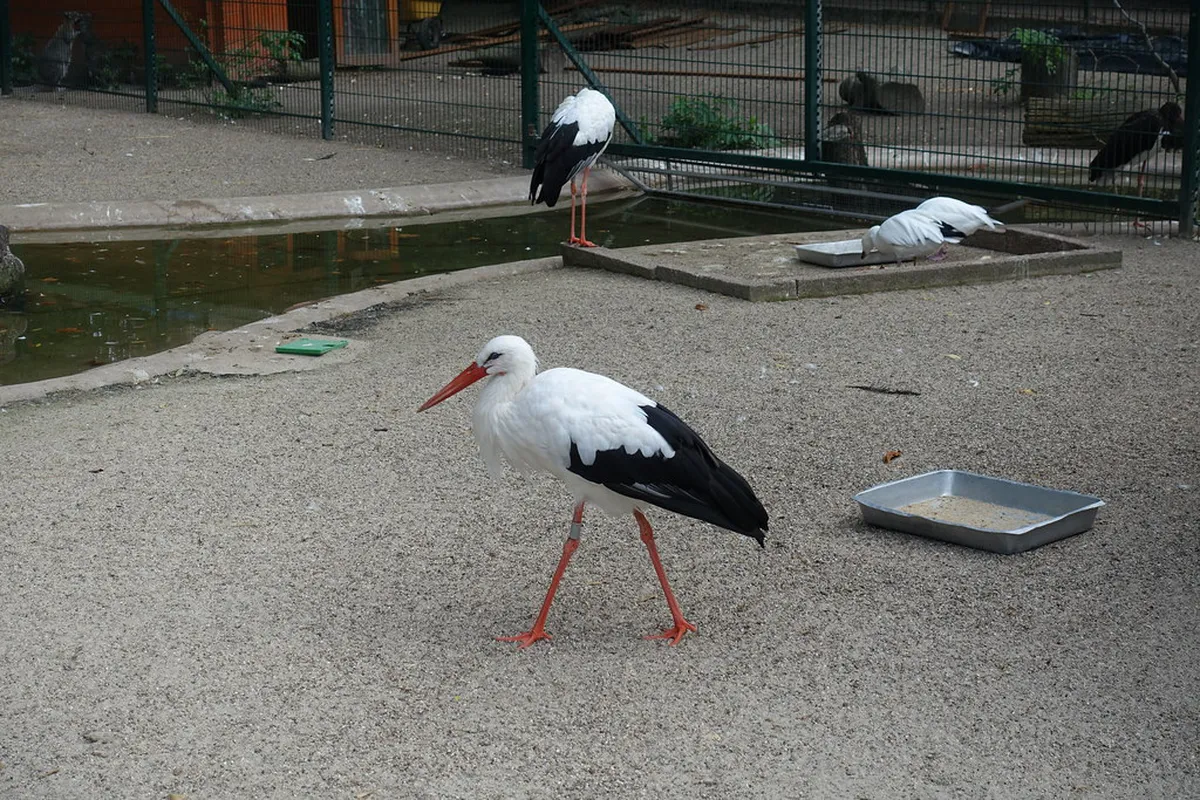
The real stars, though, are the white storks — the emblem of Alsace. Parc de l'Orangerie was home to the first stork reintroduction centre in the region, set up in 1960 when the species had nearly vanished from Alsace, and since then hundreds of storks have been hatched here. Today you can see them year-round in the park's enclosure, but the magic happens from roughly late April through summer, when wild pairs return to build their huge platform nests on chimneys, treetops, and purpose-built poles. Watching the adults clatter their bills and feed their chicks is a quintessentially Alsatian sight, and it is entirely free to enjoy.
Family Activities (boating, mini-golf)
While the park itself is free, a handful of optional activities carry a small charge — and they are exactly what make it such a hit with children. The most popular is boating on the lake: in the warmer months you can rent a rowing boat and paddle out toward the waterfall, with the Pavillon Joséphine as a backdrop, for a modest hourly fee. Near the lake you will also find a bowling alley, children's play areas, and seasonal rides such as the little electric cars and a carousel that delight younger visitors.
In the warmer season the park also typically offers extra family attractions — a mini-golf course and pedal-kart hire are part of the seasonal mix in most years — so it pays to check what is running on the day. None of it is essential: many families simply bring a picnic, let the kids loose on the lawns, watch the storks, and walk the free zoo loop. If you want a budget-friendly day with options to spend a little when you feel like it, the Orangerie is hard to beat.
Getting There (tram E)
The easiest way to reach Parc de l'Orangerie is the city tram. Take tram line E to the Droits de l'Homme stop, which sits right by the park entrance on Avenue de l'Europe — the ride from the city centre takes only a few minutes. Several bus lines (6, 30 and 72) also stop at "Orangerie" if the tram does not suit your route, and the whole area is flat and pram-friendly.
If you are already exploring on foot, the park is an easy 5–10 minute walk from the European Parliament and the Council of Europe, so it pairs naturally with a visit to the European quarter. From the historic centre and the cathedral it is a pleasant 25-minute stroll or a short tram hop. There is no entrance fee and no opening gate, so you can arrive whenever suits you, though the zoo, boating, and seasonal rides keep daytime hours. For a fuller day, combine the Orangerie with Strasbourg's other free and family-friendly highlights below.
Frequently Asked Questions
Is Parc de l'Orangerie free to visit in 2026?
Yes. The park is completely free to enter, and so is its small animal park, or mini-zoo. Only optional extras such as renting a rowing boat on the lake, bowling, or the seasonal rides carry a small charge.
Can you see storks at Parc de l'Orangerie?
Yes. The park hosts the first white-stork reintroduction centre in Alsace, set up in 1960, so you can see storks year-round in the enclosure. Wild pairs nest here from roughly late April through summer, when you can watch them build platform nests and raise their chicks.
How do you get to Parc de l'Orangerie by public transport?
Take tram line E to the Droits de l'Homme stop, right by the park entrance on Avenue de l'Europe, a few minutes from the city centre. Bus lines 6, 30 and 72 also stop nearby, and the park is a 5–10 minute walk from the European Parliament.
Explore More of Strasbourg
- Things to Do in Strasbourg — the full city guide.
- Strasbourg with Kids: Family Guide — more family-friendly outings, including the Orangerie.
- Free Things to Do in Strasbourg — where this free park fits in a budget itinerary.
- La Petite France — the canal-laced old quarter on the other side of town.


