Vieux-Port (Old Port), Marseille: Visitor Guide (2026)
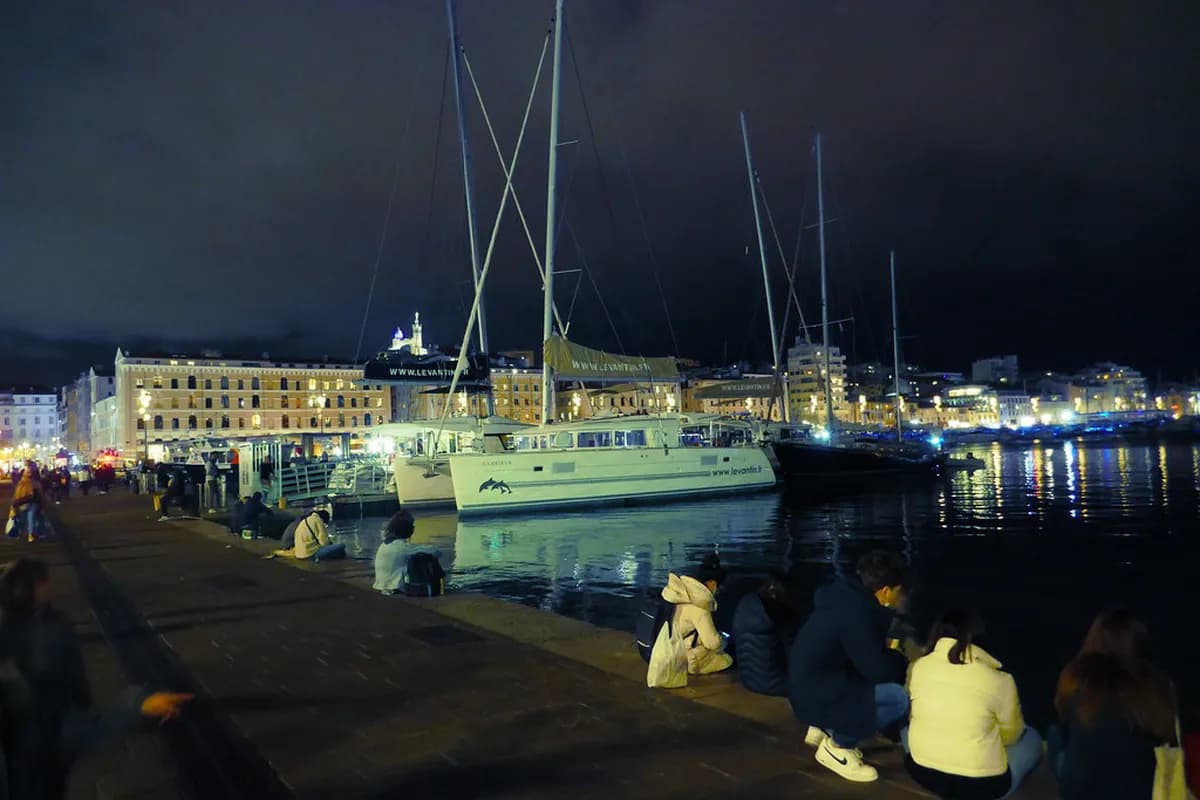
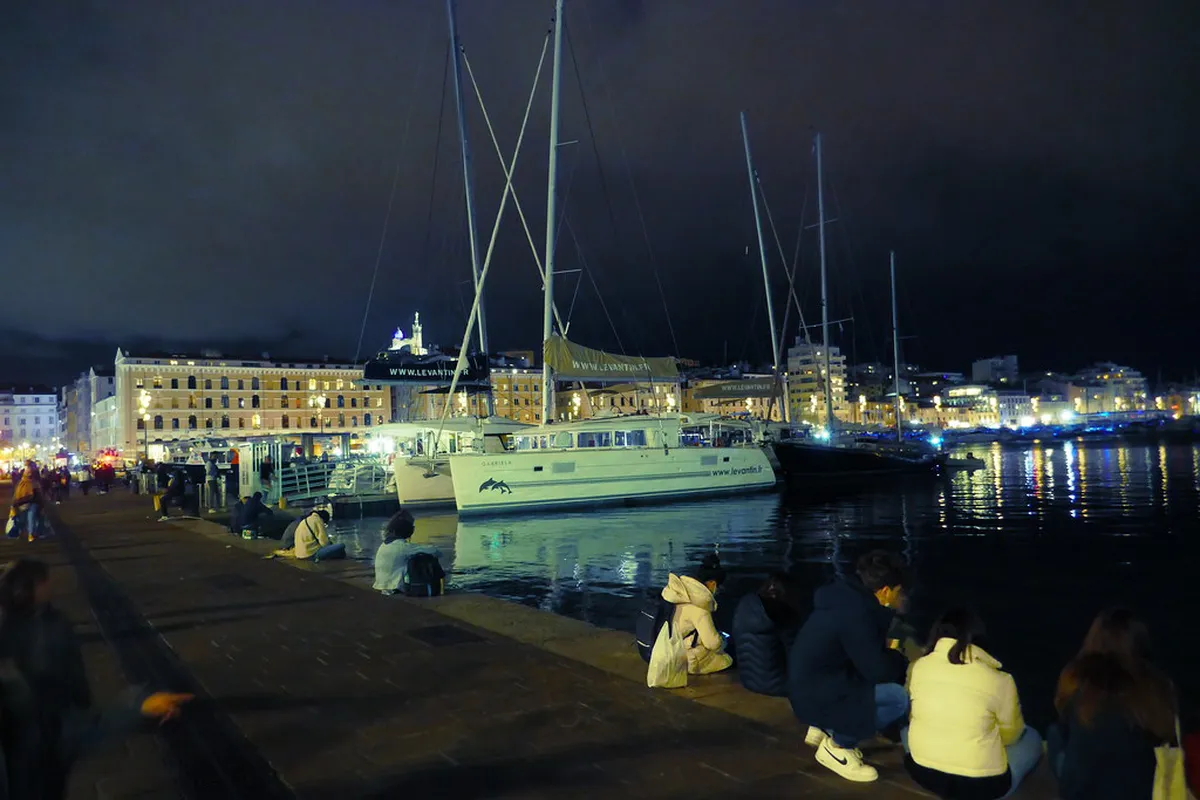
The Vieux-Port — the Old Port — is the historic heart of Marseille and the reason the city exists. The Greeks of Phocaea founded a trading harbour here around 600 BC, and for more than 2,600 years this rectangular inlet has been the city's living room: a forest of white sailboat masts, café terraces, and the comings and goings of fishermen, ferries, and tourists. Pedestrianised and reshaped for Marseille's year as European Capital of Culture in 2013, the port today is a vast, open public space framed by the Quai du Port, the Quai de Rive Neuve, and the Quai des Belges at its head. It costs nothing to wander, and it is the natural starting point for any visit to the city. This guide covers what to see, the famous morning fish market and the little César ferry boat, how to get there, and what lies nearby.
What to See
The Vieux-Port isn't a single monument but a wide, walkable arena of water and quaysides that you experience by strolling its edges. Start at the Quai des Belges at the head of the port — the broad open plaza where the métro surfaces and the boats line up — then walk down either flank. The Quai du Port on the north side runs beneath the hill of Le Panier, the old town, and passes the Hôtel de Ville (City Hall); the Quai de Rive Neuve on the south side is lined with restaurants and leads towards the Abbaye Saint-Victor.
The port's modern signature is L'Ombrière, the mirrored stainless-steel canopy designed by British architect Norman Foster and unveiled in 2013 for Marseille-Provence European Capital of Culture. Roughly 46 metres long and 22 metres wide, supported on slim pillars about 6 metres high, its polished underside reflects the crowd, the boats, and the sky — making it one of the city's most photographed (and free) spots. Look up and you'll see yourself and the whole port mirrored overhead. From the quaysides you also get the classic view towards the twin fortresses guarding the harbour mouth (Fort Saint-Jean and Fort Saint-Nicolas) and up to the golden statue of Notre-Dame de la Garde watching over the city.
The Fish Market & Ferry Boat
Every morning, fishermen tie up along the Quai des Belges (the eastern head of the port, also signed as the Quai de la Fraternité) and sell their catch straight off the boats at the Marché aux Poissons — Marseille's daily fish market. It is the city in miniature: crates of glistening rascasse, conger eel, sea bream, and the spiny fish that go into a true bouillabaisse, sold to a chorus of Marseillais accents. The market runs every morning, roughly 8am to 1pm (some stalls start earlier, around 7:30am, and pack up by midday). It is free to watch and a wonderful slice of local life even if you don't buy a thing.
The port's other great tradition is the César ferry boat — the little shuttle that has crossed the 283-metre span between the Quai du Port (by the Hôtel de Ville) and the Quai de Rive Neuve (facing the Place aux Huiles) since 1880. The current boat, christened the César, has served since 1967 and chugs across in just 3 to 4 minutes with its characteristic teuf-teuf. The crossing costs only €0.50 (and is free for RTM and CityPass holders), making it one of the cheapest and most charming boat rides in France. It runs daily from morning to evening, weather permitting.
The Quai des Belges is also the springboard for longer trips: maritime shuttles and tour boats depart here for the Frioul archipelago and the island fortress of the Château d'If (the prison of Dumas's Count of Monte Cristo), as well as cruises along the dramatic limestone inlets of the Calanques National Park.
Getting There
The Vieux-Port is right in the centre of Marseille and is best reached by métro. Take Métro Line 1 (M1) to the Vieux-Port – Hôtel de Ville station, which surfaces directly onto the Quai des Belges at the head of the port — you step out of the station and the harbour and L'Ombrière are in front of you. The métro runs daily from about 5am to 1am. Numerous bus lines and the city's tram network also serve the surrounding streets.
From the main train station, Marseille Saint-Charles, it is a short one-stop métro ride or roughly a 15-minute downhill walk to the port. The whole port and its quaysides are pedestrianised and step-free, so once you arrive, exploring on foot is easy and pleasant. As an open public space, the Vieux-Port has no entrance, no ticket, and no closing time — it is free and accessible day and night.
Nearby
The Vieux-Port is the perfect base for the rest of central Marseille. Climb the steps on the north side into Le Panier, the city's oldest and most atmospheric quarter, with its art studios, street art, and the grand Vieille Charité. At the harbour mouth sits Fort Saint-Jean, now connected by footbridge to the striking lattice-clad MuCEM (Museum of European and Mediterranean Civilisations). From the south quay you can walk up to the Abbaye Saint-Victor, and the city's icon, the basilica of Notre-Dame de la Garde, crowns the hill above. For the full picture, see our things to do in Marseille guide, our Le Panier & Old Port neighbourhoods guide, and the entity page for Le Panier.
Frequently Asked Questions
Is the Vieux-Port in Marseille free to visit?
Yes. The Vieux-Port (Old Port) is an open, pedestrianised public space at the heart of Marseille, so wandering the quaysides, watching the morning fish market, and standing under Norman Foster's L'Ombrière canopy are all completely free, with no ticket and no opening hours. You only pay if you take the César ferry boat (€0.50) or board a tour boat.
What time is the fish market at the Vieux-Port?
The Marché aux Poissons sets up every morning along the Quai des Belges, roughly from 8am to 1pm — some fishermen start earlier, around 7:30am, and most stalls have packed up by midday. It runs daily and is free to watch.
How do I get to the Vieux-Port by métro?
Take Marseille Métro Line 1 (M1) to the Vieux-Port – Hôtel de Ville station, which opens directly onto the Quai des Belges at the head of the port. From the main Saint-Charles train station it is a single stop or about a 15-minute walk downhill.
Explore More of Marseille
- Things to Do in Marseille — the full city guide.
- Le Panier & Old Port Neighbourhoods Guide — how the historic quarters fit together.
- Le Panier — the old town climbing the hill above the port.