8 Best Hidden Gems in Strasbourg: A Local's Guide (2026)
Discover the 8 best hidden gems in Strasbourg, from secret wine cellars and speakeasies to street art festivals and local thrift havens.
On this page
8 Best Hidden Gems in Strasbourg
The real Strasbourg hides behind the Cathedral crowds. Most visitors spend their entire trip in Petite France and leave without stepping foot in the Krutenau, the imperial Neustadt, or the riverbanks where locals actually sit with a glass of Riesling on summer evenings. These eight hidden gems will completely reframe what you thought you knew about this Alsatian city.
This guide focuses on non-obvious spots that reward a little extra effort. Finding the right Best Time To Visit Strasbourg 2026: 10 Essential Planning Tips matters here too — a few of these gems are at their best in shoulder season, when you can have the cobbled alleyways almost entirely to yourself. From a wine cellar beneath a working hospital to a rooftop nobody seems to know about, here is what 2026 Strasbourg actually looks like for those who know where to look.
The Krutenau: A Local Favorite for Food and Nightlife
The Krutenau was once the neighborhood of fishermen and boatmen, and today it is the most genuinely local district in the city. Located just east of the historic center, it fills up with independent boutiques, small galleries, and student-packed bars the moment the sun goes down. The vibe here is relaxed and creative in a way that the tourist zones can never quite replicate.
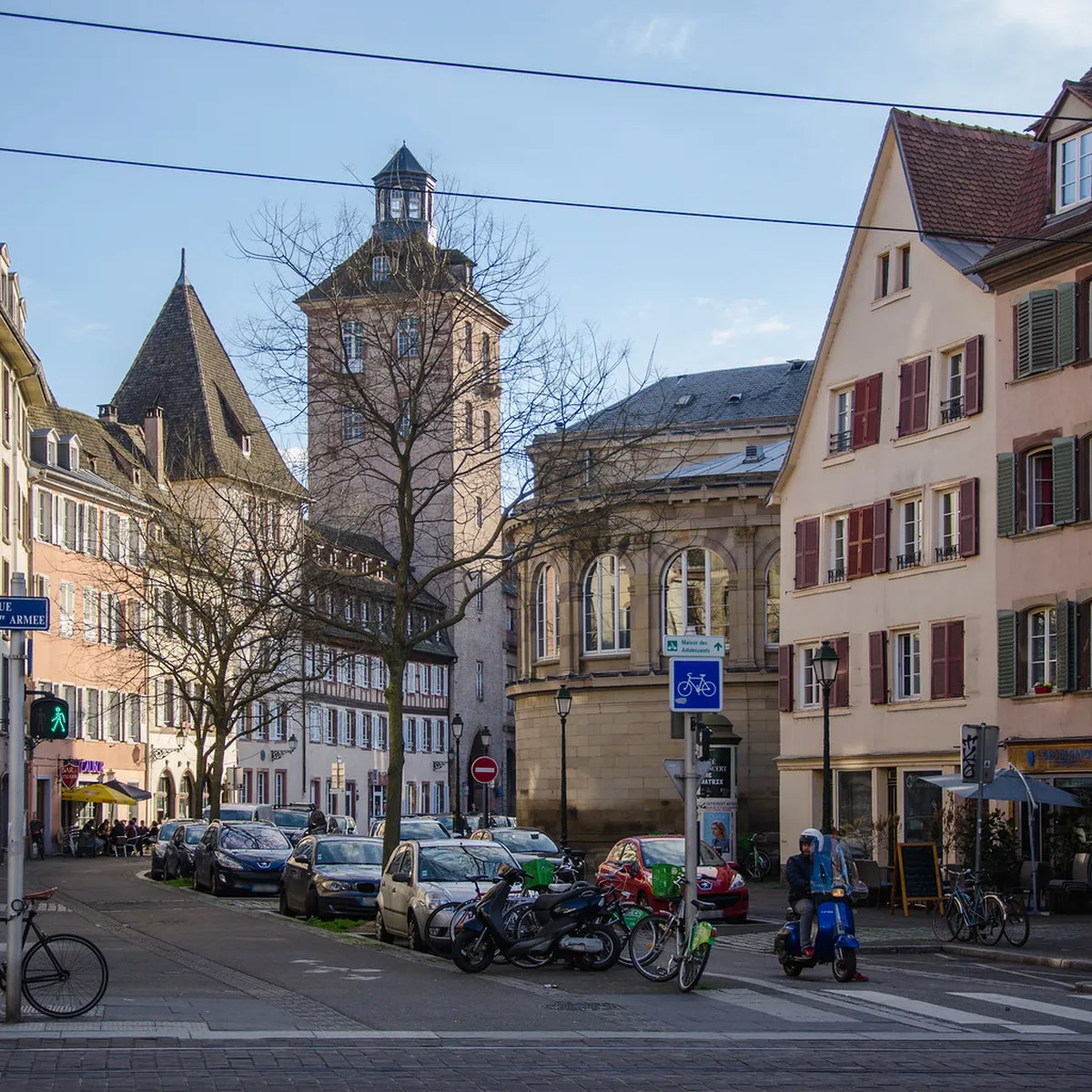
For dinner, skip the menus around Place Kléber and head to the small bistros on Rue de la Krutenau instead. You will find modern takes on Alsatian classics — tarte flambée with seasonal toppings, locally sourced charcuterie — at prices that are 20 to 30 percent lower than comparable restaurants in Petite France. The neighborhood truly comes alive after 21:00 when the small bars start filling up with a mix of students and young professionals.
Café Atlantico on the river is a particular favorite for a long brunch that bleeds into an afternoon drink. It sits right on the water and stays open until 01:30, so it doubles as a relaxed night-out option when you want somewhere quieter than the center.
Quai des Bateliers and the Cour du Corbeau
The Quai des Bateliers is the scenic riverside stretch that locals use when they want the view without the Petite France crowds. The stone steps along the water, directly across from the Palais Rohan, are the standard local move on a warm evening: grab a bottle from a nearby cave à vin, sit down, and watch the Batorama boats drift past. Access is free and open around the clock.
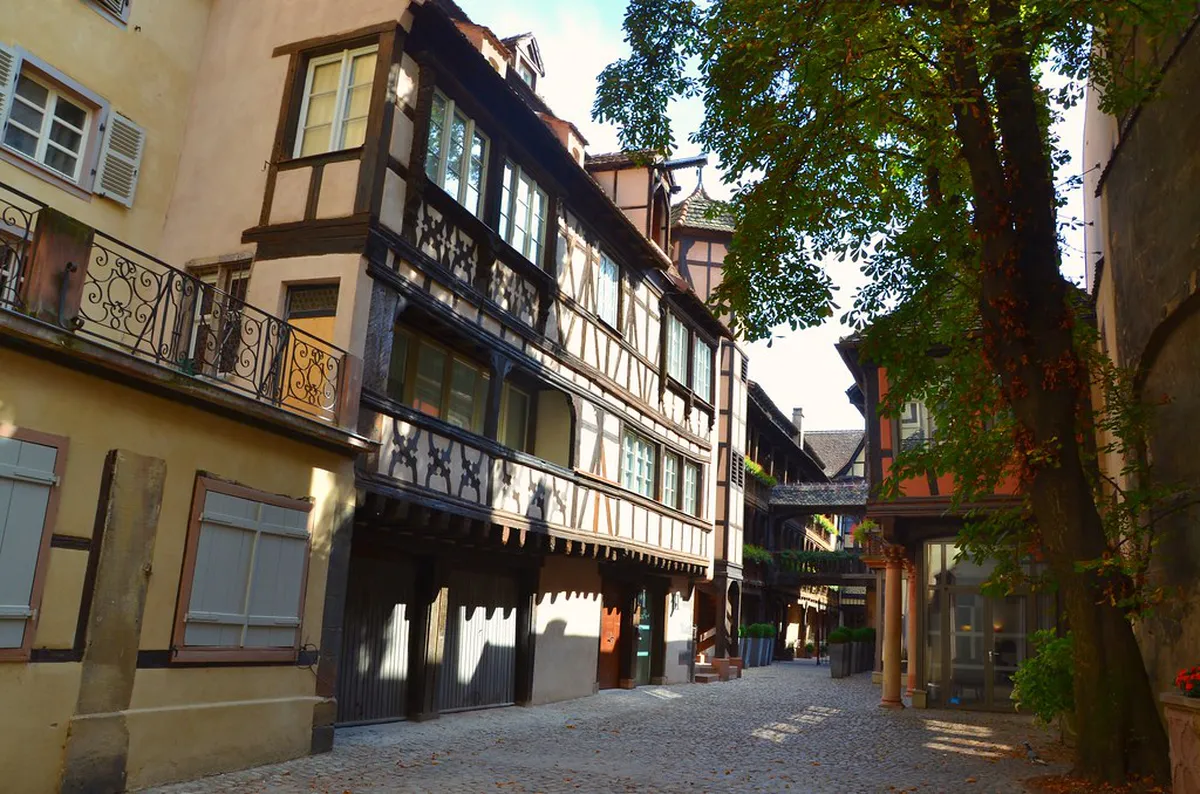
Halfway along this stretch, tucked at 6 Quai des Bateliers, sits the Cour du Corbeau — one of the most atmospheric courtyards in Strasbourg and one that almost no travel article bothers to mention. The building dates to the 14th century and was one of the most important inns on the Rhine trade route, hosting royalty and merchants for over four hundred years. The courtyard is now part of a hotel but the entrance arch is open to the public during the day. Walk through the archway and you step into a half-timbered interior courtyard that feels entirely medieval, a few meters off a busy road but completely removed from the noise.
The Cour du Corbeau is a 14th-century courtyard accessible to the public during daytime hours. The quiet half-timbered interior is a peaceful escape despite being just meters from busy street traffic, making it ideal for a few minutes of reflection away from the Cathedral crowds.
Together, the quai and the Cour du Corbeau make for a natural 30-minute loop that most visitors rushing between the Cathedral and Petite France never discover. It is one of the better free experiences in the city in 2026.
Cave Historique des Hospices: The World's Oldest Barrel-Aged Wine
Hidden beneath the city's main hospital lies a treasure trove of wine history dating back to 1395. The Cave Historique des Hospices was originally used to store wine given as payment for medical care, a system that continued for centuries and produced one of the most remarkable charitable archives in France. Today, it continues to age local vintages in massive, ornate oak barrels in the same vaulted cellars.
The most famous object in the collection is a barrel containing wine from 1472 — rarely tasted, almost certainly undrinkable, but an extraordinary piece of living history. Walking through the cool, damp cellar provides both a sensory break from the busy streets above and a genuine education in Alsatian terroir. The staff can explain the differences between the region's dry Rieslings and its more aromatic Gewürztraminers in real practical terms.
Entry is free and the cellar is open Monday to Friday from 08:30 to 17:30. Take Tram A to the Porte de l'Hôpital stop. Buying a bottle of their Riesling (around 12 to 18 EUR) directly supports the hospital's equipment fund, making it a far more meaningful souvenir than anything sold near the Cathedral. It is located in the Krutenau district, so you can pair this visit with dinner on Rue de la Krutenau the same evening.
The Neustadt: Exploring the UNESCO-Listed Imperial District
The Neustadt represents a completely different side of Strasbourg's complex history. Built during the German annexation in the late 19th century, it features wide Haussmann-style boulevards, monumental Neo-Renaissance and Neo-Gothic public buildings, and a scale that feels closer to Vienna or Berlin than to the medieval alleyways of the Grand-Île. This area was added to the UNESCO World Heritage list in 2017 for its distinctive urban planning and its unusual status as a planned German imperial capital built on French soil.
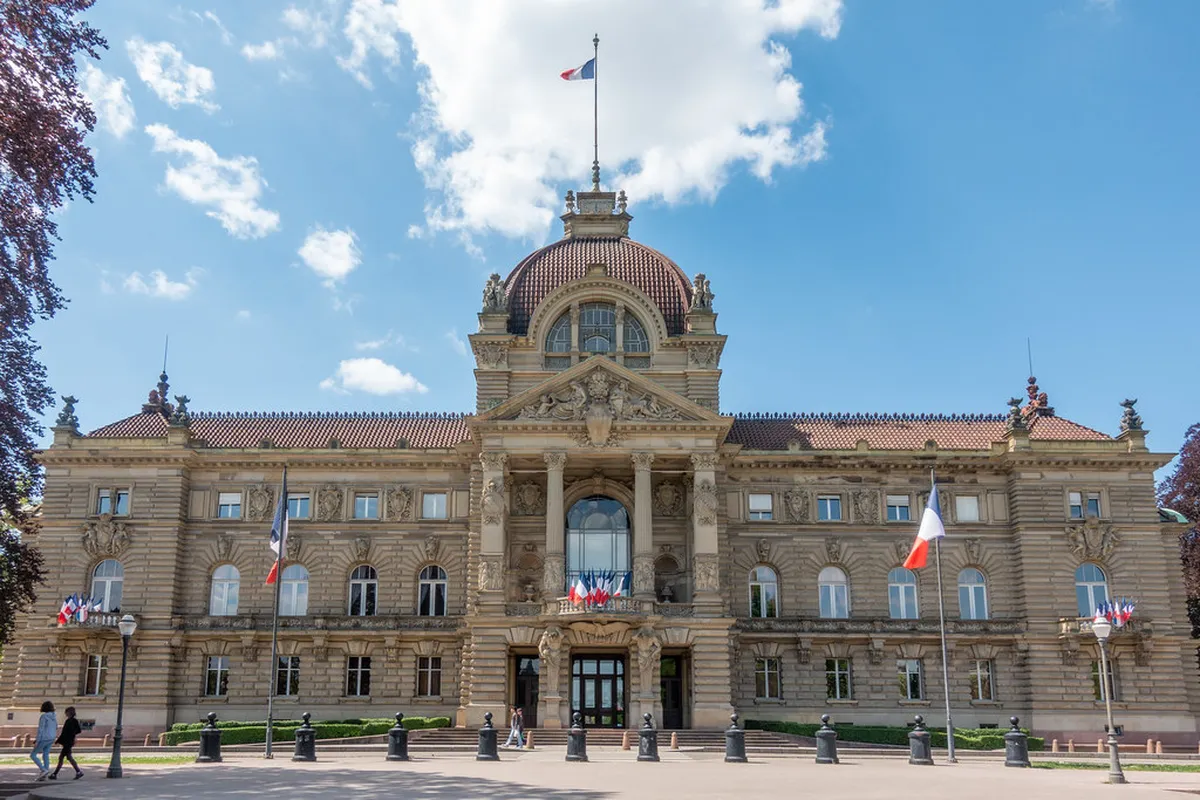
The walk from Place de la République toward the University Library takes you past the best of the district's architecture. The Prefecture building, the National Theatre of Strasbourg, and the main Post Office are all worth pausing at. The Lycée International des Pontonniers on Rue des Pontonniers is arguably the most photographed secondary school in France — its Neo-Gothic facade sits in a quiet residential street where you will rarely see another tourist.
The Bains Municipaux at 10 Rue des Couples is a highlight. Recently restored at considerable expense, it offers swimming in an original pool surrounded by marble columns and intricate Art Nouveau tilework. Entry to the pool is around 5 EUR; full spa access costs roughly 22 EUR. Weekday mornings are quietest. This is a working community facility used by local families and elderly residents — treat it accordingly and you will be made very welcome.
Aedaen Place: Finding the City's Best Speakeasy
Walking into Aedaen Place feels like stepping back into the Roaring Twenties with a modern French twist. The entrance is hidden behind a false wall inside a functioning pizza restaurant on Rue des Aveugles, near the Rue du Bain-aux-Plantes. Here is how it works: walk into the pizza shop, ignore the dining room, and look for a staff member near the kitchen area. Ask for "the library" or simply say you have a reservation — the host will guide you through a hidden door into a completely different space.
Once inside, the atmosphere shifts from casual dining to an opulent lounge: velvet banquettes, vintage furniture, low lighting, and a bar stocked with Alsatian spirits alongside the standard international range. The mixologists craft cocktails using local seasonal ingredients — expect to pay 12 to 18 EUR per drink. The bar opens daily at 18:00. Arrive by 18:30 on weekends if you want a table without a wait, as this is genuinely popular with locals, not just tourists who have read about it online.
The same venue also runs a more visible restaurant section where you can try traditional Alsatian food before or after the bar. The contrast between the bright dining room and the dark, theatrical speakeasy is part of the appeal. It remains one of the city's best-kept secrets for evening drinks.
Colors Urban Art Festival: Strasbourg's Street Art Scene
Modern art thrives in the industrial corners of the city, far from the gothic spires of the center. The Colors Art Festival transforms the 67100 postal district into an open-air museum every September, when local and international artists take over the gray walls of former industrial buildings for live painting sessions. Studio 116 at 23 Rue Saglio serves as the creative hub during festival weeks, with indoor gallery space and direct access to the artists at work.
The murals remain year-round long after the festival ends, so this neighborhood is worth visiting in any season. A morning walk through the streets around Rue Saglio and Rue des Grandes Arcades Strasbourg Sud will take you past pieces on a scale that rivals the famous street art districts of Berlin. Most tourists never make it this far south, but the tram ride from the center takes under ten minutes.
The festival itself, held each September since 2012, draws artists from across Europe and has quietly built a strong international reputation on the urban art circuit. If you are visiting during that window, check the Colors festival website for the schedule of public events and open studio sessions — most are free to attend.
Thrifting and Local Crafts: Emmaüs and Petite France Artisans
Strasbourg's local artisan scene is considerably more interesting than the souvenir shops clustered around the Cathedral. In Petite France, several artist collective stores allow independent makers to sell ceramics, prints, and textiles directly — you will typically pay 30 to 50 percent less than you would for comparable work in the tourist-heavy shops on the main square, and the items are actually made by people who live in Alsace.
Youngmi Kim's watercolor studio near Rue du Bain-aux-Plantes is the standout individual artist in this area. Her paintings capture Strasbourg's light and architecture in a way that feels both precise and atmospheric. The most sought-after pieces are framed in arch-window shaped frames — designed to look like you always have a window looking into Strasbourg on your wall. Small prints start around 15 EUR; original pieces run from 40 EUR upward. The studio keeps irregular afternoon hours, so check before making a special trip.
For secondhand and vintage, Communauté Emmaüs in Vendenheim is a giant warehouse goldmine. The kitchenware room alone is worth the trip — some pieces start at 50 cents, and the mid-century French cookware selection is genuinely impressive. Take Tram D or F to Lingolsheim then a connecting bus north, or use the Emmaüs Strasbourg map for bus routing from the center. It is open Wednesday and Saturday afternoons. Bring cash and a large bag.
The Galeries Lafayette Rooftop: The Free View Nobody Talks About
Every travel article about Strasbourg sends you to the Barrage Vauban terrace or up the Cathedral platform for the city panorama. Both are worth doing. But the rooftop terrace of the Galeries Lafayette department store on Rue des Grandes Arcades is a completely free alternative that almost nobody mentions — and the view it offers of the Cathedral's spire, framed against the Alsatian skyline, is arguably the single best photograph you can take in the city without paying for a ticket.
The rooftop terrace at Galeries Lafayette offers a 360-degree view of the Cathedral spire and Alsatian skyline without any admission fee. Visit in late afternoon for the best light, and plan for 15–20 minutes to orient yourself before heading into the old town on foot.
Access is straightforward: walk into the store, take the escalator to the top floor, and step outside onto the terrace. There are no queues, no timed entry slots, and no admission fee. The terrace is open whenever the store is open — typically 09:30 to 19:30 Monday to Saturday. The angle looking northwest toward the Cathedral spire and the rooftops of the Grand-Île is particularly good in late afternoon light.
It is a useful tip for first-timers who want to orient themselves geographically before heading into the old town on foot. Standing up there for ten minutes, watching the trams cross Place Kléber below, gives you a clear mental map of how the city's neighborhoods relate to each other. Combine it with a coffee at one of the independent cafés on Rue des Orfèvres on your way back down.
Planning Your Trip: Transport and Timing for Hidden Gems
Strasbourg has one of the best urban tram networks in Europe and you will rarely need a taxi. For short stays, buy a paper ticket at any tram stop and load it with a day pass or a pack of ten single trips. For longer stays, get a Badgeo Card from a CTS agency and manage it via the CTS app — it works across trams, buses, and some regional routes. One critical detail: validate your ticket before boarding, not on the tram itself. There are no on-board machines, and inspectors check regularly.
The Strasbourg City Card covers unlimited tram and bus travel plus free or discounted entry to museums. It starts at around 15 EUR for 24 hours. It is worth it if you plan to visit the European Parliament Hemicycle, which requires a valid ID and advance booking during plenary sessions (entry is otherwise free on weekday mornings — take Tram E to the Parlement Européen stop and arrive 15 minutes early for security).
When deciding where to stay in Strasbourg, the Neustadt and Krutenau neighborhoods offer the best combination of local atmosphere and easy access to the sights. Both are quieter than the Grand-Île at night and connect directly to the tram network. Book at least three months ahead for December visits — the Christmas market period fills the city entirely and prices rise steeply. For all other months in 2026, two to three weeks of lead time is generally sufficient.
Frequently Asked Questions
What are the best non-touristy things to do in Strasbourg?
Visit the Cave Historique des Hospices to see the world's oldest wine or explore the street art in the 67100 district. These spots offer a local perspective away from the main Cathedral crowds. Check out more 12 Best Things to Do in Strasbourg 2026 for a balanced trip.
Is the Cave Historique des Hospices worth visiting?
Yes, it is a fascinating and free historical site located beneath a working hospital. You can see ancient wine barrels and learn about the charitable history of Alsatian winemaking. It only takes about 45 minutes to tour the vaulted cellars.
How do I find the speakeasy at Aedaen Place?
Enter the Aedaen Place pizza shop on Rue des Aveugles and look for a hidden door behind a velvet curtain. The staff can guide you to the secret bar if you ask for the library. It is one of the city's best-kept secrets for cocktails.
Strasbourg is far more than just a gateway to the Alsace wine route or a backdrop for Christmas markets. By stepping into the speakeasies of the Krutenau, walking the medieval courtyard of the Cour du Corbeau, or looking down at the Cathedral from the Galeries Lafayette rooftop, you discover the city's true character. These hidden gems provide the stories and memories that outlast any generic itinerary.
Take your time, talk to the local artisans in Petite France, and always look for the hidden doors. The real Strasbourg in 2026 rewards curiosity above all else.
You might also like


Continue reading
More guides you'll find useful