10 Hidden Gems in Montpellier: A Local's Secret Guide (2026)
Discover the best hidden gems in Montpellier, from the world's oldest medical school to secret medieval courtyards and local markets. Updated for 2026.
On this page
10 Hidden Gems in Montpellier
The Écusson, Montpellier's limestone-walled historic heart, is one of the most walkable medieval neighborhoods in southern France. While most visitors spend their time on Place de la Comédie, the real character of the city hides behind half-open wooden doors, under aqueduct arches, and along streets that rarely appear in any brochure. This guide, updated for 2026, covers the specific spots that locals return to again and again. Whether you are already convinced or still wondering Is Montpellier Worth Visiting Travel Guide, these places settle the question.
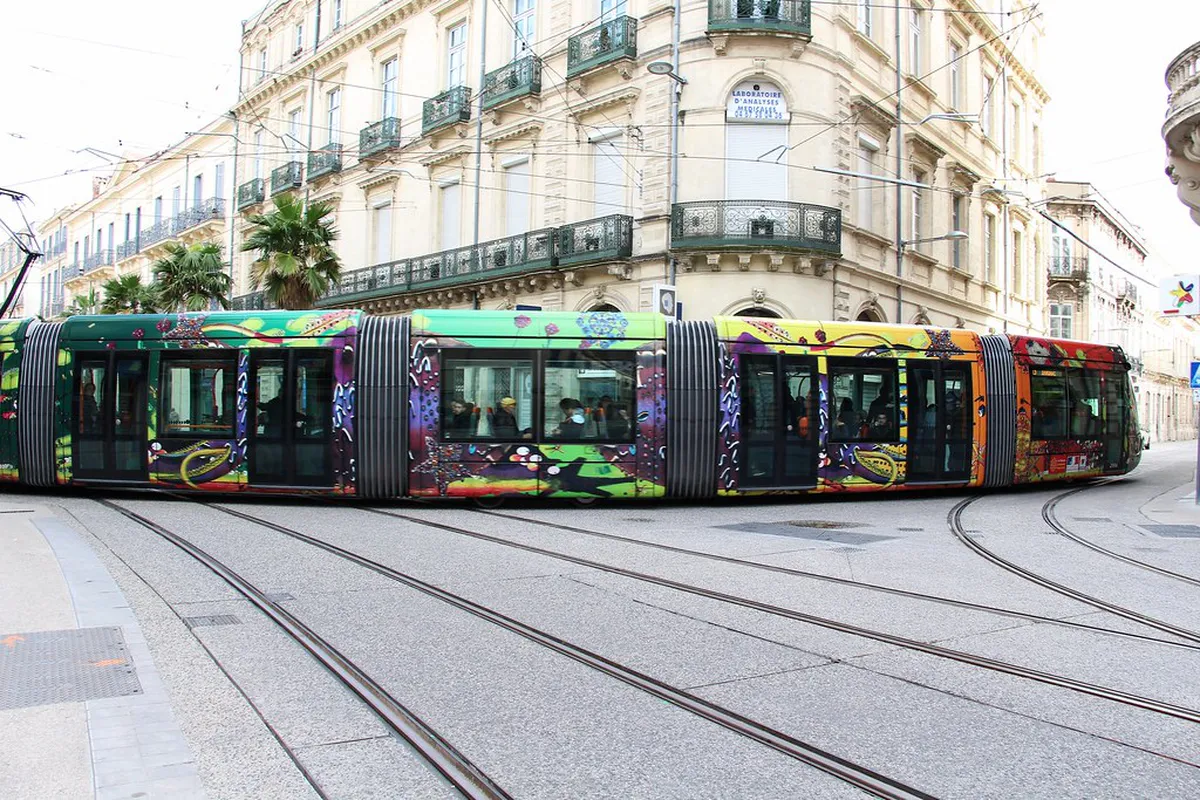
Montpellier is a university city of around 300,000 people, which means it has the energy and affordability of a student town alongside serious cultural infrastructure. The tram network is excellent and gets you to most of these spots without a car. Staying centrally — somewhere near the Comédie, such as the Grand Hôtel du Midi Montpellier — puts you within ten minutes' walk of half this list. The other half require a short tram or bike ride, but none is a serious detour.
Free guide: France's Hidden Gems
12 under-the-radar places across Provence, Alsace & Occitanie — with the best season to visit each and a local tip you won't find in the guidebooks.
The Écusson: Medieval Streets Worth Losing Yourself In
The best approach to the Écusson is to ignore the map for the first hour. The old town is compact enough that you cannot get seriously lost, and the random turns produce better results than any itinerary. Streets like Rue du Bras de Fer, Rue de l'Ancien Courrier, and Rue de la Vieille are lined with independent bookshops, soap sellers, and café terraces tucked into 15th-century stone buildings.
Rue du Bras de Fer in particular is one of the most photographed streets in the city for good reason. It is narrow and slightly winding, with a wrought-iron sign arching overhead and colourful tiled steps at one end. The blend of secondhand bookshops, flower stalls, and corner cafés gives it a lived-in quality that the main shopping streets lack entirely. Come in the morning before 09:00 when the light hits the warm stone at its best.
The architecture is a layered mix of medieval lanes opening onto grand 17th and 18th-century squares. Faded shutters, iron balconies, and sun-bleached plaster create a palette that looks better in person than in any photograph. The Écusson rewards slow walking and punishes rushing. These 10 Best Things to Do in Montpellier 2026 (Local Guide) take on a completely different quality when you give them proper time.
Place de la Canourgue: The City's Oldest and Quietest Square
Place de la Canourgue sits in the upper Écusson, a few minutes' walk from the Promenade du Peyrou, and has an atmosphere completely different from the busier squares below. It is leafy and shaded, with garden benches arranged around a small central fountain and views of the Cathedral Saint-Pierre towers rising above the surrounding rooftops.
The square dates to the medieval period and is lined with 17th-century townhouses that have barely changed in three centuries. Several good lunch spots and wine bars face the square, making it a natural place to pause on a longer walk through the old town. In summer the plane trees provide shade that the more open plazas cannot offer. Arrive before noon if you want a bench in the shade.
Entry is free and the square is accessible at all hours. It lacks the tourist infrastructure of Place de la Comédie, which is exactly the point. On weekday mornings you will mostly share it with local residents and students cutting through from the faculty buildings nearby.
Promenade du Peyrou and the Château d'Eau Water Tower
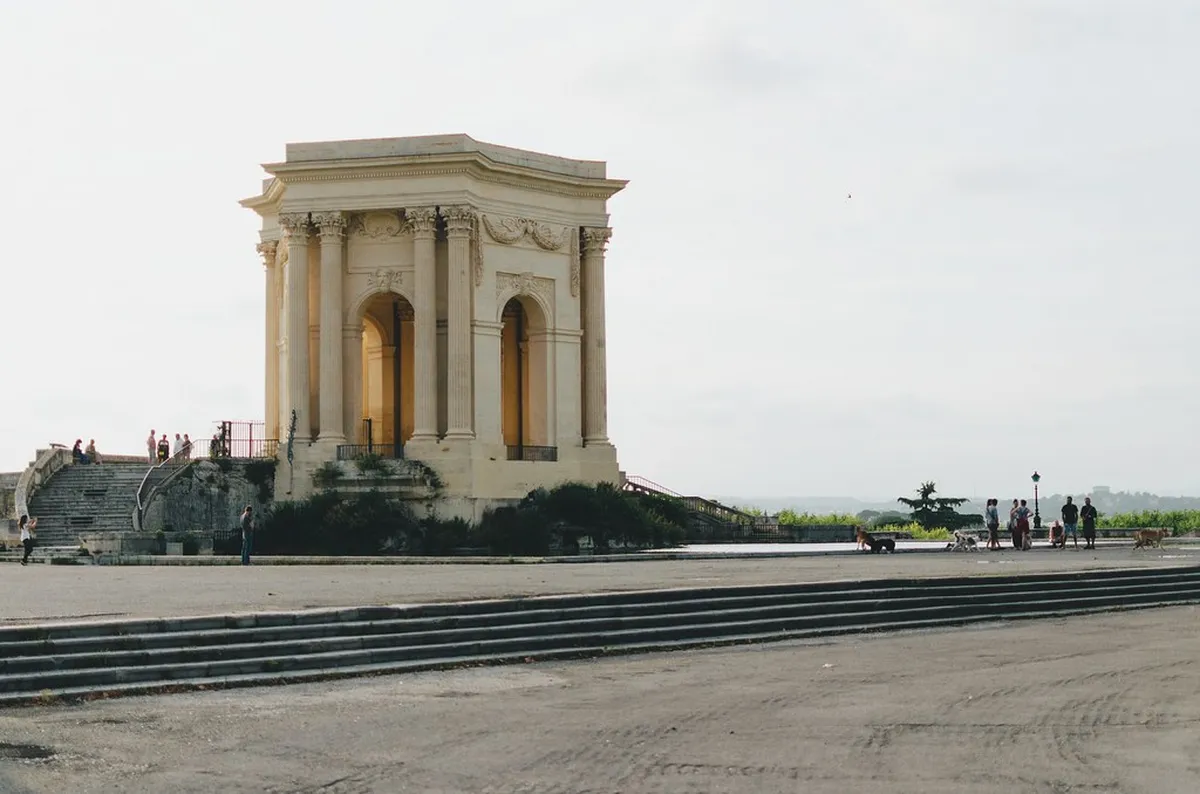
The Promenade du Peyrou is a formal 17th-century elevated park at the western edge of the old city, and it offers the best panoramic view in Montpellier. On a clear day you can see across the rooftops to the Cévennes mountains in one direction and, on the clearest winter mornings, a faint suggestion of the Mediterranean in the other. The central esplanade is anchored by an equestrian statue of Louis XIV and framed at one end by the Arc de Triomphe.
The real hidden-gem element here is the Château d'Eau at the far end — a hexagonal water tower from 1768 that served as the terminal point of the Saint-Clément aqueduct. Most visitors photograph the Arc and move on without walking the full length of the promenade to reach it. The aqueduct walk alongside the Château d'Eau is genuinely quiet and provides a different angle on the city's engineering history. The structure is free to view and the surrounding park benches are rarely crowded outside summer weekends.
The Arc de Triomphe itself was built in the 1690s to honour Louis XIV and modelled on Paris's Porte Saint-Denis. The carved panels on the arch depict scenes from the king's campaigns. From here the descent back into the Écusson takes you past the back walls of several hôtels particuliers — the private mansions that define the neighborhood's upper streets.
The Hôtels Particuliers: How to See Inside the Private Courtyards
Montpellier built its wealth in the 17th and 18th centuries on the wool and dye trades, and the city's merchant class invested that wealth in grand townhouses known as hôtels particuliers. There are over 150 of them in the Écusson, and from the street they look like ordinary stone facades with heavy wooden carriage doors. Behind those doors are vaulted passageways, monumental stone staircases, and internal courtyards with elaborate ironwork balustrades.
The local custom worth knowing: these doors are sometimes left ajar in warmer months to ventilate the ground-floor corridor. When a door stands slightly open and the entrance appears to be a public passageway rather than a private lobby, it is generally acceptable to step quietly inside and look at the courtyard. The key word is quietly — many of these buildings are still residential. Do not photograph people, do not open secondary doors, and retreat if anyone indicates the space is private.
Look for slightly open wooden carriage doors on 17th-century mansion facades in the upper Écusson. If the entrance looks like a public passageway (not a private lobby), you can step inside to view the courtyard — but always remain quiet and respectful, as residents may be present. Summer months offer the best chance of finding doors ventilated open.
For guaranteed access to interiors, the Tourist Office on Place de la Comédie runs specialist architectural walking tours that typically cost between €12 and €18 depending on the route. These tours visit four or five courtyards that are ordinarily closed and include the guide's explanation of how each mansion reflects its owner's social ambitions. Book at least a day ahead in summer as spaces fill quickly. The Montpellier old town guide lists the current tour schedule.
The Mikvé: A 12th-Century Jewish Ritual Bath Beneath the Streets
The Mikvé on Rue de la Barralerie is one of the most unusual underground sites in France. It is a well-preserved medieval ritual bath dating to the 12th century, constructed during a period when Montpellier had a substantial and influential Jewish community. The community was expelled in 1394 following the French crown's absorption of the city, and the bath was sealed. It was only rediscovered during building works in the 20th century.
Access is strictly by guided tour organised through the Tourist Office. Tours cost approximately €10 per adult and typically run on specific days of the week — check the current schedule when you arrive, as it varies by season. The entrance is through an unmarked door that gives nothing away from the street, which adds to the sense of discovery. The chamber itself is carved into the bedrock and descends via a stone staircase to a small pool still partially fed by an underground spring.
Book your Mikvé tour at the Tourist Office on Place de la Comédie well in advance, especially in summer — tours fill quickly and run on specific days of the week. The entrance is an unmarked door on Rue de la Barralerie with no street-level indication, so you must arrive with the guide. Tours include context about Montpellier's medieval Jewish quarter's relationship to the medical school and markets, which deepens the historical significance of the site.
This is one of only a handful of surviving medieval mikvot in France and is significantly older than more famous examples elsewhere in Europe. The guide's explanation of the Jewish quarter's geography — how it related to the medical school and the market streets — makes the visit considerably richer than simply seeing the bath itself.
Marché des Arceaux: Local Market Under a 17th-Century Aqueduct
The Marché des Arceaux runs on Tuesday and Saturday mornings from around 07:00 to 13:30, occupying the street directly beneath the arches of the Saint-Clément aqueduct. The setting is striking — stall canopies are pitched against the rhythm of the stone arches, and the market extends for several hundred metres along both sides of the road. It has a genuinely local character: most shoppers are neighbourhood residents rather than tourists.
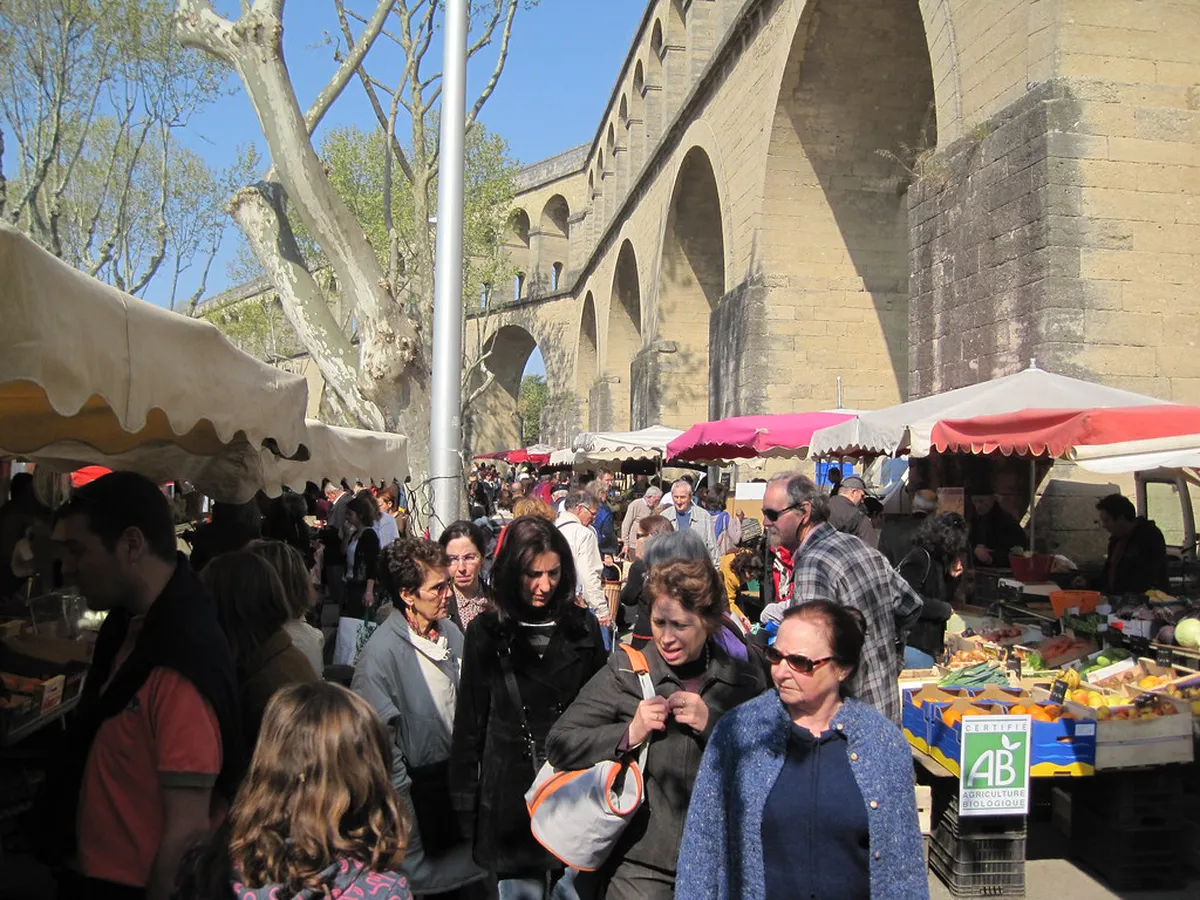
Saturday morning is the better visit if you have a choice. The flower section is larger, the cheesemakers bring fuller displays, and the crowds, while heavier, are more festive. Arrive before 09:00 to move freely and secure the best pastries from the boulangerie stalls. By 11:00 the aqueduct arches fill with a more social atmosphere as people stop to eat and chat at the edge of the market. Local farmers from the Hérault valley sell organic vegetables, honey from the garrigue, and Picpoul de Pinet wine by the bottle at competitive prices.
Check our guide to the Montpellier markets for the full map of which stalls appear on which days. The Tuesday market is smaller but less crowded, making it preferable if you want to talk to producers without the Saturday noise.
MO.CO. Panacée and Musée Fabre: Two Art Spaces Most Visitors Miss
MO.CO. Panacée occupies a former royal college of medicine in the heart of the Écusson and shows rotating contemporary exhibitions that regularly feature international artists. Entry is free, hours run Wednesday through Sunday, and the inner courtyard café is one of the best spots in the city for a quiet coffee without the tourist markup of the main square. The contrast between the 18th-century stone architecture and whatever is currently showing inside is reliably interesting.
The Musée Fabre, just off the Esplanade Charles-de-Gaulle, holds one of the strongest provincial art collections in France — works by Courbet, Delacroix, and Frédéric Bazille alongside contemporary acquisitions. The building is 19th-century with a later modernised wing that brings in good natural light. It is manageable in size: a focused visit of 90 minutes covers the main collection without fatigue. Admission is around €8 for adults, free on the first Sunday of each month.
Both spaces are frequently overlooked in favour of the Jardin des Plantes and the old-town architecture. The combination of MO.CO. in the morning and Musée Fabre in the afternoon makes a full day in itself for anyone with a serious interest in art.
Marché du Lez: The Creative Riverbank District No Guide Covers
The Marché du Lez in the Nouveau Saint-Roch quarter occupies a converted industrial site on the banks of the Lez river, roughly 20 minutes on foot east of the Comédie or one stop on tram line 1 to the Port Marianne area. It is part market, part design village, part food hall — and on weekend afternoons it is where a significant portion of Montpellier's under-35 population actually spends its time. The site includes permanent boutiques from local clothing designers, a record shop, a barber, and a dozen food and drink traders that change seasonally.
What makes it worth including in a hidden-gems list is the street art covering the industrial walls. Local and visiting muralists have treated the compound's exterior as a continuous canvas, and the quality is significantly higher than the scattered trompe-l'œil in the old town. Weekends between noon and 18:00 are the most active. The food stalls — Neapolitan pizza, Vietnamese bánh mì, craft beer from a local microbrewery — are considerably cheaper than anything in the tourist centre.
This is not in any standard guidebook to Montpellier and is barely mentioned in English-language travel writing. It opened in its current form around 2015 and has evolved steadily since. Locals who grow tired of the Antigone promenade come here instead. Take tram line 1 east toward Odysseum and get off at the Léon Blum stop, then walk five minutes south along the riverbank.
The Antigone District: Neoclassical Architecture from the 1980s
The Antigone district was designed by Catalan architect Ricardo Bofill and built between 1979 and 2000 as an ambitious attempt to create a new urban neighborhood in a monumental neoclassical style. It stretches from the Polygone shopping centre east toward the Lez river and consists of a long axis of symmetrical plazas, colonnaded facades, and oversized classical ornament executed in pale concrete and local stone.
The paradox is that it is both immediately visible on any city map and consistently missed by visitors who assume it is simply a modern housing estate. It is in fact one of the most coherent examples of postmodern civic architecture in Europe, and Bofill's ability to give social housing the visual vocabulary of a Parisian palace is worth several hours of walking. The sequence of spaces — from Place du Nombre d'Or to Place du Millénaire — works best when you walk the full east-west axis rather than dipping in at a single point.
Walking through is free at all hours. The district is quiet early on weekday mornings, which is the best time to see the proportions without distraction. It functions as a counterpoint to the medieval center: two radically different ideas about what a city should look like, separated by about ten minutes' walk.
Jardin des Plantes and La Serre Amazonienne: Two Green Escapes
The Jardin des Plantes de Montpellier is the oldest botanical garden in France, founded in 1593 to supply medicinal plants to the Faculty of Medicine. It is now a public park on the northern edge of the old town, free to enter Tuesday through Sunday from 12:00 to 18:00 (hours vary slightly by season). The layout still reflects its scientific origins — beds are organised by plant family and origin — but the feeling inside is of a slightly overgrown urban garden rather than a formal showpiece. Locals use it for lunch breaks, and it is never as crowded as the Peyrou promenade.
For a completely different atmosphere, La Serre Amazonienne at the Montpellier Zoo recreates a tropical rainforest environment in a large glass structure on the university campus, reachable via tram line 1 to the Universités stop. Tickets cost approximately €7 for the greenhouse; the surrounding zoo grounds are free. It opens daily 10:00 to 17:00 with reduced winter hours. Inside, the humidity is noticeable, exotic birds move freely through the canopy, and the scale of the planting makes the city outside feel very far away.
The two gardens make a logical half-day combination. Start at the Jardin des Plantes in the early afternoon when it opens, then take the tram out to La Serre before it closes at 17:00. Consider booking a Montpellier wine tour for the evening to round out a day that has moved from medieval botany to rainforest to Languedoc vineyard.
The World's Oldest Medical School and Its Anatomy Theatre
The University of Montpellier Faculty of Medicine is the oldest continuously operating medical school in the Western world, officially founded in 1220 — though its origins as an informal teaching centre predate that by at least a century. The building sits just behind Cathedral Saint-Pierre and looks, from the outside, like any other institutional block in the upper Écusson. The interior is extraordinary.
Guided tours of the Anatomy Theatre, historic library, and pharmacy collection run on specific days and must be booked through the Tourist Office, typically at €12 per adult. The 17th-century anatomy theatre — a steeply raked circular room where public dissections were once conducted before an audience of students and curious citizens — is the most dramatic space. The library holds manuscripts and illustrated atlases dating to the 15th century. Tours are not offered daily, and the calendar changes between academic term and holiday periods, so check availability when you arrive in the city.
The medical school's location next to the cathedral is not accidental. In the medieval period, the teaching of medicine, the practice of pharmacy, and the city's Jewish community (which produced many of the early physicians) were all concentrated in this same quarter of the Écusson. Walking from the Mikvé on Rue de la Barralerie to the Faculty of Medicine takes about five minutes and covers roughly 800 years of connected history.
Trompe-l'œil Murals: The Écusson's Street-Art Tradition
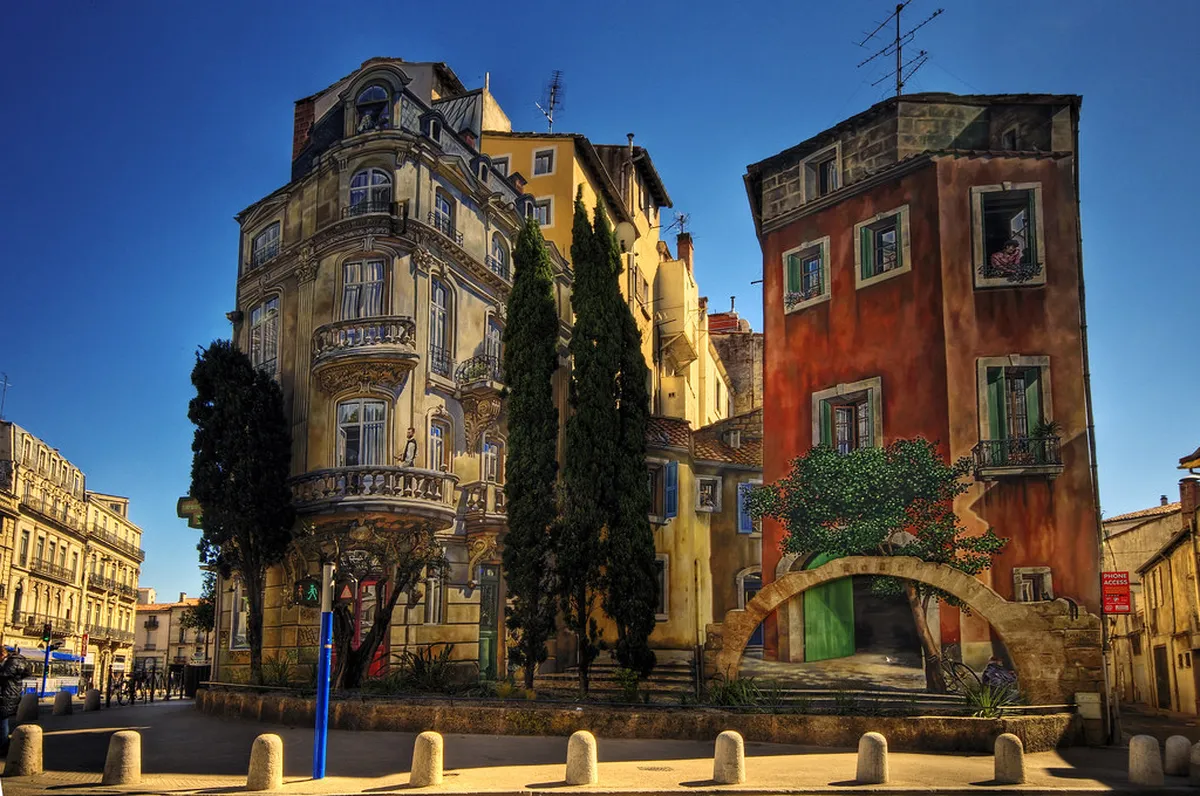
Large-scale trompe-l'œil murals are painted on building facades throughout the old town, creating optical illusions of windows, balconies, and inhabitants that do not exist. The tradition is well established enough that there are now a dozen examples spread across the Écusson, each with a different style and degree of ambition.
The most discussed example is on Rue de l'Aiguillerie, where a multi-storey painting shows imagined residents leaning out of windows, reading, or hanging laundry. Another strong piece appears near Place Saint-Roch, where an entire side wall is painted to mirror the street scene opposite. Finding all of them makes a free and genuinely engaging self-guided walk through the old town. The murals are visible at all hours and require no tickets or booking.
The scavenger-hunt apps available for Montpellier — including the World City Trail game-format walk — incorporate several of these murals into their puzzle routes. If you prefer a human guide, Cityunscripted connects visitors with local hosts who design personalised walks around your specific interests. The app costs around €25 per team; the local host experience typically runs €50 to €80 depending on duration. Both are legitimate options. The app suits independent travellers who want flexibility; the hosted walk is better if you want someone to explain the history behind what you are looking at.
Frequently Asked Questions
What is the oldest medical school in the world?
The University of Montpellier Faculty of Medicine is the oldest continuously operating medical school in the Western world. It was officially founded in the 12th century and remains a prestigious institution today. Visitors can see its historic buildings near the cathedral.
How do I find the hidden courtyards in Montpellier?
You can find hidden courtyards by looking for slightly open doors on historic mansions in the Écusson district. For guaranteed access, book a guided architectural tour through the Tourist Office. Always remain respectful as many of these are private homes.
Is the Marché des Arceaux open every day?
No, the Marché des Arceaux is only open on Tuesday and Saturday mornings. It is located under the historic Saint-Clément aqueduct and features local organic produce. Arrive early to experience the best selection of artisanal goods.
Montpellier is a city that hands out its best discoveries slowly and only to those who slow down enough to notice them. The Mikvé beneath Rue de la Barralerie, the courtyards behind half-open carriage doors, the Marché du Lez on a Saturday afternoon — these are not experiences you stumble into on a two-hour walking tour. They require a little planning and a willingness to walk past the obvious. The reward is a city that feels entirely yours by the time you leave.
The Occitanie region around Montpellier extends those possibilities further: the Camargue, the Hérault vineyards, and the medieval villages of the Hérault valley are all within an hour. But the city itself, given proper time, is more than enough.
Free guide: France's Hidden Gems
12 under-the-radar places across Provence, Alsace & Occitanie — with the best season to visit each and a local tip you won't find in the guidebooks.
You might also like


Continue reading
More guides you'll find useful