Marseille 2 Day Itinerary: 8 Essential Planning Sections
Plan the perfect Marseille 2 day itinerary. Our guide covers Le Panier, Vieux Port, Notre Dame de la Garde, and essential transport tips for a 48-hour trip.
On this page
Marseille 2 Day Itinerary: 8 Essential Planning Sections
Marseille is a gritty, beautiful port city with a soul unlike any other place in France. This guide is built for first-timers who want a structured 48-hour plan covering the historic port, hilltop basilica, and at least one coastal walk. I have refined this itinerary across multiple visits to make sure the timing is realistic and the logistics are sound.
The city often calls itself the Independent Republic of Marseille — a phrase that reflects its rebellious, multicultural identity. Marseille is not a polished Provençal village; it is raw, loud, generous, and deeply proud of its 2,600-year history. Managing those expectations before you arrive will make the experience far better. Before you start, check our Marseille Airport Travel Guide: 2026 Transit Tips for a smooth arrival, and read our overview of 15 Best Things to Do in Marseille if you want ideas beyond this two-day plan.
How Many Days in Marseille?
Two days is enough to hit every major landmark and get a genuine feel for the city's character. You can cover the Vieux Port, Le Panier, MuCEM, the Cathedral of Saint-Marie-Majeure, Notre Dame de la Garde, the Corniche, and Cours Julien within 48 hours if you start your mornings early. The city is compact enough that most of Day 1 is walkable.
Where two days falls short is the Calanques. The limestone inlets south of the city require a half-day minimum for even the shortest hike, and a full day for the classic Calanque de Sugiton route. If hiking the Calanques is your priority, plan for three days — this itinerary pairs well with our Le Panier neighborhood guide for anyone adding a third day.
Three days also gives you room for a day trip to Aix-en-Provence or a boat excursion to the Frioul Islands without feeling rushed. For most visitors, though, two full days leaves Marseille on a high note — not exhausted and not under-exposed.
Where to Stay: Best Neighborhoods for a 2-Day Trip
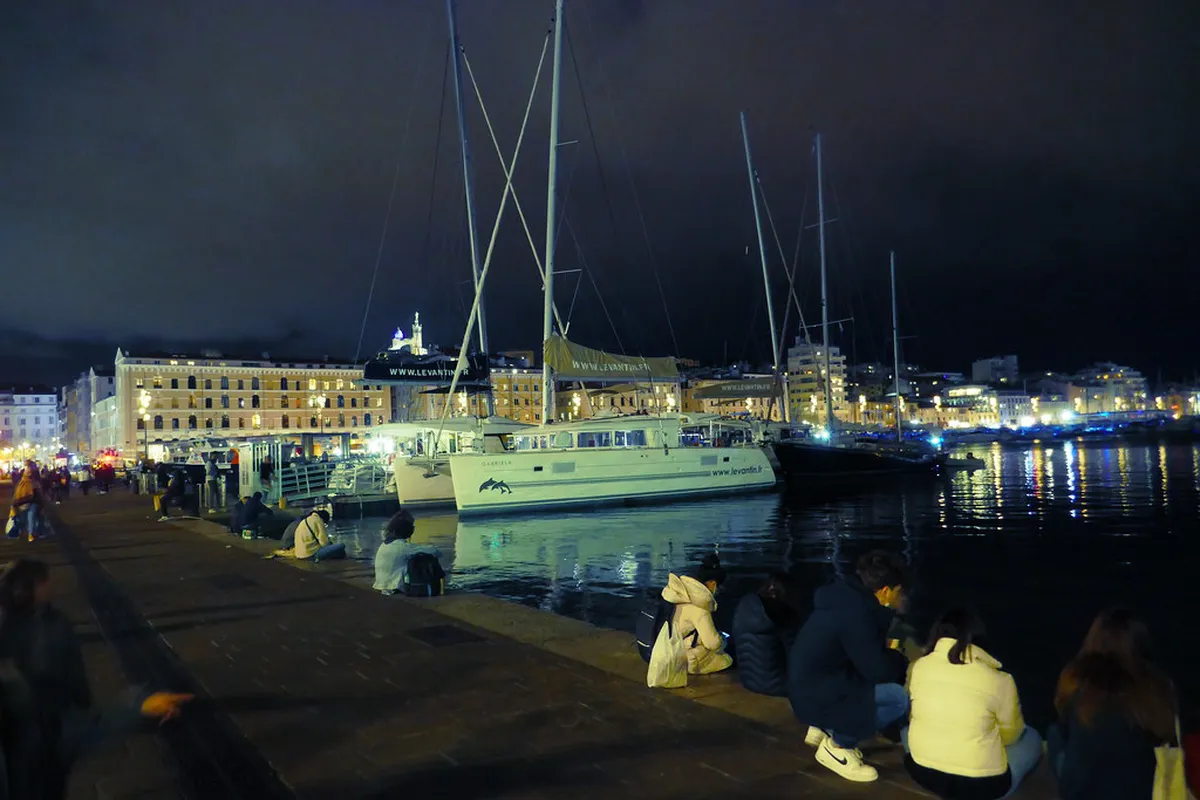
The Vieux Port area is the most practical base for a two-day visit. You wake up steps from the fish market, MuCEM is a 15-minute walk, and the number 60 bus to Notre Dame de la Garde departs from the port itself. Hotels here run from budget ibis-style options to the upscale Grand Hotel Beauvau and InterContinental Marseille Hotel Dieu, the latter converted from an 18th-century hospital with dramatic views over the port.
Le Panier sits directly north of the port and offers a more atmospheric stay in narrow medieval streets. The trade-off is noise: bars stay open late and the cobblestones amplify sound at night. I slept poorly there on a Saturday and recommend Le Panier for travelers who turn in late rather than those who want an early-morning start. The Opera district, between the port and Cours Julien, offers a quieter middle ground at slightly lower prices.
If you want a sea view and a quieter atmosphere, the Corniche Kennedy and Malmousque area work well for a second night once you've seen the port. You will rely on the RTM bus network from here, which is frequent and cheap but adds 20–30 minutes to most journeys. For deeper picks, see our guide on where to stay in Marseille.
Day 1: The Historic Heart and Le Panier
| Day | Focus | Highlights |
|---|---|---|
| Day 1 | Historic port and old town | Vieux Port fish market, Cathedral of Saint-Marie-Majeure, MuCEM, Fort Saint-Jean, Le Panier, La Vieille Charité, Cours Julien |
| Day 2 | Coastal landmarks and seascapes | Notre Dame de la Garde, Corniche Kennedy, Vallon des Auffes, Malmousque, Abbaye Saint-Victor |
Morning (08:30–12:00): Start at the Vieux Port before the crowds arrive. The daily fish market on Quai des Belges runs from around 08:00 and wraps up by midmorning — local fishermen sell the night's catch directly off their boats. Walk under L'Ombrière de Norman Foster, the giant reflective steel canopy at the port entrance, then head north toward the cathedral quarter. The Cathedral of Saint-Marie-Majeure (Cathédrale La Major) is the only cathedral in France built in the 19th century, begun in 1852 and completed 44 years later. Its Roman-Byzantine style was chosen deliberately: Marseille was then the main gateway to the eastern Mediterranean, and the architect matched the architecture to the city's global ambitions. The interior has mosaic floors and striking white-and-red marble banding throughout.
Midday (12:00–14:00): A three-minute walk from the cathedral brings you to MuCEM (Museum of European and Mediterranean Civilizations), which opened in 2013 when Marseille was European Capital of Culture. Admission is €11 and the building is as interesting as the collection — a latticed concrete cube connected by an aerial walkway to the adjacent Fort Saint-Jean, built by Louis XIV in the 17th century. Your MuCEM ticket includes the fort. From the walkway you get some of the best views in the city: the open Mediterranean on one side, the old port on the other.
Afternoon (14:00–18:00): Walk 12 minutes north into Le Panier, the oldest continuously inhabited neighborhood in France and the original Greek colony of Massalia. The streets are steep and maze-like — follow Rue du Panier uphill and you will stumble onto Place des Moulins, a quiet square that feels nothing like the busy port below. La Vieille Charité is the neighborhood's architectural centerpiece: a 17th-century almshouse built around a Baroque chapel whose dome is visible from most of Le Panier. Entry to the courtyard is free; the museums inside cost a few euros. Budget an hour here and resist the urge to rush.
Evening (19:00–21:30): Head to Cours Julien for dinner — it is a 15-minute walk from Le Panier and the liveliest neighborhood for independent restaurants. The local food guide covers the full range, but for a sit-down meal look for restaurants along the Escaliers du Cours Julien or on Place Notre-Dame-du-Mont just to the south. Many open at 19:00 and fill quickly on weekends.
Day 2: Notre Dame de la Garde and the Coast
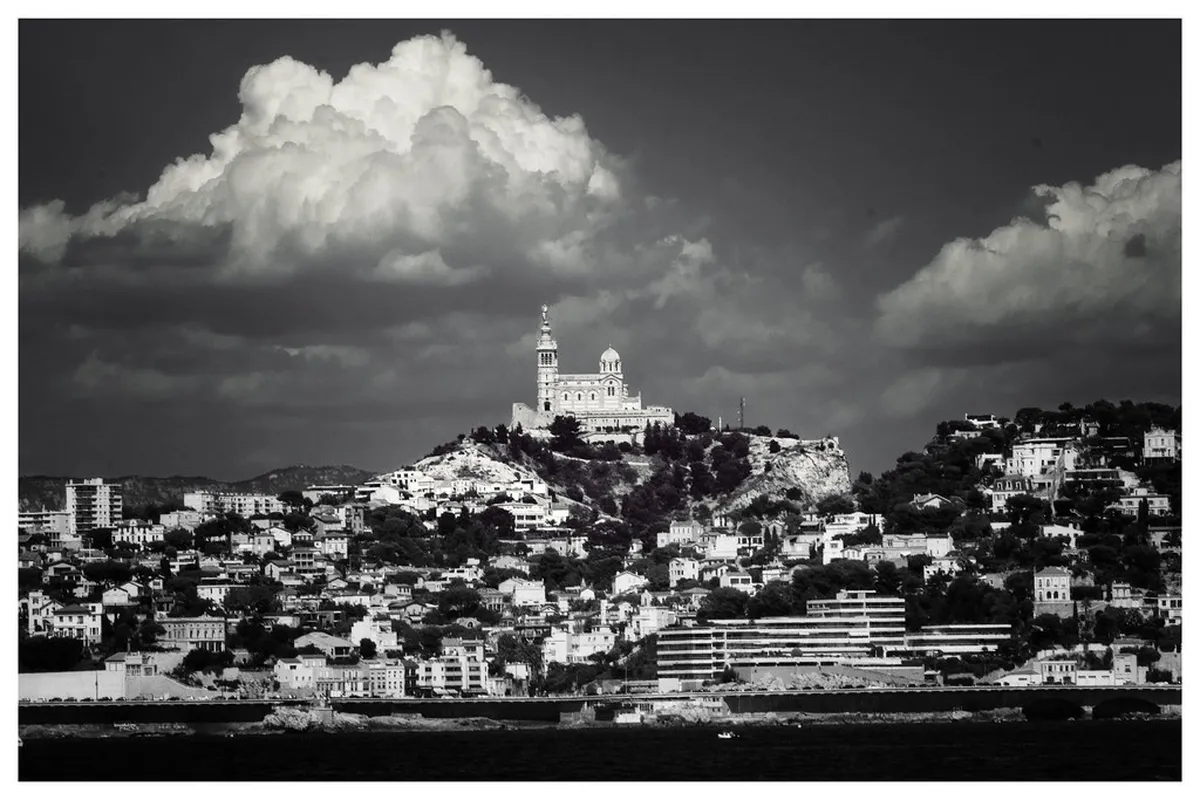
Morning (09:00–11:30): Take the number 60 bus from the Vieux Port to Notre Dame de la Garde — the journey takes about 20 minutes and saves your legs for the coast walk later. The basilica sits 154 metres above the city and the 360-degree panorama from the viewing platform is the best in Marseille: the port, the Frioul Islands, Château d'If, and on clear days the Calanques cliffs to the southeast. The basilica itself is 19th-century Neo-Byzantine, free to enter, and open daily from 07:00. I recommend arriving before 10:00 when the coach tours begin. The famous gold statue of the Virgin Mary at the tower's summit — La Bonne Mère, protector of sailors — is visible from almost every point in the city.
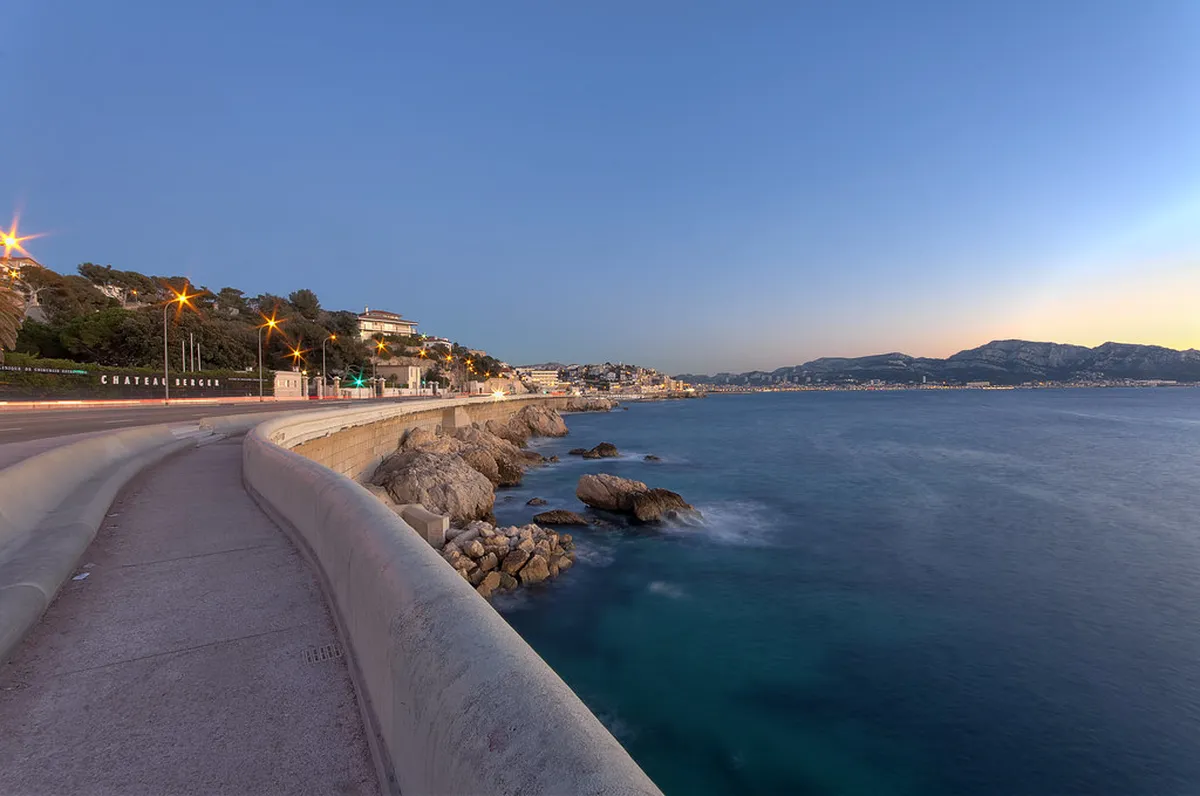
Midday (11:30–14:30): Walk downhill on the western side toward the Corniche. The Corniche Kennedy promenade stretches 3.7 km along the coast from Catalans Beach to the Prado beaches. This is where locals jog, swim, and eat bouillabaisse — the Corniche restaurant strip is generally considered the best place in the city to try it. Chez Fonfon at Vallon des Auffes is the most famous address (€55–80 per person for the full service, reserve at least a week ahead). If your budget is tighter, a bowl of fresh fish soup at one of the smaller restaurants along the Corniche costs around €20.
Afternoon (14:30–18:00): Continue along the Corniche to Vallon des Auffes, a tiny fishing inlet squeezed between two road bridges with coloured boats and whitewashed fishermen's houses that look completely out of place in a city of 900,000 people. It is a 25-minute walk from Notre Dame de la Garde along the coast, or a short bus ride. From Vallon des Auffes continue to Malmousque, a rocky headland with natural swimming pools cut into the limestone. This is where Marseille residents swim on summer weekends — arrive early or expect to share the rocks.
Evening (18:30–21:00): Return to the Vieux Port by bus for a final pastis at one of the port-side terraces. The square at Cr Honoré d'Estienne d'Orves on the southern end of the port basin has some of the best sunset views in the city. Alternatively, Abbaye Saint-Victor, a 12-minute walk from the port, is one of the oldest abbeys in Europe — founded in the 5th century — and worth a 30-minute visit before it closes at 17:30 if you want to close Day 2 with something historical.
Plan Around the Mistral: A Day 2 Risk Most Guides Skip
The Mistral is a cold, powerful wind that sweeps down the Rhône valley and hits the Marseille coast with little warning. It is one of the most important practical factors for planning your second day, yet almost no itinerary guide addresses it directly. When the Mistral blows — sometimes for three or six days at a stretch — ferry services to Château d'If and the Frioul Islands are cancelled without warning. The Corniche becomes cold and unpleasant even in June. Outdoor café terraces along Vallon des Auffes go from idyllic to miserable in under an hour.
The Mistral can cancel ferry services and make coastal walks unpleasant. Check the MeteoFrance wind forecast the evening before Day 2 — sustained winds above 50 km/h at Marseille-Marignane mean ferries will likely be suspended. Have the Longchamp Palais (indoor museums) as a backup for severe Mistral conditions.
The fix is simple: check the wind forecast the evening before Day 2. A MeteoFrance forecast showing sustained winds above 50 km/h at Marseille-Marignane means the ferries are likely off. In that case, swap the coastal walk for the Longchamp Palais on Boulevard Longchamp — a magnificent 19th-century palace housing the Musée des Beaux-Arts and the Natural History Museum, set in beautiful listed gardens. It is an excellent indoor alternative that most visitors on a two-day trip miss entirely because they only encounter it in fair weather guides.
The Mistral also tends to clear the air after it passes, producing the intense blue-sky days that make Marseille photographs so striking. If your trip overlaps with the tail end of a Mistral, plan your coastal activities for the final afternoon when the light is exceptional and the sea is dramatic.
Weekend in Marseille: Where to Eat
Marseille food is not a polished cuisine — it is honest, port-city cooking shaped by centuries of trade with North Africa, the Levant, and southern Italy. Bouillabaisse is the signature dish: a saffron fish stew made with at least four types of local fish, served with rouille-topped croutons and traditionally presented in two courses — broth first, then fish. Expect to pay €50–80 per person at a serious restaurant. Anything priced below €20 near the tourist port is not the genuine article.
Panisse are fried chickpea flour cakes sold at street stalls and casual cafés — the Marseille equivalent of chips, best eaten hot with salt. You can find them in the Estaque neighborhood and at the Noailles market. The Noailles market itself, a 15-minute walk from the port, is the best place in the city for lunch on a budget: the surrounding streets have North African pastry shops, merguez butchers, spice sellers, and cheap restaurant terraces. A meal here costs €8–15.
Pastis is the drink of Marseille — an aniseed aperitif diluted with cold water that turns cloudy yellow in the glass. You will see locals drinking it from midmorning at streetside bars. It costs €2–4 almost everywhere and is the cheapest and most authentic way to drink like a local. For a special dinner on Day 1, the Cours Julien neighborhood has a strong concentration of independent wine bars and modern Provençal restaurants at mid-range prices (€30–50 per person).
Night Time Arrival: Getting from MRS Airport to the Center
Marseille Provence Airport (MRS) is 25 km northwest of the city center. The Navette Aéroport shuttle bus to Gare Saint-Charles runs every 15–20 minutes and costs €10 per person. The journey takes 25–30 minutes in normal traffic, longer during rush hour on weekday afternoons. Tickets are available at the airport from vending machines — buy before boarding to avoid the driver queue. Current Marseille Airport Bus Info is on the airport website; check it before your trip as schedules are updated seasonally.
The shuttle stops at Saint-Charles station around midnight, after which service is reduced or suspended. For very late arrivals — flights landing after 23:00 — an Uber from MRS to the Vieux Port area costs €50–70 and takes 30–40 minutes depending on traffic. Ride-share availability at MRS can be patchy late at night; book in advance via the app from the baggage carousel, not the arrivals hall exit. Taxis from the official rank outside arrivals charge a regulated flat rate of around €55 to the city center.
If you arrive at Gare Saint-Charles by TGV train instead, the central station is a short metro ride (Line M1 or M2) or a 20-minute walk downhill to the Vieux Port. The station is at the top of a steep staircase — use the elevator on the right side if you are carrying heavy luggage.
Getting Around Marseille
The RTM network covers the city with two metro lines, trams, and an extensive bus system. A single ticket costs €1.70 and is valid for one hour across all modes including transfers. A day pass costs €5.20 and makes sense if you are making more than three journeys. Tickets are sold at metro stations and on the bus from the driver, but the driver machines only accept coins — buy in advance at a station if you are paying by card. Full route information is on the Marseille Tourism Public Transport page.
Buy a RTM day pass (€5.20) if you plan more than three journeys — it covers metro, tram, and buses. The number 60 bus is essential for this itinerary, running from Vieux Port directly to Notre Dame de la Garde (07:00–21:00). Buy tickets at metro stations, not from the driver, if paying by card; driver machines accept coins only.
The number 60 bus is the key route for this itinerary: it departs from the Vieux Port and stops directly below Notre Dame de la Garde, running daily from approximately 07:00 to 21:00. Metro Line M1 connects Saint-Charles station to the Vieux Port in three stops. The Corniche Kennedy has no metro stop — use buses 83 or 83S from the port, or walk the 30 minutes if the weather is good.
Most of Day 1 on this itinerary is walkable if you stay within the port-to-Le Panier corridor. Marseille is hilly and the pavements are uneven in the old neighborhoods, so wear shoes with grip. The steepest climb on the two-day plan is the approach to Notre Dame de la Garde — the bus is genuinely the better choice unless you want the workout.
Practical Tips for a Smooth Marseille Visit
Book MuCEM tickets online at least two days ahead in summer — timed entry is enforced and the morning slots fill first. If you want to try bouillabaisse at Chez Fonfon or another well-regarded restaurant on the Corniche, reserve a minimum of one week in advance for weekends. The ferry to Château d'If from the Vieux Port costs around €13 return and should also be booked online; the crossing takes 20 minutes but is subject to Mistral cancellations (check the forecast the evening before as noted above).
Safety in the central tourist districts is not a significant concern for most visitors, but the area around Gare Saint-Charles and the northern port neighborhoods warrant standard urban caution. Keep bags zipped in the fish market and on the Vieux Port esplanade. For a full picture before you travel, our Marseille safety guide covers the neighborhoods in detail.
Marseille in 2026 is busier than it was before 2020, and accommodation prices at Vieux Port hotels are now comparable to Lyon or Bordeaux in high season. Book your hotel at least two weeks ahead for June through September visits. Shoulder season — April, May, and October — gives you the best combination of weather, manageable crowds, and reasonable rates.
Frequently Asked Questions
Is 2 days in Marseille enough?
Yes, two days is enough to see the main highlights like the Old Port and Le Panier. You can visit the major museums and the hilltop basilica within this timeframe. However, you will need more time for hiking in the nearby Calanques.
Is Marseille safe for tourists?
Marseille is generally safe for tourists who stay in the main central districts. You should be mindful of pickpockets in crowded areas like the train station. For more details, read our safety guide before your trip.
What is the best way to get around Marseille?
The best way to get around is a mix of walking and using the RTM metro and bus system. A single ticket costs €1.70 and is valid for one hour. The number 60 bus is especially useful for reaching the basilica.
Marseille is a city that rewards those who look past its rough exterior to find its heart. This two-day itinerary ensures you experience the perfect blend of ancient history and modern culture. I hope you enjoy the salty sea air and the vibrant energy of this Mediterranean gem.
Remember to take it slow and enjoy a glass of pastis as the sun goes down. The beauty of Marseille lies in its chaotic, colorful streets and its resilient, friendly people. Safe travels on your upcoming adventure to the south of France!
You might also like


Continue reading
More guides you'll find useful