Marseille Airport Travel Guide: 2026 Transit Tips
Plan your trip through Marseille Airport with top picks, neighborhood context, timing tips, and practical booking advice for a smoother 2026 French vacation.
On this page
Navigating Marseille Airport for a Smooth French Trip
Marseille Provence Airport (IATA: MRS) sits near the town of Marignane, roughly 27 km northwest of the city centre. It is the main international gateway for Provence, handling around 10 million passengers per year across two terminals. Many travelers wonder Is Marseille Worth Visiting? 10 Honest Pros and Cons before they land at this busy Mediterranean gateway.
Getting from the airport to Vieux-Port takes 30 to 50 minutes depending on the transport you choose. This guide covers terminals, airlines, every transport option, car hire, and what to do if you have a long layover in 2026.
Free guide: France's Hidden Gems
12 under-the-radar places across Provence, Alsace & Occitanie — with the best season to visit each and a local tip you won't find in the guidebooks.
Terminals T1 and T2: Which Gate Are You Using?
Marseille Airport has two adjacent terminals — T1 and T2 — connected by a free shuttle bus that runs every 5 minutes. The walk between the two via the internal corridor takes about 8 minutes. Both share the same road access, taxi rank, and parking zones, so the terminal you land in does not dramatically change your exit experience.
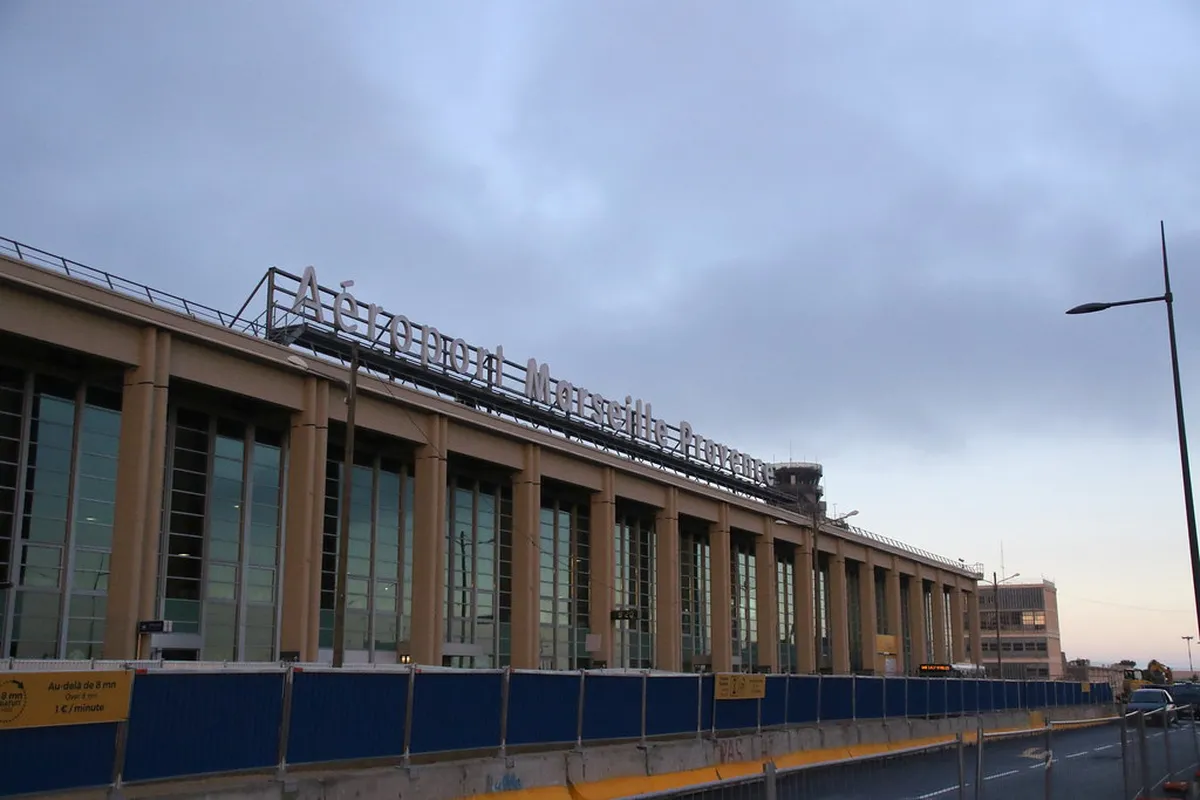
T1 handles the majority of international long-haul and European scheduled flights. Air France, easyJet, Ryanair, Vueling, British Airways, Lufthansa, and Transavia all operate from T1. T2 is used primarily for low-cost and charter traffic, including Wizz Air on certain routes and seasonal charter operators serving North Africa and Turkey. Check your boarding pass: the terminal letter is printed alongside the gate number.
Both terminals have ATMs, currency exchange desks, and a pharmacy airside. The T1 departures hall has a larger food-court selection including a Paul boulangerie and a café open from 05:00 to 22:00. T2 is more compact; airside options are limited to one bar and a snack kiosk, so eat before you go through security if you have a long wait.
Lebus+ 91 Shuttle Bus to Saint-Charles Station
The Lebus+ 91 navette is the default choice for most independent travelers. Buses depart from the exit of both T1 and T2 every 10 to 20 minutes between roughly 04:30 and 00:30, serving the full timetable of arriving flights. The journey to Gare Saint-Charles — Marseille's main rail hub — takes 25 to 35 minutes without traffic. From Saint-Charles you can connect to the metro (Lines 1 and 2) or a tram to reach Vieux-Port in under 10 minutes.
The Lebus+ 91 shuttle costs €10 for a single ticket in 2026 and takes 25–35 minutes to reach Saint-Charles station. A return ticket is €16 if bought together, saving €4 overall.
In 2026 the single fare is €10 per adult, paid by card or cash at the ticket machine near the bus stop or directly to the driver. A return ticket costs €16 if purchased together, saving €4 versus two singles. Children under 10 ride free. Keep your ticket — inspectors board regularly on the return leg from the city.
The bus drops passengers at a dedicated bay on Boulevard d'Athènes, steps from the Saint-Charles entrance. From there it is about a 15-minute walk downhill to the Vieux-Port, or a single metro stop on Line 1 (direction La Rose / La Fourragère). Refer to the Getting Around Marseille: Complete Metro and Transport Guide for metro fare details and day-pass options.
The Vitrolles Rail Route: Faster and Cheaper at Off-Peak Hours
Few guides highlight the Vitrolles-Aéroport Miramas train station, yet it is the cheapest way to reach central Marseille when the shuttle fits your schedule. A free dedicated bus (navette gratuite) connects both airport terminals to Vitrolles station in about 7 minutes; buses run every 15 to 30 minutes and are coordinated with TER train departures. At Vitrolles you board a regional TER train directly to Gare Saint-Charles, a 28-minute ride that costs around €6 with a standard TER ticket in 2026.
The Vitrolles train route offers a free 7-minute shuttle from both terminals to Vitrolles station, then a 28-minute TER train to Saint-Charles for around €6. This saves approximately €4 per trip compared to the Lebus+ 91 shuttle, making it ideal for budget-conscious travelers.
The total journey — terminal door to Saint-Charles platform — typically runs 45 to 55 minutes including the wait for a train. This compares to 35 to 45 minutes on Lebus+ 91 on a good traffic day, but the train costs roughly €4 less per trip. If you are travelling as a couple or a family, the saving compounds quickly. The route is also immune to motorway traffic, making it more reliable during summer peak hours when the A7 and A55 approach roads into Marseille can add 20 minutes to the bus.
One caveat: TER trains to Vitrolles run roughly every 30 to 60 minutes and the last departure is around 22:45. Late arrivals and very early departures (before 06:00) should stick to the Lebus+ 91 bus or a taxi. Check real-time TER schedules on SNCF Connect before you travel.
Taxis, Rideshares, and Private Transfers
Taxis queue outside both terminals 24 hours a day. The regulated fare from MRS to the city centre is metered, but as a rough guide budget €50 to €70 during the day and up to €80 at night and on Sundays. The trip to Vieux-Port takes 25 to 40 minutes depending on traffic. All taxis accept card payment — do not let a driver insist on cash only.
Uber and Bolt both operate at Marseille Airport. Prices are typically €35 to €55 to the city centre at off-peak times, though surge pricing on Friday evenings and after major flight arrivals can push the fare close to taxi level. The rideshare pickup point is in the main car park area; follow the app's directions rather than the standard taxi signs. Drivers may ask you to confirm your name before you get in.
Pre-booked private transfers (shuttles or saloon cars) start at around €45 for a solo traveller and offer a fixed price regardless of traffic. Several operators including Marcel, Blacklane, and local companies allow booking up to 30 minutes before arrival. These are worth considering for groups of three or more where the per-person cost becomes competitive with the bus.
| Transport Option | Time to City Centre | Cost Per Person (2026) | Best For |
|---|---|---|---|
| Lebus+ 91 Shuttle | 35–45 min | €10 single / €16 return | Budget travelers, frequent service |
| Vitrolles Train via TER | 45–55 min | €6 (train only) | Budget travelers, weather-proof, families |
| Taxi | 25–40 min | €50–70 (€80 night) | Direct service, groups, late night |
| Uber / Bolt | 30–40 min | €35–55 (surge pricing varies) | Convenience, door-to-door, pre-booking |
| Private Transfer | 30–40 min | €45+ fixed | Groups 3+, fixed price, comfort |
Car Hire at Marseille Airport
All major rental desks — Europcar, Hertz, Avis, Budget, Enterprise, and Sixt — are located in the T1 arrivals hall and a satellite facility between T1 and T2. Opening hours are typically 06:00 to 23:00. If your flight lands after 23:00, arrange out-of-hours collection in advance; some desks offer a key-box handover for late arrivals but this must be confirmed at booking.

Hiring a car makes practical sense if you are heading to Aix-en-Provence (30 minutes on the A51), the Calanques (45 minutes to Cassis via the A50), or any village in the Luberon. Marseille itself has a ZFE (Zone à Faibles Emissions) low-emission zone in force since 2024 — vehicles with a Crit'Air 3 sticker or worse cannot enter the city centre on weekdays between 08:00 and 20:00. Most modern rental cars carry Crit'Air 1 or 2, but verify before you drive in.
Parking in Marseille centre is metered and often scarce near Vieux-Port. For a pure city break, leave the car at the airport or at a park-and-ride (P+R) near a metro station. For Provence road trips — Cassis, Les Baux, Gordes, Arles — a hire car is the most flexible option and rental rates at MRS are competitive, especially if booked two to three weeks in advance.
Long Layovers and Your First Day in the City
If you have four hours or more between connections, it is feasible to leave the airport and see a slice of Marseille. Take the Lebus+ 91 directly to Saint-Charles, walk 15 minutes downhill to Vieux-Port, spend an hour watching the fishing boats and grabbing a coffee on Quai des Belges, then return to the airport with enough time for security. Allow 90 minutes for the round trip plus the airport re-entry buffer.
For a longer stopover of six hours or more, consider making it to Le Panier — Marseille's oldest quarter, north of the port. The narrow streets, pastel-coloured houses, and independent boutiques take about 90 minutes to explore at a relaxed pace. Alternatively, the 9 Essential Insights: Marseille Museums and MuCEM Guide covers what is achievable in a half-day visit to the MuCEM at the entrance of the harbour.
Those with a full day before their outbound flight can check luggage at the paid Left Luggage (consigne) office in T1 (open 06:00–22:30, approx €7 per bag per day) and head to Notre Dame de la Garde for panoramic views of the coast, then finish the afternoon at the Calanques. The Calanques National Park Travel Guide explains which trailheads are reachable by public transport from Saint-Charles without a car.
Practical Tips for 2026 Arrivals
Wi-Fi is free throughout both terminals under the network "AMP Free WiFi" — connect via a one-click portal, no registration required. The signal is reliable airside and in the arrivals halls. Mobile data roaming within France is free for EU citizens under the 2017 roam-like-at-home regulation; non-EU travellers should buy a French SIM from a tabac or an airport kiosk (Free Mobile and Bouygues both have vending machines in T1).
Currency: France uses the Euro. ATMs in both terminals dispense euros and charge standard international-card fees; decline the "DCC" dynamic currency conversion option if your home currency is offered, as the rate is always worse. Most transport options — including Lebus+ 91 — accept contactless card payment, so you do not strictly need cash before leaving the airport.
The airport operates a Marseille 3-day itinerary-friendly information desk in T1 arrivals (open 07:00–22:00) staffed by English-speaking advisors from the Marseille Tourism office. They distribute free city maps, bus passes, and can book last-minute accommodation. Validate any paper bus or tram ticket in the yellow machine before boarding — failure to validate results in a €60 on-the-spot fine even if the ticket is genuine.
For the full picture, see our complete guide to things to do in Marseille.
Frequently Asked Questions
Which Marseille Airport transport options fit first-time visitors?
First-time visitors often find the direct shuttle bus to Saint-Charles station the most convenient and reliable option. This service runs frequently and places you in the heart of the city near the metro system. Taxis and ride-shares are also available for those seeking door-to-door service.
How much time should you plan for Marseille Airport transfers?
You should allow at least 45 to 60 minutes for the transfer between the airport and the city center. While the shuttle takes 30 minutes, traffic can occasionally cause delays during peak morning and evening hours. This buffer ensures you reach your Marseille 3-day itinerary stops on time.
What should travelers avoid when planning a Marseille Airport arrival?
Avoid arriving without local currency or a contactless card for transport tickets, as some smaller kiosks may have limited payment options. Do not forget to validate your paper tickets before boarding the train or bus to avoid fines. Planning your route in advance helps you avoid confusion at the terminal.
Marseille Airport serves as an efficient and modern gateway to the wonders of southern France and the Mediterranean coast.
By choosing the right transport and planning your first few stops, you can begin your holiday with ease and confidence.
Enjoy the rich history, vibrant culture, and stunning natural beauty that await you just beyond the airport gates.
Free guide: France's Hidden Gems
12 under-the-radar places across Provence, Alsace & Occitanie — with the best season to visit each and a local tip you won't find in the guidebooks.
You might also like



Continue reading
More guides you'll find useful