Calanques National Park Travel Guide
Explore Calanques National Park's best hikes and turquoise beaches near Marseille. Booking tips, trail maps, and what to know about summer access.
On this page
Ultimate Guide to Calanques National Park
Calanques National Park is one of the most dramatic coastal landscapes in Europe — a 20-kilometre stretch of white limestone cliffs, hidden turquoise inlets, and deep Mediterranean sea that runs between Marseille and Cassis in Southern France. It is both a hiking destination and a swimming destination, a conservation area and a living neighbourhood. This guide covers how to get there, the best hikes and beaches, what the summer access restrictions actually mean in practice, and how to decide whether to base yourself in Marseille or Cassis.
Planning ahead matters here. Summer 2026 brings mandatory reservations for some calanques, fire-risk closures that can shut the entire park with little notice, and access roads that fill before 09:00. Read this before you go.
Summer reservations required: Calanque de Sugiton mandates free online reservations mid-June to mid-September 2026, capped at 400 visitors daily. Book several days ahead via the official park website or Mes Calanques app — rangers check QR codes at the Luminy trailhead. Fire-risk closures can close the entire park with little notice; download the Mes Calanques app before you travel for real-time alerts.
Free guide: France's Hidden Gems
12 under-the-radar places across Provence, Alsace & Occitanie — with the best season to visit each and a local tip you won't find in the guidebooks.
About the Parc National des Calanques
The Parc National des Calanques was established in 2012 and is the only national park in Europe that simultaneously covers terrestrial, marine, and periurban areas. It sits within the Massif des Calanques — a limestone mountain range in the Provence-Alpes-Côte d'Azur region — and spans the communes of Marseille, Cassis, and La Ciotat. The park protects both the land surface and a vast marine zone of the Mediterranean Sea, including one of the richest submarine canyons on the continent. Many visitors combine it with the various 15 Best Things to Do in Marseille on a multi-day stay.
A calanque is a narrow, steep-walled inlet cut into limestone or dolomite rock. The word is specific to the Mediterranean coast and describes something slightly different from a crique (a narrow beach at the foot of a cliff). There are roughly 20 named calanques in the Massif, divided broadly into the Calanques de Marseille on the western side and the Calanques de Cassis on the eastern side. Each has its own character: some are accessible by a short walk; others require a full morning of technical hiking to reach.
The park is home to rare plants that have adapted to the extreme heat and thin limestone soils, as well as the Bonelli's eagle, Hermann's tortoise, and significant colonies of nesting seabirds. The marine zone shelters dolphins, sea turtles, and posidonia seagrass meadows that are among the most sensitive ecosystems in the Mediterranean. Conservation restrictions — including anchoring rules, no-fishing zones, and the summer access system — are directly tied to keeping these habitats viable.
How to Get to the Calanques National Park
There are four main entry points. Each opens up a different set of calanques and suits different hiking ambitions. Driving directly into the park is extremely limited — most access roads close to private vehicles from April through September — so public transport and early starts are the practical reality for summer visitors.
- Luminy (Marseille) — best for Sugiton and Morgiou. Take bus #21 from Place Castellane (or Rond-Point du Prado) towards Luminy and get off at the terminus, "Luminy PN des Calanques." The journey takes about 25 minutes. A large parking lot exists near Luminy University if you drive, but it fills by 08:30 on summer weekends. From the bus terminus, follow the marked trail south towards Col de Sugiton.
- Cassis (Port-Miou entrance) — best for Port-Pin, En Vau, and Port-Miou. Walk 20 minutes from Cassis town centre to the Calanque de Port-Miou, or drive and park at Parking de la Presqu'île. Parking here is free but fills quickly; arrive before 09:00 in summer. This is the starting point for the classic Calanques de Cassis day hike.
- Les Goudes (Marseille) — best for Marseilleveyre and Callelongue. Take bus #19 from Castellane to La Madrague de Montredon, then bus #20 to Callelongue. Alternatively, drive to the hilltop car park above Les Goudes — parking beyond the village is extremely limited on weekends. The trail from Callelongue to Calanque de Marseilleveyre follows the cliff edge and is one of the more manageable hikes for families.
- Sormiou (Marseille) — best for Calanque de Sormiou's sandy beach. Take bus #23 from Rond-Point du Prado to the La Cayolle stop, then walk 700 metres to the parking area near the water treatment plant. In summer, the road past that point is gated. In winter, you can drive all the way down to the calanque.
One practical note on Sormiou: the calanque has a restaurant, Le Château, on the water. If you book a table and give your licence plate number when reserving, the restaurant can arrange vehicle access through the summer gate — a legitimate workaround that avoids the parking scramble and lets you drive into the cove. It is worth a meal on that basis alone.
Best Hikes in the Calanques National Park
Most trails are well marked but rocky and exposed. Sturdy footwear — trail runners at minimum, hiking boots ideally — is not optional. The limestone is slippery even when dry. Carry at least two litres of water per person; there are no refill points once you leave the trailheads. Expect significant sun exposure from May through September.
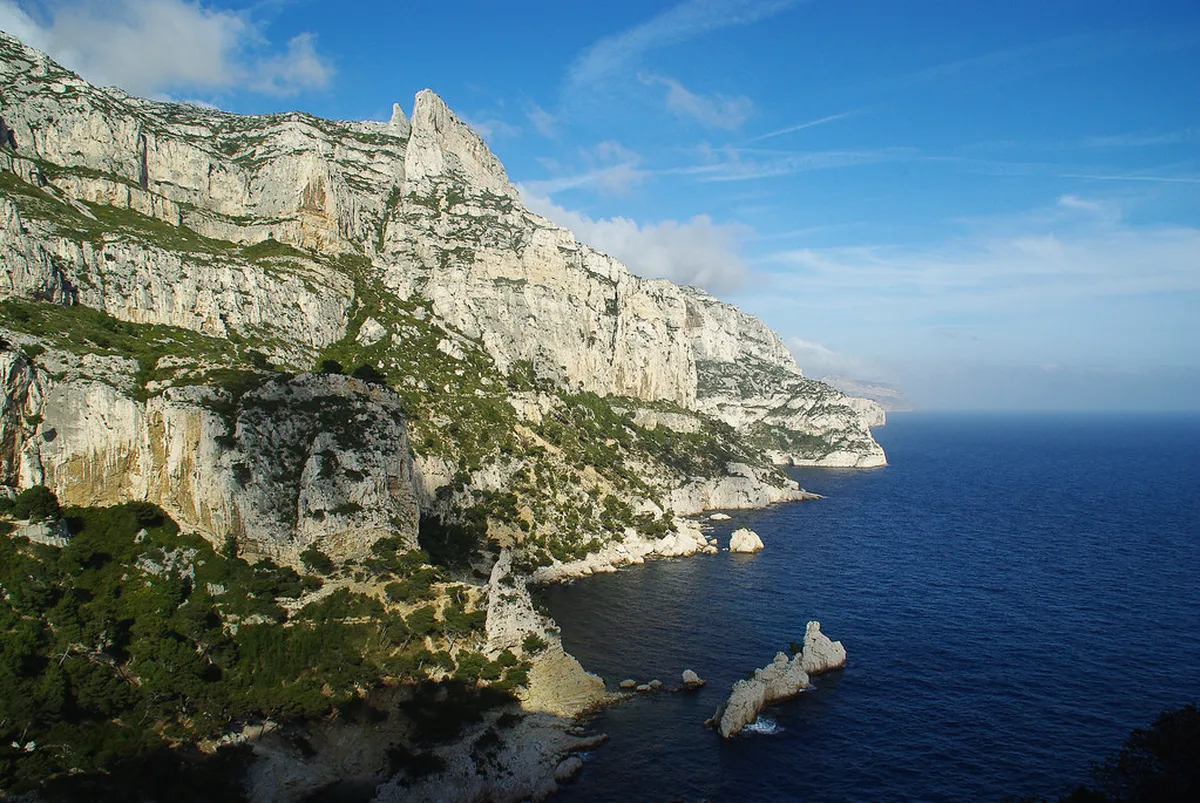
Calanques de Cassis loop (Port-Miou to En Vau). This is the most popular day hike in the park. Starting from Parking de la Presqu'île in Cassis, you walk through the long fjord of Port-Miou, reach the beach at Port-Pin after about 45 minutes, and then climb to the lookout point above Calanque d'En Vau. From that viewpoint, a steep rocky descent (add 30–40 minutes) takes you to the pebbled beach at the bottom of En Vau's limestone walls. The full loop back to Cassis via the inland path takes 2.5–3 hours without the descent to En Vau, or 3.5–4 hours if you go all the way down and back. This is the hike that covers the three most-photographed calanques in the park in one outing.
Calanque de Sugiton from Luminy. Start from the bus terminus at Luminy and follow the trail south for approximately 45 minutes to reach Col de Sugiton. You can detour 15 minutes up to the Belvédère de Sugiton for a panoramic view of the entire bay before descending. The total return trip is about 2.5 hours plus swimming time. Note that the main beach at Sugiton was cordoned off after a rockfall incident; the two sheltered bays to the right of the main cove are where you actually swim. Access to Sugiton requires a reservation in summer — see the seasonal access section below.
Les Goudes to Marseilleveyre and Podestat. Starting at Calanque de Callelongue, the trail follows the cliffs at a moderate grade. La Mounine, a small inlet without a real beach but excellent snorkelling, appears after about 40 minutes. Calanque de Marseilleveyre arrives at roughly one hour — a pebbled beach with calm, shallow water that works well for families. You can return the same way or add another 30–45 minutes to reach the smaller Calanques de Queyrons and Podestat. The full Callelongue–Podestat return takes 2.5–3 hours. This stretch is part of the GR 98, the 11-hour long-distance trail connecting Marseille to Cassis along the coast.
Calanque de Morgiou from Luminy. Morgiou is a 45-minute walk from the Luminy car park on a separate trail from the Sugiton path. The calanque itself has a small fishing port and a restaurant open in summer. The more rewarding swimming spot is Plage Sauvage de Morgiou — a tiny pebble cove reached by continuing on a rocky trail past the port and descending limestone steps cut directly into the cliff. In winter, you can drive directly down to Morgiou from Les Baumettes on the D559E road, bypassing the Luminy walk entirely — this is the only calanque where winter driving access exists from Marseille side.
Best Beaches and Calanques to Visit
The best beaches in the park are inaccessible by road and reachable only by foot or boat. That seclusion is exactly what makes them worth the effort. Most have no facilities — no toilets, no cafés, no shade structures — so plan accordingly. Water shoes are genuinely useful on the pebbled and rocky shores.
| Calanque | Difficulty | Access from Marseille | Time from Trailhead | Best for |
|---|---|---|---|---|
| En Vau | Moderate–Hard | Bus #20 to Cassis (20 min), then walk 20 min to start | 2.5–4 hours | Iconic photography, experienced hikers |
| Sugiton | Moderate | Bus #21 to Luminy (25 min) | 2.5 hours return | Sheltered bays, mandatory summer reservation |
| Port-Pin | Easy–Moderate | Bus to Cassis, 20 min walk from town | 45 minutes one-way | Families, shade under pines, calm water |
| Sormiou | Easy–Moderate | Bus #23 to La Cayolle, walk 700 m (summer gating) | 1–1.5 hours | Sandy beach, lifeguards, seaside restaurant |
| Morgiou | Moderate | Bus #21 to Luminy (25 min) | 45 min walk + optional rocky descent | Fishing village atmosphere, Plage Sauvage snorkelling |
| Marseilleveyre | Easy–Moderate | Bus #19/#20 to Callelongue | 1 hour from start | Families, shallow pebble beach |
| Port-Miou | Easy | Bus to Cassis, 20 min walk from town | 30 min one-way | Protected fjord inlet, starting point for longer loops |
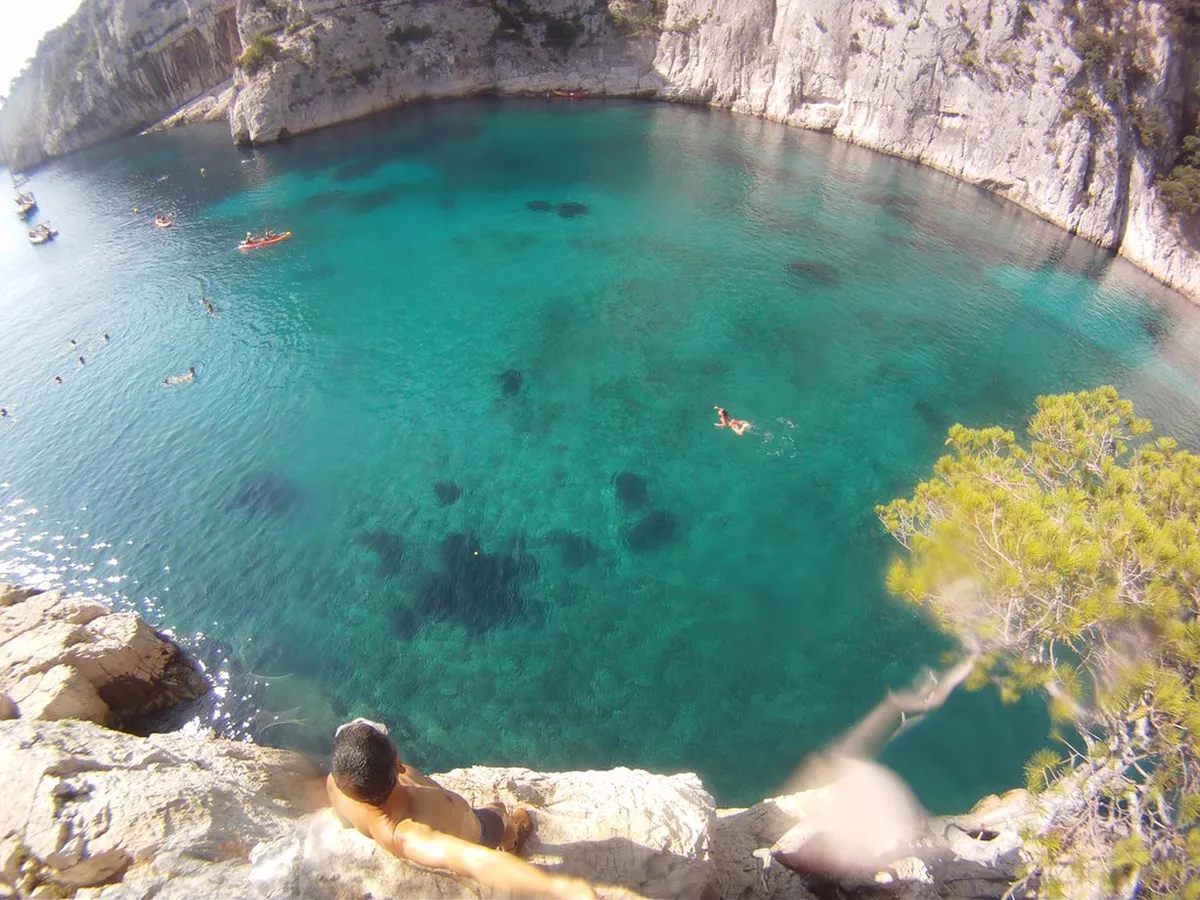
Calanque d'En Vau is the flagship of the park. Sheer white limestone walls rise 150 metres on either side of a narrow turquoise inlet. The pebbled beach at the bottom is small and gets crowded by midday in summer. Arrive early or arrive via boat. There are no facilities whatsoever. It ranks among the most photographed beaches in France for good reason.
Calanque de Sugiton offers two sheltered bays with deep blue water and rocky platforms for sunbathing. The small island of Le Tourpillon sits just offshore and makes a short swim destination. Because of the mandatory reservation system introduced to manage visitor numbers, Sugiton is often quieter in practice than En Vau.
Calanque de Port-Pin is the easiest significant beach to reach from Cassis — about 30 minutes from Parking de la Presqu'île. It has a mix of sand and pebbles, calm shallow water, and pine tree shade. Lifeguards are sometimes present in high summer. This is the most family-friendly beach in the park that still feels genuinely natural.
Calanque de Sormiou has the largest beach in the park — a wide sandy bay with lifeguards in summer. Traditional fishing cottages called cabanons line the shore. The main beach can be busy, but two smaller coves to the left of the port are quieter. A good restaurant here makes this a viable lunch-destination hike.
Visiting the calanques by boat opens access to beaches that are genuinely difficult to reach on foot. Our separate Marseille boat tour guide covers the sea routes in detail, including which tour operators depart from the Old Port and what each itinerary covers.
Other Activities in the Calanques National Park
The park is more than a hiking and swimming destination. Several other activities are well established here and suit visitors who want a different physical challenge or a different relationship with the landscape.
Rock climbing is one of the defining activities of the Calanques — the limestone cliffs have been a training ground for French alpinists for generations. There are hundreds of established routes across the Massif, from beginner single-pitch lines to multi-pitch climbs at an advanced level. Guided half-day and full-day climbing sessions run from both Marseille and Cassis. If you have no experience, a guided session at the Calendal climbing site near Cassis is a straightforward introduction.
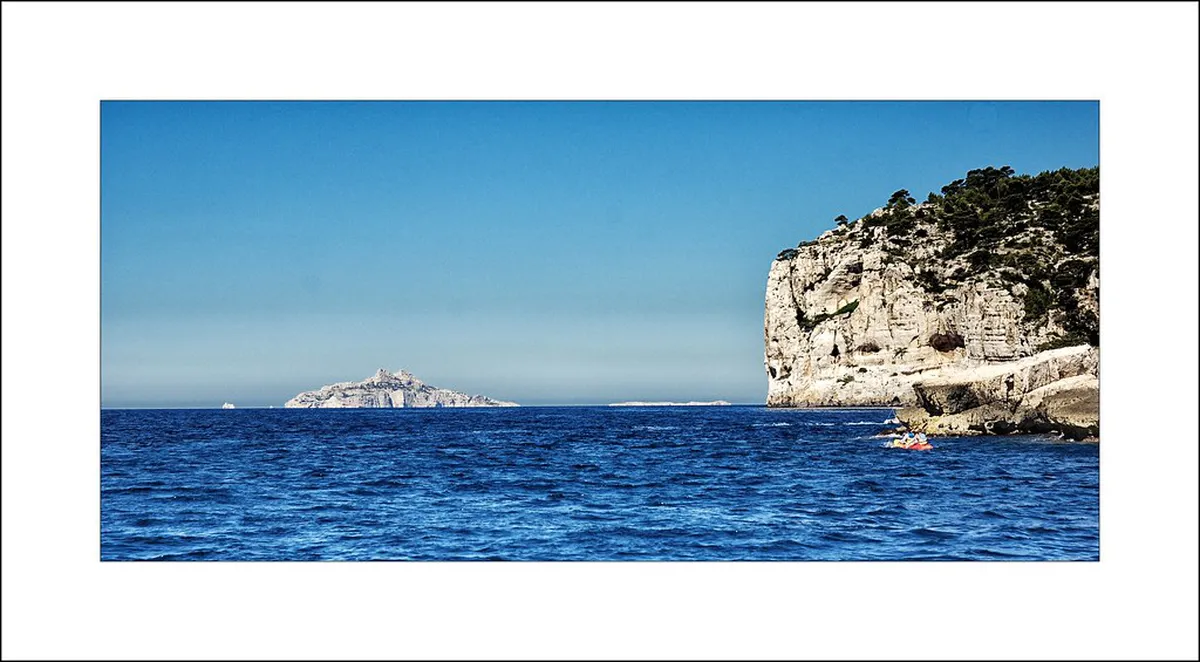
Kayaking and paddleboarding allow you to reach sea caves and narrow inlets that are too shallow for tour boats. A full-day guided kayak tour from Marseille typically includes the Calanques de Sugiton and Morgiou. From Cassis, you can rent kayaks at the Plage de l'Arène and paddle independently to Port-Miou. LOKAYAK and CSLN both allow online booking in advance, which matters in July and August when rentals sell out.
Scuba diving and snorkelling are excellent in the marine zone. The Canyon de la Cassidaigne, offshore from Cassis, is one of the most biodiverse submarine canyons in the Mediterranean. Guided dive trips depart from Point Rouge in Marseille and include access to deeper sites and a few historic wrecks along the Marseille coast.
Mountain biking is permitted on specific tracks within the park. Guided e-bike tours operate primarily from Marseille and offer a faster way to cover more of the park's interior terrain. For solo riders, trails are marked but require solid technical skills on the loose limestone.
Key Things to Know: Seasonal Access and Reservations
Summer access to the park is more complex than it appears on most travel sites. Two separate systems apply simultaneously: fire-risk closures and mandatory reservations. They operate independently and both can affect your visit on any given day from June through September.
Fire-risk closures. When wind speed and humidity reach critical levels, the entire park closes to all visitors — no hiking, no driving, no access on foot. The park uses a colour-coded alert system. Orange means access is restricted to low-risk zones with extra caution required. Red means the park is fully closed. The closure decisions are made each morning and announced by 16:00 the previous afternoon when possible, but conditions change fast. Download the Official Mes Calanques App before you travel. It shows current fire risk levels, which trails are open, and sends push notifications when closures are declared. Do not rely on checking a website the morning of your visit — the app is significantly faster and more reliable.
Sugiton reservation system. Calanque de Sugiton operates a mandatory reservation system that has been in place since 2021. During the peak season (roughly mid-June to mid-September in 2026), a daily cap of approximately 400 visitors is enforced. You must book a free time-slot online — through the official park website or the Mes Calanques app — several days in advance. You receive a QR code to present to park rangers stationed at the start of the Luminy trail. Rangers do check. Turning up without a reservation during this period means you will be turned back at the trail entrance. Outside the reservation season, Sugiton is open without booking, though fire-risk closures still apply.
Beyond the formal systems, a few practical rules apply year-round: no fires or barbecues anywhere in the park, no camping, no picking plants or disturbing wildlife, and no anchoring in the posidonia seagrass zones. Dogs must be kept on leads from 1 April to 30 September. Rubbish bins are absent from most trailheads — pack out everything you bring in.
Where to Stay Near the Calanques: Marseille vs. Cassis
Both Marseille and Cassis give access to the park, but they suit different types of travellers. The choice affects not just your accommodation budget but how much time you spend commuting versus hiking each day.
| Marseille | Cassis | |
|---|---|---|
| Distance to park | 25–40 min by bus to Luminy/Les Goudes trailheads | 20 min walk to Port-Miou |
| Calanques accessible | Sugiton, Morgiou, Sormiou, Marseilleveyre | En Vau, Port-Pin, Port-Miou |
| Accommodation cost | Wide range — budget hostels to luxury hotels | Mid-range to luxury; limited budget options |
| Town atmosphere | Urban, diverse, cultural, busy | Village, relaxed, tourist-oriented in summer |
| Other attractions | MuCEM, Notre-Dame-de-la-Garde, Old Port, Le Panier | Port, vineyards, Cassis wines, beaches |
| Best for | First-time France visitors, urban explorers, budget travellers, those combining city + nature | Hikers spending 2+ days in the park, couples, those who want park access without a commute |
Marseille makes sense if you want to visit the park as one part of a broader trip. The city has a great deal to offer beyond the calanques — the metro and bus network makes getting around easy, and the accommodation range is far wider. You can be at Luminy trailhead within 30 minutes of leaving a central hotel. The downside is the commute: if you want a full day at the Cassis-side calanques, you need either a car or a 20-minute bus to Cassis first.
Cassis suits hikers who want to walk out of the village door and be on trail within minutes. Port-Miou is a 20-minute walk from the town centre. En Vau and Port-Pin are reachable in a half-day from the hotel. The trade-off is cost — Cassis hotels and restaurants are noticeably more expensive than equivalent options in Marseille, and the town is small enough that you exhaust its non-hiking attractions within a day. For more on the options in the city, see our guide on where to stay in Marseille.
What to Bring — and Common First-Timer Mistakes
The single most common mistake is underestimating water. The exposed limestone reflects heat, there is no shade on most ridgelines, and the descent to a beach adds time you did not plan for. Two litres per person is a minimum; three is safer on a full-day hike in July or August. The second most common mistake is footwear: flip-flops cause injuries on the rocky descents. Trail runners work; proper hiking shoes work better.
Carry 2–3 litres of water per person, sturdy trail runners or hiking boots, water shoes or old trainers for rocky beaches, and a packable dry bag for your phone. There are no water refills along the trails. The exposed limestone is slippery even when dry. Bring a headlamp if your hike might extend past sunset, and always pack out all rubbish — bins are absent from most trailheads.
Pack water shoes or old trainers for the beaches. The pebbles at En Vau and Sugiton are hard and sharp underfoot, and the entries to the water are often over rounded boulders. A packable dry bag protects your phone and documents if you swim to offshore rocks. A headlamp is worth carrying for hikes that might run longer than expected — the paths are harder to follow after sunset, and park rangers do not patrol in the evening.
Check the Mes Calanques app the evening before your planned hike. If the forecast shows high mistral wind, expect a possible closure announcement by 06:00. Build a backup plan — the Marseille city beaches, a visit to Château d'If, or the Côte Bleue west of the city — for days when the park is shut. First-timers who arrive without a Plan B often lose an entire day of their trip.
Where to See Other Calanques in the South of France
The national park is the most famous, but other limestone inlets exist along this coast and offer similar scenery without the summer crowding. La Ciotat, 15 kilometres east of Cassis, has the Calanque de Figuerolles — a reddish rock cove with a small beach and an on-site restaurant, reachable without a significant hike. It is a good option when the national park is fire-closed or you want a lower-effort beach day.
The Côte Bleue, west of Marseille between L'Estaque and Martigues, has a string of quieter inlets including Calanque de l'Everine near Niolon — a hidden cove accessed by a 45-minute coastal walk that most tourists never reach. The Côte Bleue is also accessible by the scenic Marseille–Miramas train line, which itself offers cliff and sea views similar to a boat tour at no extra cost.
For more Marseille ideas, see our Notre-Dame de la Garde and the Calanques guides.
Frequently Asked Questions
Do you need a reservation for Calanques National Park?
Yes, a reservation is required for Calanque de Sugiton during the peak summer season in 2026. You must book a free slot on the official website to receive a QR code for entry. Other parts of the park do not currently require reservations but may have fire risk closures.
What is the best way to see the Calanques?
The best way depends on your fitness level and interests. Hiking offers the most intimate experience and access to hidden beaches. Boat tours provide a relaxing way to see the massive cliffs from the sea without the physical exertion. Both options offer stunning Mediterranean views.
Can you drive into the Calanques National Park?
Driving directly into the park is very restricted, especially during the summer months. Most roads leading to the calanques are closed to private vehicles to protect the environment. It is much better to use public transit or park in designated lots outside the park boundaries.
Which is better: Calanques de Marseille or Cassis?
Marseille is better for variety, transit, and urban culture. Cassis is better for a village atmosphere and walking access to the trails. Before booking, check if Marseille is safe for your travel style to ensure a comfortable stay in the city.
Calanques National Park rewards those who prepare. Book your Sugiton reservation early, download the Mes Calanques app before you fly, and pack more water than you think you need. Whether you arrive by bus from Marseille or walk out of a Cassis hotel, the white cliffs and turquoise water at the end of every trail make the logistics worth it.
Free guide: France's Hidden Gems
12 under-the-radar places across Provence, Alsace & Occitanie — with the best season to visit each and a local tip you won't find in the guidebooks.
You might also like


Continue reading
More guides you'll find useful