Château d'If: 10 Essential Insights for Your Visit
Discover the history of Château d'If, the inspiration for The Count of Monte Cristo. Plan your visit with tips on ferries, tickets, and the island's dark past.
On this page
Château d'If: 10 Essential Insights for Visiting the Island Prison
The island fortress of Château d'If stands as a grim sentinel overlooking the sparkling waters of the Mediterranean Sea. This former prison gained global fame through the legendary pages of Alexandre Dumas's classic novel, The Count of Monte Cristo.
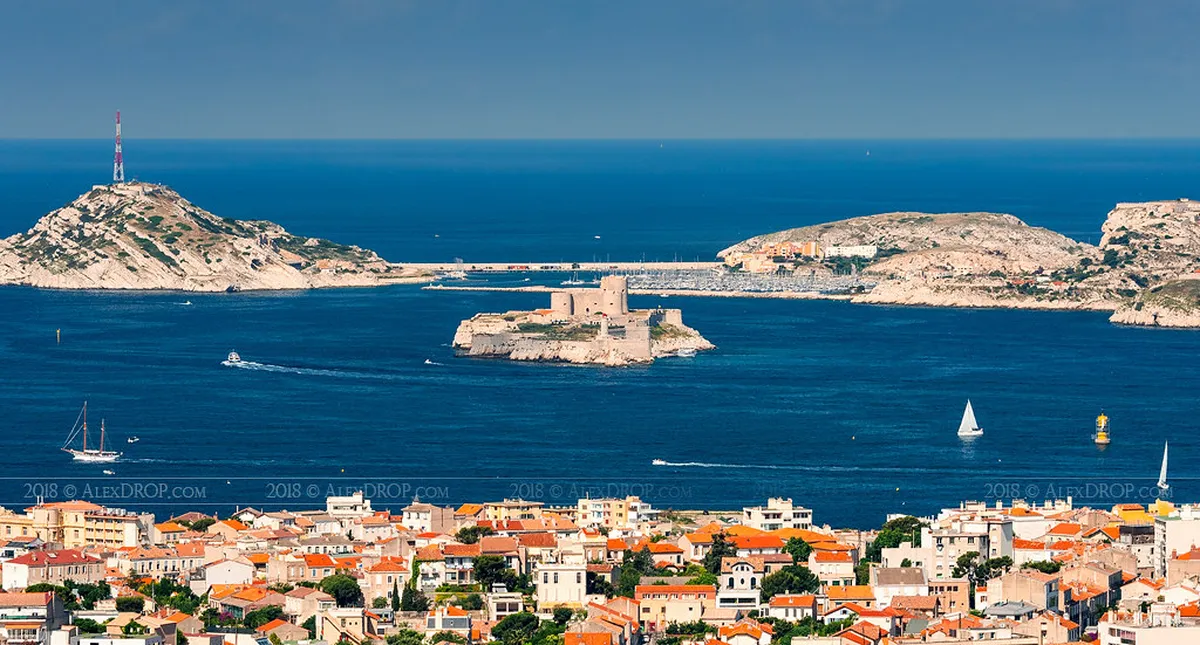
Visiting this historic site is often considered one of the most essential things to do in Marseille for history lovers. The jagged limestone rocks of the Frioul archipelago provide a dramatic backdrop for this 16th-century royal stronghold.
Travelers today can explore the dark corridors where real and fictional prisoners once languished in deep isolation. From its military origins to its literary legacy, the island offers a haunting glimpse into the past of southern France.
Planning a trip requires careful attention to ferry schedules and weather conditions that frequently shift in the Gulf of Lion. This guide covers everything you need to know for a successful journey to the Alcatraz of the Mediterranean.
Free guide: France's Hidden Gems
12 under-the-radar places across Provence, Alsace & Occitanie — with the best season to visit each and a local tip you won't find in the guidebooks.
The History and Origins of Château d'If
King Francis I ordered the construction of this fortress in 1524 after a visit to Marseille revealed the strategic importance of the tiny island of If. The location allowed complete control over access to the busy port of Marseille, which had only been annexed to the Kingdom of France in 1480. The citizens of Marseille were opposed to the project from the start, viewing it as a symbol of royal surveillance rather than genuine coastal defence. For detailed Château d'If history, the fortress timeline and its role in the Frioul archipelago are well documented.
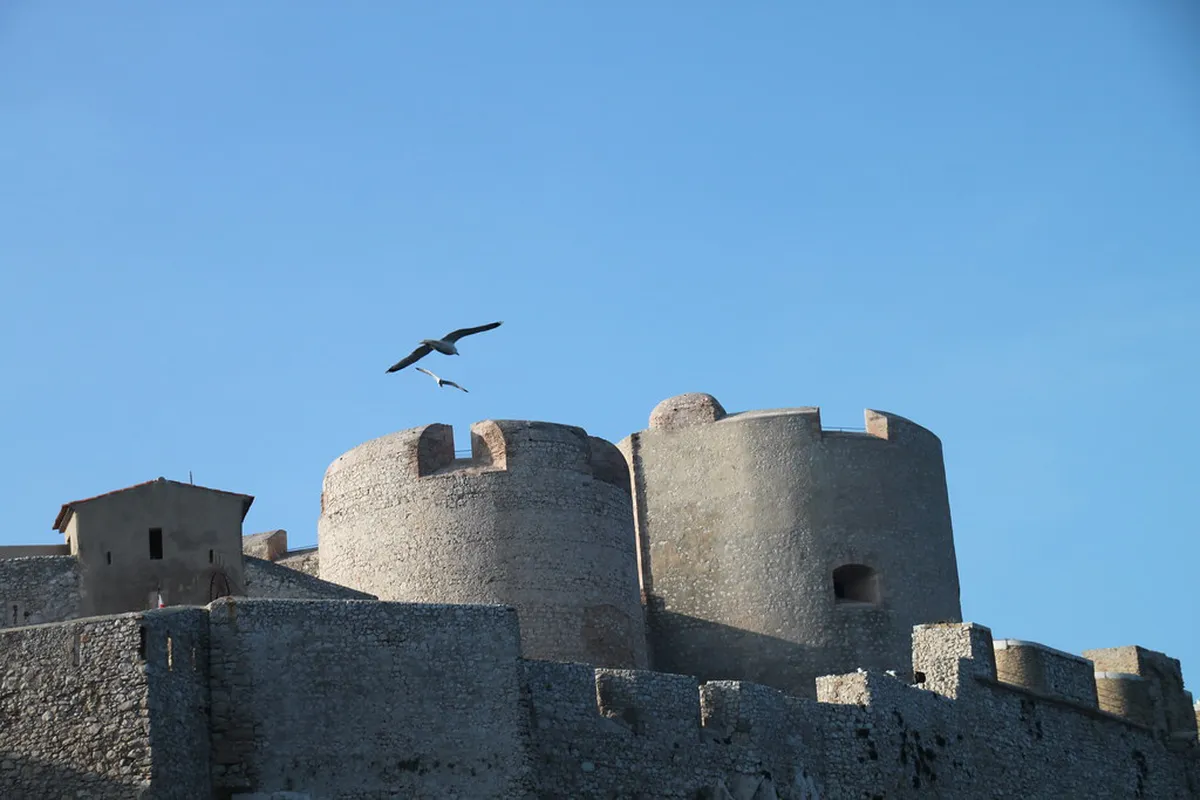
Construction began in 1528 and was completed by 1531, producing a structure with a keep, three circular towers, high curtain walls, a moat, and a drawbridge. Engineers designed it to receive military reinforcements and heavy artillery. Despite its formidable appearance, the fort never faced a direct military assault and was described by contemporaries as "the most beautiful window of the Kingdom of France in the Northern Mediterranean."
From 1540 onwards, the fortress transitioned into a state prison because its isolated geography made escape almost impossible. For nearly four centuries it held thieves, bandits, religious dissenters, and political opponents. The last prisoners left in 1914, and the German army occupied the castle briefly during the Second World War. It has operated as a national monument and popular visitor site ever since.
Famous Real Prisoners Behind the Walls
The prison population was not only made up of common criminals. Jean-Baptiste Chataud, the captain of a merchant vessel, was held here under suspicion of triggering the Great Plague that devastated Marseille in 1720 and killed roughly half the city's population. His case remains one of the most dramatic episodes in the fortress's history.
The nobleman Honoré Gabriel Riqueti, Comte de Mirabeau, was imprisoned at Château d'If before going on to become one of the most influential voices of the French Revolution. The Marquis de Sade was also held here briefly, adding another notorious name to the roster. These real figures give the island a layer of history that runs far deeper than its literary fame.
Following the revocation of the Edict of Nantes in 1685, thousands of French Protestants known as Huguenots were imprisoned here for refusing to convert to Catholicism. Many were sent to the royal galleys; older or infirm prisoners stayed in the dungeons. Inscriptions carved into the cell walls by these inmates survive to this day and are among the most affecting things to see on the island.
The Count of Monte Cristo: Where Fiction Meets Reality
Many travelers wonder is Marseille worth visiting solely for its literary history, and this island often provides the definitive answer. Alexandre Dumas used the bleak atmosphere of the prison to house his fictional hero, Edmond Dantès, in his 1844 masterpiece. Dumas visited the island before writing the novel to ensure the setting felt authentically oppressive.
The novel describes the harrowing years Dantès spent in a dark cell before his miraculous escape over the island's rocky cliffs. The fictional hole connecting his cell to that of the wise Abbé Faria became one of the most iconic images in French literature. While Dantès himself was invented, the physical conditions Dumas described matched the actual misery of the lower-tier cells.
Visitors can see a specific cell the monument staff has designated as the one belonging to Edmond Dantès, complete with a small hole in the wall mirroring the one in the novel. A second cell is labelled for Abbé Faria. This blend of documented history and literary legend makes Château d'If a pilgrimage for readers from around the world, not just a conventional tourist sight.
Life Inside the Prison: The Class Divide
The prison operated under a rigid class system that determined whether an inmate survived or perished within months. Wealthy prisoners paid a daily fee for a "pistolet" cell on the upper floors: these rooms came with a window, a fireplace, and enough light to read. Poorer inmates were thrown into the ground-floor dungeons, which had no natural light and sat so close to the waterline that damp and disease were constant. The life expectancy in those lower cells was estimated at around nine months for the most physically resilient.
This social divide extended to every aspect of daily life. Better-off prisoners received food, firewood, and occasional visitors. Those below had none of these comforts and were entirely dependent on their guards for survival. The contrast is still legible today in the architecture itself: the upper rooms are spacious compared to the narrow, low-ceilinged ground-floor cells.
Prisoner graffiti covers many of the cell walls, with 96 documented inscriptions recording names, dates, and short messages. Revolutionary prisoners from the 1848 uprising left many of these marks. They represent some of the most intimate and moving objects in the entire monument, a direct physical trace of people history might otherwise have forgotten entirely.
Ferries to Château d'If: Operators and Boarding
To reach the island you must take a ferry from the Quai de la Fraternité in the Vieux-Port of Marseille. Two operators currently serve the route. The Frioul If Express runs year-round and is the most frequent service; monument admission is paid separately on arrival at the island. Calanques If operates from February to November and allows you to purchase your monument ticket at the same time as your boat crossing, which saves time at the entrance desk.
Understanding getting around Marseille is useful here because the metro and tram lines run directly to the Vieux-Port. Buy your ferry ticket online in advance during July and August, when queues at the harbor kiosks can be long. The crossing takes around 20 minutes each way. Arrive at the pier at least 20 minutes before departure as security checks apply before boarding.
Both operators also stop at the Frioul Islands on the same route. If you plan to combine both destinations in a single day, check the specific timetable for the boat you choose, since not every departure goes to both stops in the same order. The ferry does not run in severe weather, so check the operator website on the morning of your visit if the Mistral is blowing.
The ferry departs from Quai de la Fraternité in the Vieux-Port, and both Frioul If Express and Calanques If offer regular crossings. Check the operator's website on the morning of your visit during rough weather, as the Mistral wind frequently causes ferry cancellations without notice.
Monument admission closes entirely on January 1, May 1, and December 25. From November to March, the site is also closed on Mondays. In 2026, individual tickets cost €7, with free admission for under-18s and EU residents aged 18–25. Weather-related closures can occur outside official hours.
| Option | Operator | Duration | Ticket Price | Notes |
|---|---|---|---|---|
| Ferry Crossing | Frioul If Express (year-round) | 20 minutes | €5.50–€9.50 (varies by season) | Most frequent service; monument ticket purchased on-island |
| Ferry Crossing | Calanques If (Feb–Nov) | 20 minutes | €5.50–€9.50 + €7 monument | Combined ticket option; saves time at entrance desk |
| Monument Entry | Centre des Monuments Nationaux | 90 min–2 hours explore | €7 standard; €5.50 groups of 20+ | Free for under-18s, EU 18–25, disabled visitors, jobseekers |
Tickets, Opening Hours, and Free Admission in 2026
The monument entrance fee in 2026 is €7 for a standard individual ticket. This covers access to the entire fortress: the cells, the courtyard, the ramparts, and the tower terraces. The ferry crossing is separate and is not included in this price. Groups of 20 or more paying adults pay a reduced rate of €5.50 per person.
Several categories enter free. Visitors under 18 are admitted without charge, as are EU nationals and regular non-EU residents in France aged 18 to 25. Disabled visitors and their accompanying adult enter free, as do jobseekers on presentation of a certificate less than six months old. Free admission is also available on the first Sunday of the month from November to March. If you already have a ticket for the Marseille Citadelle (Fort Saint-Nicolas / Fort Saint-Jean area), you qualify for the discounted €5.50 rate at Château d'If, and vice versa — a useful saving if you are making a day of Marseille's fortifications.
Opening hours follow a seasonal pattern. From 1 April to 30 September the castle is open 10:00 to 18:00 daily. From 1 October to 31 March it opens 10:00 to 17:15 and is closed on Mondays. The monument closes entirely on 1 January, 1 May, and 25 December. Note that bad weather can close the site without notice, regardless of the official schedule, because the shuttle boats cannot dock safely in high winds.
Combining with the Frioul Islands: A Full Day on the Water
Many visitors choose to combine Château d'If with a visit to the neighboring Frioul islands day trip for a complete day away from the city. The Frioul archipelago consists of four islands, the most accessible being Ratonneau and Pomègues, which are connected by a causeway. Ratonneau has a small snack bar near the ferry dock, making it a practical lunch stop between the two destinations.
The ferry timetable dictates the rhythm of a combined visit. Most people spend 90 minutes to two hours at Château d'If and then take the boat onward to Ratonneau for the afternoon. The Frioul islands offer wild swimming coves, marked walking paths, and the ruins of the Caroline Hospital, a quarantine facility built in the 18th century to protect Marseille from further plague outbreaks. The contrast between the prison island's confined, stone-heavy atmosphere and the open limestone landscape of Frioul is striking.
Pack water and sunscreen for this excursion. There is no shade on the ferry, very little on the ramparts, and the limestone reflects heat intensely in summer. The café on Ratonneau is seasonal and limited, so bringing food is advisable unless you plan to return to Vieux-Port for lunch.
The Passion Monuments Card: A Saving Most Visitors Overlook
The Centre des Monuments Nationaux manages Château d'If alongside more than 80 other French monuments, from the Arc de Triomphe to the Palais du Tau in Reims. The Passion Monuments card gives unlimited free entry to all of them for one year. If you are planning to visit more than a handful of national monuments during a trip to France, the card pays for itself quickly.
For a traveller doing Château d'If plus two or three other CMN sites — the Abbey of Montmajour near Arles, the Roman theatre at Orange, or the Pont du Gard monument, for example — the maths work in your favour well before the year is out. The card is sold at monument ticket offices, including the reception desk at Château d'If itself. This is one of the few French heritage passes that is genuinely worth buying on-site rather than pre-ordering online, since staff can confirm current pricing and any seasonal promotions.
The Best Time to Visit and Weather Considerations
Checking the best time to visit Marseille is essential because the Mistral wind can cause sudden ferry cancellations without warning. This powerful northerly wind makes the sea too rough for the small shuttle boats to dock safely on the island. If the ferry is cancelled, your ticket is typically valid for a later sailing or a different day, but it can disrupt tight itineraries.
Spring (April and May) and early autumn (September and October) offer the best balance of weather, crowd levels, and touring conditions. Temperatures are comfortable for climbing the steep staircases and walking the sun-exposed ramparts. Summer brings the most frequent ferry departures but also the longest queues and the most intense Mediterranean heat. Arriving on the first ferry of the day — usually around 10:00 — cuts both the wait time and the heat significantly.
Winter visits from November to March are possible and genuinely atmospheric, with far fewer tourists and dramatic sea light. The reduced Monday closure applies in this period, so plan accordingly. Always check the operator's website or the harbor notice boards on the morning of your visit, whatever the season.
What to See at the Monument Today
Château d'If has been a classified historic monument since 1926 and ranks among the most visited Marseille attractions, drawing around 100,000 visitors per year. The entire interior is accessible: the ground-floor dungeons, the upper-level pistolet cells, the central courtyard, the small exhibition rooms with historical context, and the tower terraces. The official site provides current opening hours, admission fees, and ticketing information for planning your visit.
The rampart walk at the top delivers one of the best panoramic views in the Marseille area. On a clear day you can see the full sweep of the Frioul archipelago, the Calanques coastline to the south, and the city skyline framed by Notre-Dame de la Garde. The Centre des Monuments Nationaux maintains the site and updates the exhibitions periodically — the displays on prisoner graffiti and the Great Plague prisoners are among the strongest.
Wear sturdy shoes as the stone steps are worn smooth and uneven in places. Large suitcases and big backpacks are not permitted on the island. Alcohol, aerosols, knives, and throwing stones from the ramparts are all prohibited. Smoking is banned throughout the site under a 2025 decree covering all outdoor areas managed by national monuments.
For the full picture, see our complete guide to things to do in Marseille.
Frequently Asked Questions
Is Château d'If a real place?
Yes, it is a real 16th-century fortress and former prison located on the island of If in the Mediterranean Sea. While the characters in The Count of Monte Cristo are fictional, the prison itself held thousands of real inmates over several centuries. You can visit the site today as a national monument.
How do you get to Château d'If from Marseille?
You must take a ferry from the Vieux-Port in central Marseille to reach the island. The boat ride takes about 20 minutes and departs regularly from the Quai de la Fraternité. It is wise to check the ferry status online, as high winds often cause cancellations for safety.
Can you visit the cell of Edmond Dantès?
Visitors can see a specific cell that has been designated as the one belonging to the fictional Edmond Dantès. The site managers created this display to honor the legacy of Alexandre Dumas's famous novel. It includes a small hole in the wall similar to the one described in the book.
How long does a visit to Château d'If take?
A thorough visit to the fortress typically takes between 90 minutes and two hours, excluding the ferry travel time. This allows you enough time to explore the cells, climb the towers, and read the historical displays. Many travelers combine this with a visit to the nearby Frioul Islands.
Why was Château d'If built?
King Francis I ordered its construction in 1524 to serve as a defensive fortress for the city of Marseille. Its primary purpose was to protect the harbor from naval attacks and to provide a visible symbol of royal power. It later transitioned into a state prison due to its isolated location.
The Château d'If remains one of the most evocative landmarks in southern France, blending centuries of harsh reality with timeless literary fiction. Whether you are drawn by the ghost of Edmond Dantès or the history of the Huguenots, the island leaves a lasting impression.
Standing on the ramparts and looking back at Marseille, you can feel the isolation that once defined the lives of the prisoners held here. It is a place where the beauty of the Mediterranean meets the somber depths of human history.
Plan your logistics carefully to account for the unpredictable Mistral winds and the separate ferry and monument ticket purchases. A visit to this legendary fortress adds significant depth to any trip to the vibrant city of Marseille.
Free guide: France's Hidden Gems
12 under-the-radar places across Provence, Alsace & Occitanie — with the best season to visit each and a local tip you won't find in the guidebooks.
You might also like


Continue reading
More guides you'll find useful