15 Best Free Things to Do in Marseille (2026 Guide)
Discover the best free things to do in Marseille for 2026. From historic ports to coastal hikes, enjoy France's oldest city without spending a dime!
On this page
Discover the Best Free Things to Do in Marseille
Marseille is France's oldest city and one of its most generously free. Many of the best marseille attractions cost nothing at all — from a hilltop basilica with city-wide panoramas to a fishing village tucked inside the city limits. Budget travelers who know where to look can spend a full week here without paying a single entry fee. The city rewards walkers, explorers, and anyone willing to stray a block or two off the tourist maps.
This guide covers 2026's best free experiences across the city: historic neighborhoods, free museum days, coastal paths, gardens, street art, and the practical tricks locals use to move around without spending much. Each section includes the information you actually need — opening hours, transport, and whether a reservation is required before you go.
Free guide: France's Hidden Gems
12 under-the-radar places across Provence, Alsace & Occitanie — with the best season to visit each and a local tip you won't find in the guidebooks.
Stroll Through the Vieux-Port and Ride the Free Ferry
The Vieux-Port is the natural starting point for any free day in Marseille. Fishermen sell their catch from the boats at Quai des Belges every morning from around 08:00, and watching the transaction happen against a backdrop of bobbing yachts is a genuine slice of Provençal life. The Ombrière, Norman Foster's giant mirrored canopy at the western end of the port, makes for one of the city's best free photo moments — stand underneath it and the entire harbor reflects above your head.
A lesser-known detail most visitors miss: there is a small municipal ferry, the Navette Maritime, that crosses the mouth of the port between the Hôtel de Ville quay and the Rive Neuve. The crossing takes four minutes and costs €0.50 with a single ticket, or runs free if you hold a Carte Sésame (the local resident transport card). Even at full fare it is the cheapest and most scenic way to cross from the north quay to the restaurant side, and it operates daily until around 19:30. At night, Fort Saint-Jean and Fort Saint-Nicolas provide dramatic silhouettes flanking the harbor mouth — both forts are free to walk around on the exterior.
The Navette Maritime ferry crossing at Vieux-Port costs only €0.50 per single crossing (€0.90 for a round trip). If you purchase an RTM day pass or hold a Carte Sésame transport card, the ferry ride is included at no additional cost, making it free with most public transit options.
Street performers and musicians animate the Quai des Belges on weekends, and the long stone steps leading down to the water make a natural amphitheatre for watching the sunset. The full perimeter walk around the port takes about forty minutes at a relaxed pace and passes cafés, bookstalls, and the city's main tourist office where free city maps are available. Check marseille metro and transport guide details if you plan to combine the port walk with public transit to further neighborhoods.
Wander the Historic Streets of Le Panier
Le Panier is the oldest neighborhood in the city, sitting on the hill directly north of the Old Port. Its narrow cobblestone lanes are lined with pastel-painted buildings, wrought-iron balconies strung with laundry, and tiny squares that seem to belong to a different century. According to Wikipedia's Marseille history, this district dates back centuries as the original settlement. The best approach is to enter from the Rue du Panier and let yourself get pleasantly lost — there is no wrong turn here, and every dead end eventually opens onto a staircase with a harbor view.
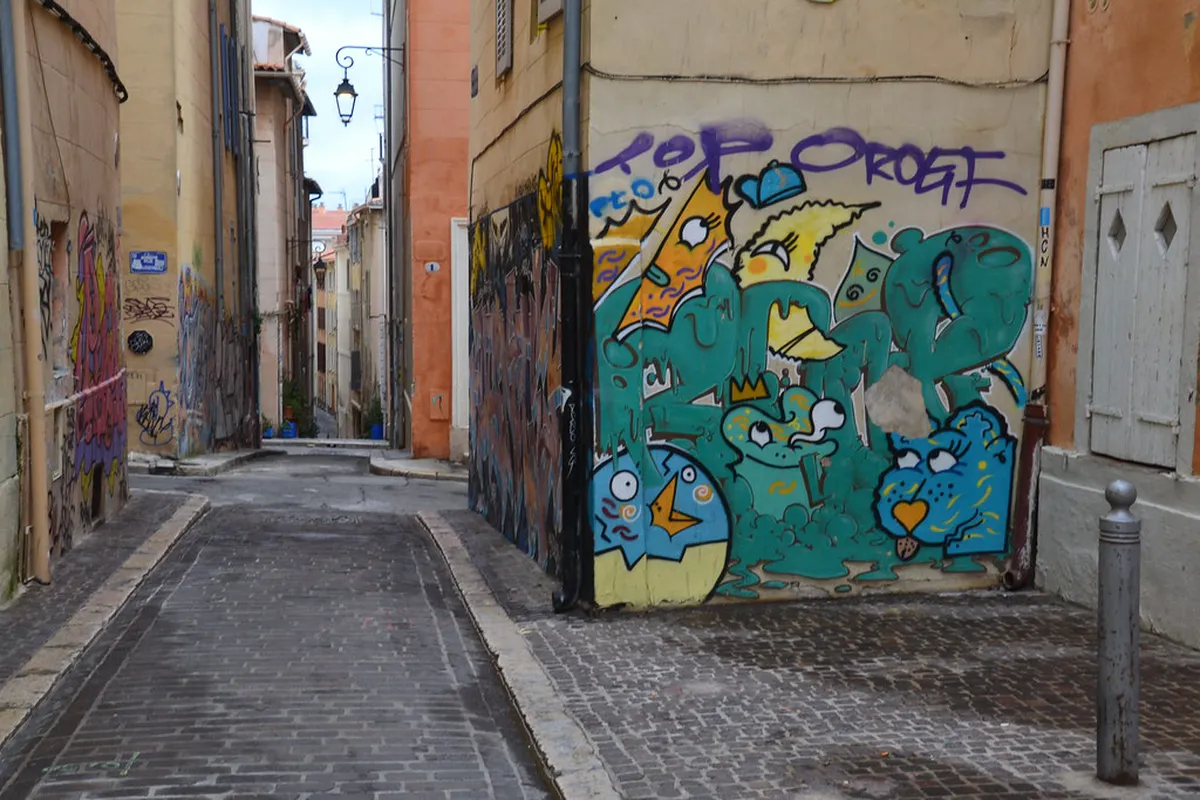
Street art covers a significant portion of the walls throughout the district, turning the neighborhood into a slow-moving open-air gallery. Local artists frequently leave their studio doors open during the daytime, and it is common to walk past someone mid-canvas without any barrier between the street and their work. The Place des Moulins is a quiet, tree-shaded square at the top of the hill that most day-trippers never reach — arriving there feels like finding a secret. Detailed neighbourhood context is covered in the marseille neighborhoods guide if you want to go deeper.
The Vieille Charité, an extraordinary 17th-century almshouse on Rue de la Charité, has a baroque chapel and a beautiful colonnaded courtyard that are free to enter even when temporary exhibitions are ticketed inside. The chapel dome is a rare example of Pierre Puget's architectural work and is worth crossing the courtyard to see up close. The complex is open Tuesday to Sunday and closes on Mondays. Allow at least an hour to walk the full district at an unhurried pace.
Visit Notre-Dame de la Garde for Free
Notre-Dame de la Garde is the defining landmark of Marseille and entry to the basilica is completely free. The interior is covered in gold Byzantine mosaics and hundreds of ex-voto offerings — small painted panels left by sailors and fishermen seeking or acknowledging divine protection. Model ships hang from the ceiling alongside paintings of storms, shipwrecks, and miraculous rescues, making the interior unlike any other church in France. More information on the site's history and visiting logistics appears in the dedicated notre-dame de la garde marseille guide.
Entry to Notre-Dame de la Garde basilica is completely free. There are no admission fees for the interior, the bell tower viewing platform, or the outdoor terraces. The only cost is optional donations left at the altar by visitors.
The outdoor terraces give the best 360-degree panorama of the city, the Calanques coastline to the south, the Frioul islands offshore, and on clear days the distant mountains of the Massif de l'Étoile to the north. The basilica opens at 07:00 and closes at 19:00 in summer (18:00 in winter). Hiking up from the Vieux-Port on foot takes around thirty minutes via the marked path through the Endoume neighborhood — a free, worthwhile alternative to the bus. Bus 60 from the Vieux-Port also runs to the summit for a standard RTM fare.
Locals call the statue topping the bell tower "La Bonne Mère" and treat the site as an active place of pilgrimage year-round, not just a tourist stop. Arriving before 09:00 on weekday mornings puts you there with the early worshippers rather than the coach tour groups. The walk down via the Chemin de la Bonne Mère passes quiet residential streets and reveals a slower, more ordinary Marseille that the tourist circuit rarely shows.
Explore the MuCEM Esplanade and the J4 for Free
The Museum of European and Mediterranean Civilisations (MuCEM) charges for its permanent collections, but the spectacular esplanade, the rooftop walkway, and the exterior footbridge connecting it to Fort Saint-Jean are all free to access every day of the week. Walking across the lace-like concrete lattice of the J4 building gives you unobstructed views of the sea on one side and the old harbor on the other. Learn more about the museum's architecture and collections on the official MuCEM website. The rooftop terrace is one of the best sunset spots in the city and is rarely crowded despite being completely open to the public.
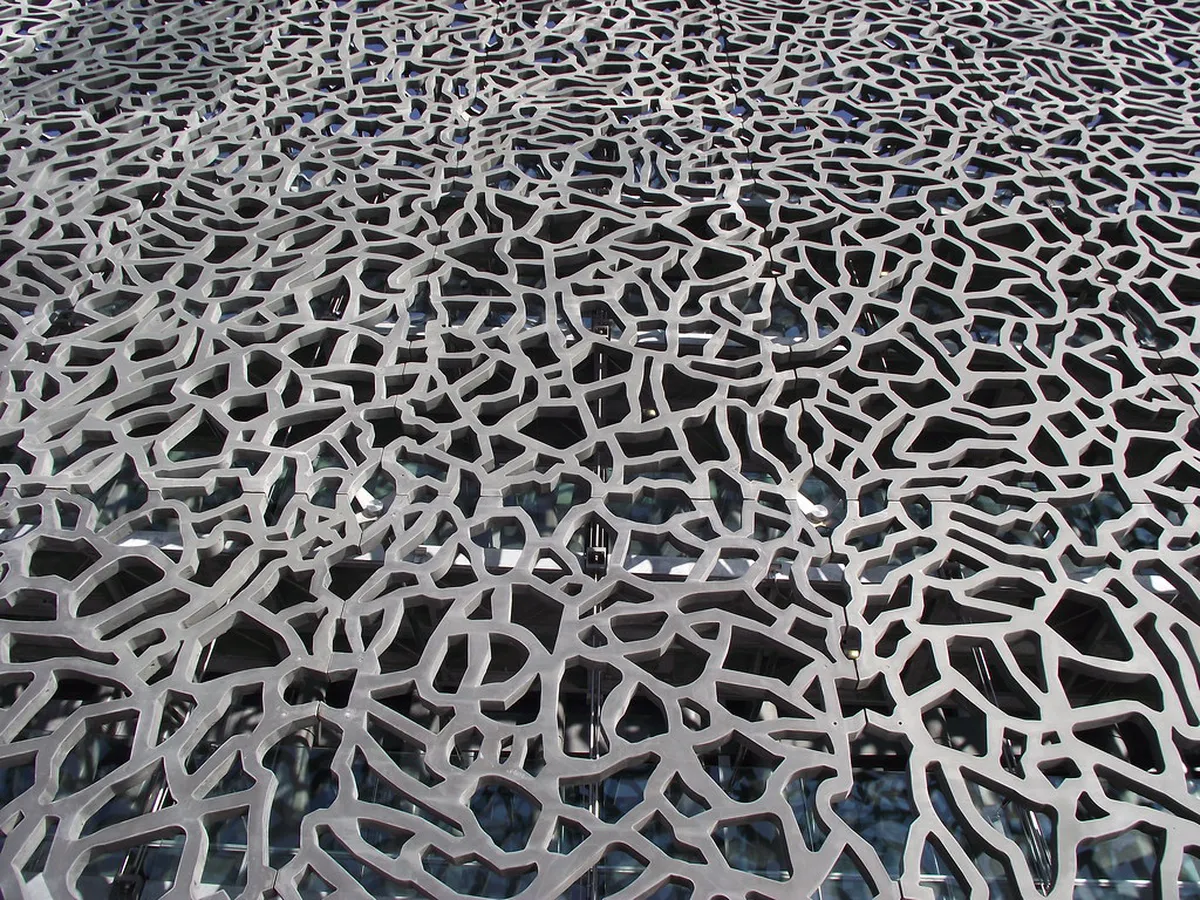
Fort Saint-Jean itself, connected to the MuCEM by the elevated walkway, has free exterior access to its ramparts, gardens, and the Chapel of Saint-Jean. The fort dates to the 17th century and the garden terraces on its upper level offer some of the finest views of the Vieux-Port entrance and the open Mediterranean beyond. On summer evenings the whole complex fills with locals sitting on the stone benches to catch the breeze — it is genuinely one of the best free spots in the city after dark.
The J4 pier extending into the sea from the MuCEM is a public space where people fish, sit, and watch cargo ships pass. On the first Sunday of each month, MuCEM waives the entry fee for the museum collections themselves — check the MuCEM website at mucem.org to confirm dates for 2026 before your visit.
Palais Longchamp and Its Free Gardens
The Palais Longchamp is one of the most impressive 19th-century monuments in France and its public gardens and cascading fountain are free to enter at all hours. The palace was built to celebrate the completion of an aqueduct bringing water from the Durance River to Marseille — which explains the theatrical fountain that forms its centrepiece, depicting water as abundance. The two curving colonnaded wings frame the fountain in a way that looks engineered specifically for dramatic photographs, and it delivers.
The Jardin du Palais Longchamp behind the main structure is a formal garden with large trees, shaded benches, and a good-sized children's play area. Locals use it as a weekday lunch park and it is significantly quieter than the Vieux-Port area. Both the Natural History Museum and the Fine Arts Museum are housed in the two wings of the palace — the Fine Arts Museum (MBA) was free at last check but verify the current policy at marseille.fr before visiting, as subsidised entry arrangements can change. Palais Longchamp is a short walk from the Cinq-Avenues-Longchamp metro station on line 1.
Coming here in the morning before the main city crowds form makes a particular difference. The fountain catches the early light well, the garden is at its most peaceful, and the steps in front of the palace make a good spot for a picnic if you have picked up supplies from one of the nearby boulangeries on Boulevard Longchamp.
Cours Julien: Street Art and the City's Bohemian Quarter
Cours Julien is a wide, tree-lined square in the 6th arrondissement that functions as the creative and bohemian heart of modern Marseille. The surrounding streets — particularly Rue Crudère, Rue des Trois Rois, and Rue d'Aubagne — are covered from pavement to roofline with large-scale murals by both local artists and international names. Walking a two-block radius from the central square gives you a free tour of what is arguably the most concentrated outdoor mural collection in southern France.
The square itself has terraced café steps, a small stream channel running through the lower level, and a weekend antique and record market (usually Saturday mornings) that costs nothing to browse. Independent bookshops, vinyl record stores, and second-hand clothing boutiques line the surrounding streets — none of them require you to buy anything to enjoy looking. The neighborhood sits between the Notre-Dame du Mont metro station (line 1) and the Cours Julien stop, making it easy to combine with a visit to Palais Longchamp or the Vieux-Port.
An important practical note: the energy of Cours Julien peaks in the late afternoon and evening when the terrace bars fill up. If you want the streets quiet enough to properly see the murals, arrive before noon. The street art changes seasonally — several major pieces are commissioned fresh each spring — so even returning visitors will find new work.
Vallon des Auffes and the Pharo Palace Gardens
Vallon des Auffes is a tiny fishing inlet tucked beneath the Corniche Kennedy road, about fifteen minutes on foot from the Vieux-Port heading south. It is one of the most photographed spots in Marseille and genuinely earns its reputation: a cluster of brightly painted fishing boats moored between low stone buildings, with a narrow arched bridge overhead and the open sea just beyond. There are no fees, no queues, and no ticket booths — just walk down the steps from the Corniche and you are there. It is easy to miss if you stay on the road level, so look for the stone staircase descending off the main path.
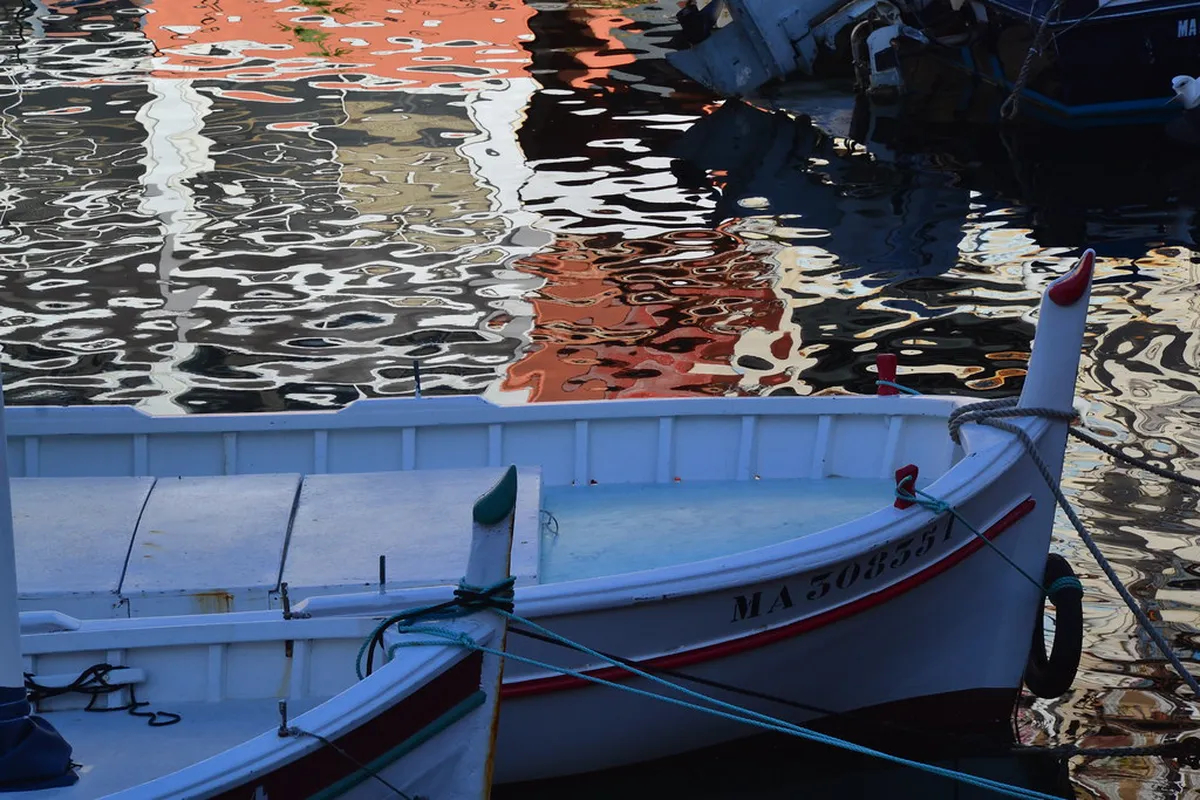
Continuing south along the Corniche for another ten minutes brings you to the Pharo Peninsula and the Pharo Palace gardens. The palace was built for Napoleon III and today operates as a conference centre, but the surrounding park with its manicured lawns and terraced gardens overlooking the harbor entrance is publicly accessible and free. The view from the Pharo gardens — looking back toward the Vieux-Port with the Notre-Dame de la Garde on the hill behind it — is one of the classic Marseille perspectives and is often used on postcards. Arrive around 17:00 in summer and you will find locals picnicking on the grass with bottles of rosé as the light softens.
Free Beaches: Catalans, Corniche, and Prado
Plage des Catalans is the most central sandy beach, a five-minute walk south of the Vieux-Port via the Rue des Catalans. It fills quickly in summer so arrive before 10:00 to secure a spot. The water is shallow and calm close to shore, making it better for paddling than swimming distances. The stony breakwater at the end of the beach is a popular local diving and jumping spot in July and August. A full guide to the city's coast appears in the marseille beaches guide.
The Corniche Kennedy walkway stretches roughly four kilometres from the Catalans beach south toward the Prado beaches, passing Vallon des Auffes along the way. The path is flat, paved, and runs right along the water's edge, with local swimmers using the rocks at various points to enter the sea. Watching the wind- and kite-surfers working the mistral on the open stretch near the Prado is a free spectacle that draws crowds on its own. The Prado beaches — Plage du Prado and Plage Borély — are the most spacious, with green lawns, public showers, drinking fountains, playgrounds, and skate areas all at no cost.
One practical tip most travel guides overlook: the beaches immediately south of the Prado, around Montredon and the Parc des Calanques entry points near Callelongue, are far less crowded than Catalans or central Prado and equally free. Getting there requires bus 19 or 20 from the Castellane metro station. The water is cleaner the further south you go as you approach the national park boundary.
Hiking the Calanques National Park
The Calanques National Park begins at the southern edge of the city and extends along the coast to Cassis. Hiking the trails is free, and the landscape — vertical white limestone cliffs dropping into turquoise coves — is genuinely extraordinary. The trail to Calanque de Sugiton (accessible from the Luminy university campus via free bus 21 from Castellane metro) takes roughly 45 minutes each way and is one of the most rewarding walks near a European city. The trail to Calanque de Sormiou from the Route de Sormiou parking area (no bus) is slightly longer but offers dramatic ridge-line views throughout.
In 2026, a mandatory reservation system remains in place for the most visited coves during the high season (typically June through mid-September, plus busy spring and autumn weekends). Reservations are free and must be made online at reservation-calanques.fr. Slots open several days in advance and fill quickly for peak summer dates, particularly for Sugiton which has a strict daily visitor cap. The park enforces these limits to protect the fragile garrigue scrubland and nesting birds — rangers check at the main access points.
Practical preparation matters here more than at most free attractions. Carry a minimum of 1.5 litres of water per person as there are no fountains or shops once inside the park. Trails are marked with yellow paint on the rock but the terrain is rugged and limestone surfaces can be slippery when wet. Starting at 07:00 or before in summer keeps you off exposed ridges during peak heat (the park can prohibit access on extreme fire-risk days — check the park website or the Prefecture des Bouches-du-Rhône social media for daily alerts before setting out).
Free Attractions Overview
| Attraction | What to Do | Notes |
|---|---|---|
| Vieux-Port | Waterfront walk, fish market viewing, sunset watching | Completely free; fishermen sell catch mornings at Quai des Belges; Ombrière canopy is signature photo spot |
| Le Panier | Wander cobblestone streets, street art gallery, local studios | Free neighborhood; Vieille Charité courtyard entrance free (chapel interior free even when exhibitions ticketed) |
| Notre-Dame de la Garde | Interior basilica visit, exterior terraces, 360-degree city views | Entry completely free; Byzantine mosaics and ex-voto paintings; opens 07:00-19:00 summer (18:00 winter) |
| Fort Saint-Jean & Fort Saint-Nicolas | Exterior ramparts walk, gardens, sea views | Exterior access free; connected to MuCEM by elevated walkway; 17th-century fortifications |
| MuCEM Esplanade & J4 | Esplanade walk, rooftop terrace at sunset, sea/harbor views | Esplanade and rooftop terrace free daily; lace-like concrete footbridge J4 has unobstructed Mediterranean views; museum collection free first Sunday monthly |
| Palais Longchamp Gardens | Formal garden walk, fountain viewing, picnicking | Public gardens free 24/7; cascading fountain and 19th-century palace architecture; Jardin du Palais behind palace quiet retreat |
| Cours Julien | Street art and mural photography, weekend market browsing | Largest mural collection in southern France; Saturday antique and record market free to browse; bohemian cafés and shops |
| Vallon des Auffes | Photography, fishing inlet views, picnicking | Tiny picturesque cove 15 min from Vieux-Port; colorful fishing boats, arched bridge, zero crowds or fees |
| Pharo Palace Gardens | Terrace walks, panoramic harbor views, sunset picnicking | Conference centre palace not open but park free and public; classic postcard Marseille view; locals come for evening rosé |
| Beaches: Catalans, Prado, Borély | Swimming, sunbathing, wind-surfing spectating | All free; Catalans most central 5 min from port; Prado has showers and playgrounds; less crowded southern beaches near Montredon |
| Calanques National Park trails | Hiking dramatic limestone cliffs and turquoise coves | Hiking free; mandatory free online reservation June-September; Sugiton trail 45 min each way; 1.5L water minimum per person |
See our main Marseille attractions guide for the broader overview.
For more Marseille ideas, see our Notre-Dame de la Garde and the city beaches guides.
Many of these have free attraction guides: the Vieux-Port, Le Panier and Vallon des Auffes.
Frequently Asked Questions
Is Marseille safe for budget travelers?
Marseille is generally safe for travelers if you stay aware of your surroundings in crowded tourist areas. Keep your valuables secure while using public transport or visiting busy markets. You can find more details in our is marseille safe guide to help plan a worry-free trip.
When is the best time to find free events in Marseille?
The summer months and European Heritage Days in September offer the most free events and open museum days. Many public festivals take place in the Vieux-Port area during June and July. Check the local tourism office website for a calendar of free concerts and outdoor cinema screenings.
Can I visit the museums in Marseille for free?
Many municipal museums offer free entry to their permanent collections on the first Sunday of every month. Students and young people under 26 often receive free or discounted entry throughout the year with a valid ID. Always check the specific museum website for current free entry policies before your visit.
Marseille proves that you do not need a large budget to enjoy the beauty and culture of the French Riviera. From the heights of the 'Good Mother' to the deep blue waters of the Calanques, free adventures are everywhere. Taking the time to walk through the historic neighborhoods reveals the true soul of this ancient Mediterranean port.
Focusing on free activities allows you to spend your budget on a few special meals or unique souvenirs instead. The city's mix of natural wonders and urban history creates a perfect destination for every type of budget traveler. Pack your walking shoes and a reusable water bottle to start your affordable journey through this vibrant coastal city.
Free guide: France's Hidden Gems
12 under-the-radar places across Provence, Alsace & Occitanie — with the best season to visit each and a local tip you won't find in the guidebooks.
You might also like



Continue reading
More guides you'll find useful