15 Best Free Things to Do in Montpellier (2026 Guide)
Find the best free things to do in Montpellier with our 2026 guide. Save money while exploring historic squares, lush gardens, and beautiful street art today!
On this page
Top Free Things to Do in Montpellier for Every Budget
Montpellier stands out as a vibrant Mediterranean city that balances historic charm with a youthful, energetic atmosphere. With over 40,000 students and a sun-drenched climate that draws visitors year-round, the city has built a remarkable culture of accessible, free public spaces.
Budget travelers will find an impressive variety of free things to do in Montpellier throughout 2026. You can wander through medieval streets, visit a full zoo, and reach the Mediterranean coast — all without spending more than a few euros on tram fare. This guide covers exactly where to go and what to expect.
Free guide: France's Hidden Gems
12 under-the-radar places across Provence, Alsace & Occitanie — with the best season to visit each and a local tip you won't find in the guidebooks.
Parc de Lunaret: Montpellier's Free Zoo
Parc de Lunaret is consistently rated the top free attraction in Montpellier, and it genuinely earns that status. The zoological park in the north of the city is home to over 1,500 animals across more than 130 species, ranging from giraffes and hippos to wolves and meerkats — all free to enter, every day of the week.

The park sits within a 80-hectare natural reserve and doubles as a nature trail through garrigue scrubland typical of the Hérault region. Allow at least two hours to walk the full circuit. The zoo is accredited by the European Association of Zoos and Aquaria (EAZA) and runs active conservation programmes, which gives it genuine depth beyond a standard city attraction.
To get there, take tram Line 1 toward Mosson and then bus 23 north, or cycle up on the VéloMagg bike-share scheme. The park opens daily at 09:00 and closes between 17:00 and 19:00 depending on the season. Bring water in summer — the site is large and mostly exposed.
Place de la Comédie and the Écusson
The Place de la Comédie serves as the beating heart of the city and is a perfect starting point for any visit. Travelers gather around the Three Graces fountain to watch street performers and local musicians entertain the crowds on warm evenings. The grand exterior of the Opéra Comédie behind the fountain gives a strong sense of the city's 19th-century architectural ambition, and the whole square is pedestrianised — no entry fee, no barriers.
From the square, step north into L'Écusson, the medieval old town, where the real texture of Montpellier reveals itself. The tightly packed lanes contain centuries-old hôtels particuliers (private mansions) with ornate stone doorways and interior courtyards. Many of these courtyards are semi-public — push open an unlocked iron gate and you may find a fountain or sculpted staircase hidden inside. The 10 Hidden Gems in Montpellier: A Local's Secret Guide extend well beyond the tourist circuit here.
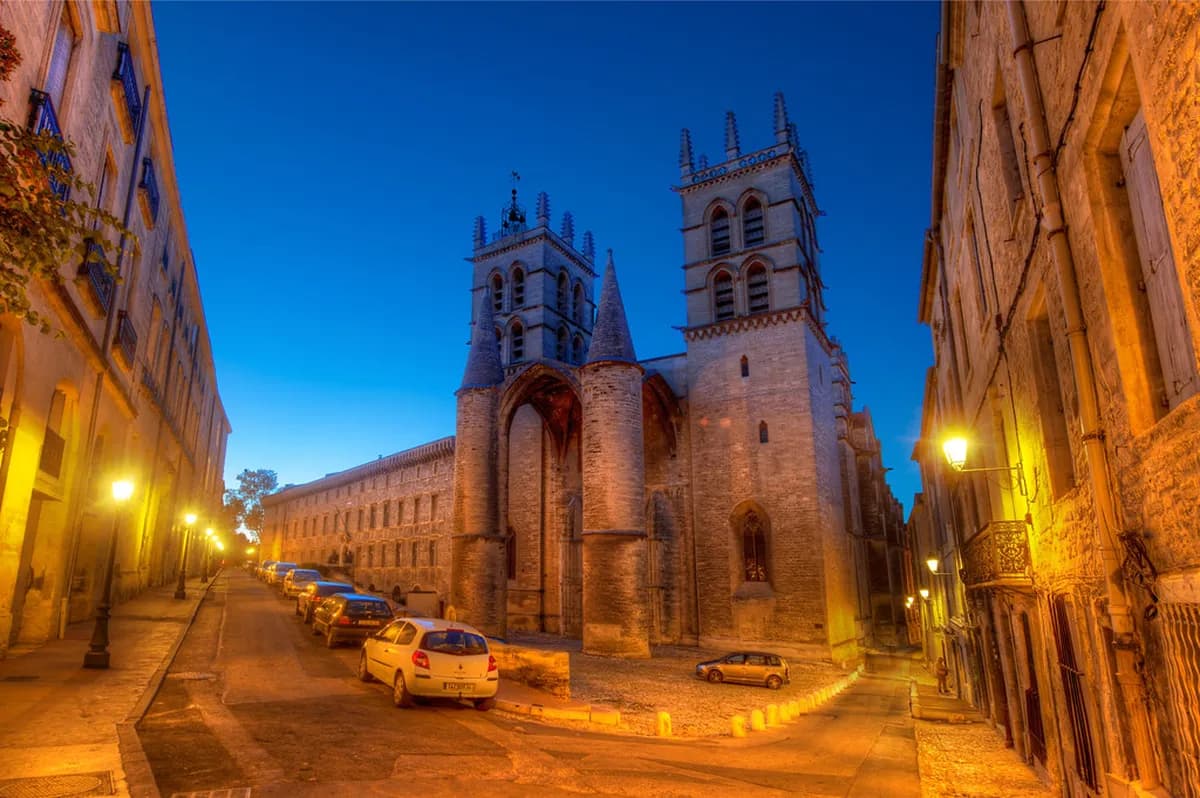
The Cathédrale Saint-Pierre is free to enter during its opening hours. Its two distinctive cylindrical towers make it look more like a fortress than a cathedral, which is intentional — it was built to withstand religious wars in the 14th century. Entry is free; a short visit takes around 20 minutes.
Promenade du Peyrou and the Saint-Clément Aqueduct
Walking up to the Promenade du Peyrou rewards visitors with some of the most expansive panoramic views in the region. The grand esplanade features an equestrian statue of Louis XIV at its western end and the octagonal water tower known as the Château d'Eau at the far edge. On a clear day you can see the Cévennes mountains to the north and the Mediterranean coastline to the south.
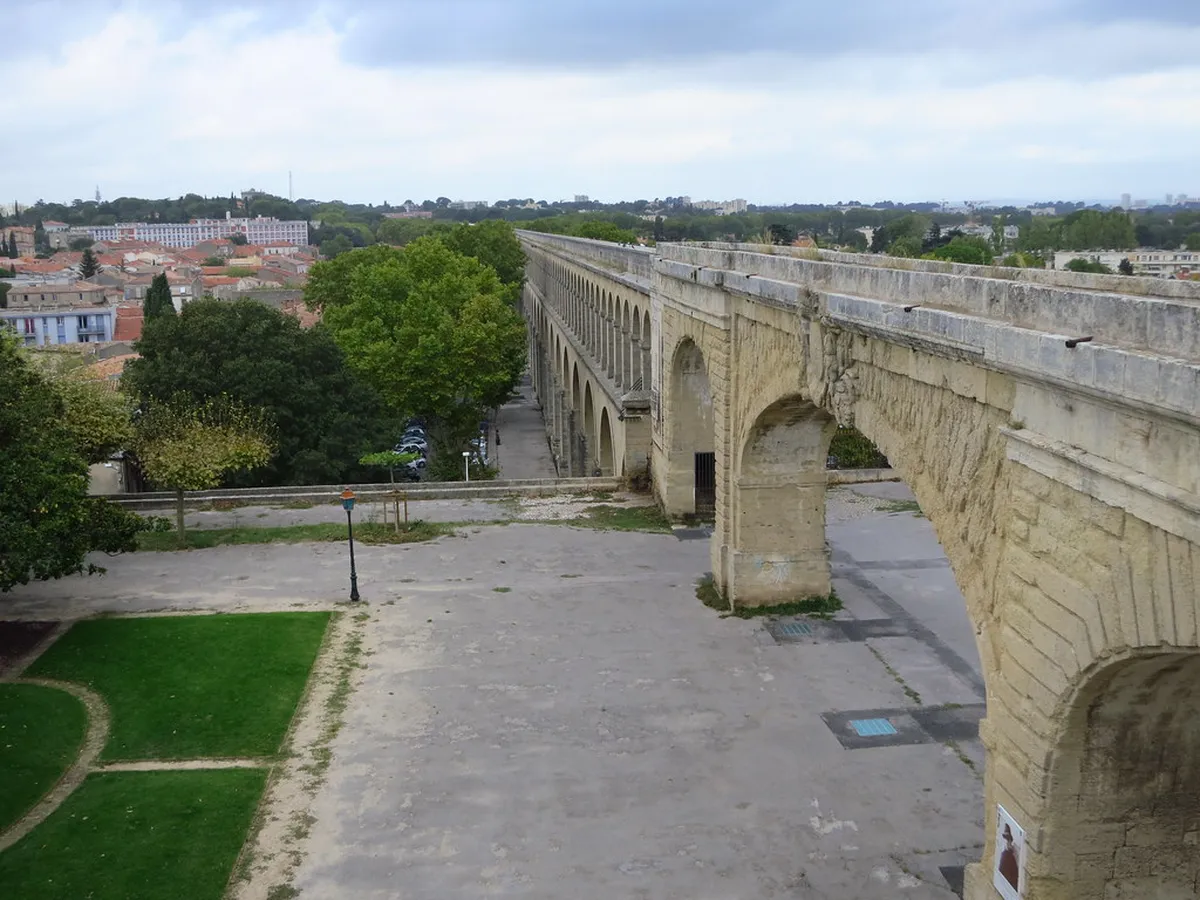
From the edge of the promenade, the Saint-Clément Aqueduct stretches away into the city below — a 17th-century engineering feat that once carried water from a spring 14 kilometres away. The lower level of the aqueduct is accessible on foot and gives a useful sense of its scale. Many locals recommend arriving at sunset when the pale stone glows amber.
Every Sunday morning, an antiques and bric-à-brac market sets up along the arcaded terraces beneath the promenade. Traders arrive from around 06:00 and pack up by midday. Books, vintage prints, old cameras, and local ceramics are reliable finds. Even if you buy nothing, it makes for an absorbing free hour before the rest of the city wakes up.
| Free Attraction | What to See | When Free / Cost |
|---|---|---|
| Parc de Lunaret | 1,500+ animals across 130 species in an 80-hectare reserve | Every day, €0 |
| Place de la Comédie | Three Graces fountain, street performers, Opéra Comédie exterior | Always, €0 |
| L'Écusson (Medieval Old Town) | Historic hôtels particuliers, courtyards, Cathédrale Saint-Pierre | Walkways always free, Cathedral €0 during visiting hours |
| Promenade du Peyrou | Louis XIV statue, Château d'Eau tower, panoramic views, Sunday market | Always, €0 (market open 06:00-midday Sundays) |
| Jardin des Plantes | 2,000+ plant species, ancient trees, historic gardens, carp pond | Daily except Monday, €0 |
| Musée Fabre | Flemish masters, Renaissance works, Impressionist collection | First Sunday of month €0, otherwise €8 |
| Pavillon Populaire | Photography exhibitions, world-class exhibitions | Every day, €0 |
| Mediterranean Beaches (via Tram Line 3) | Sandy beaches at Palavas, Carnon, La Grande-Motte | €1.70 per ticket, beaches €0 |
Jardin des Plantes: France's Oldest Botanical Garden
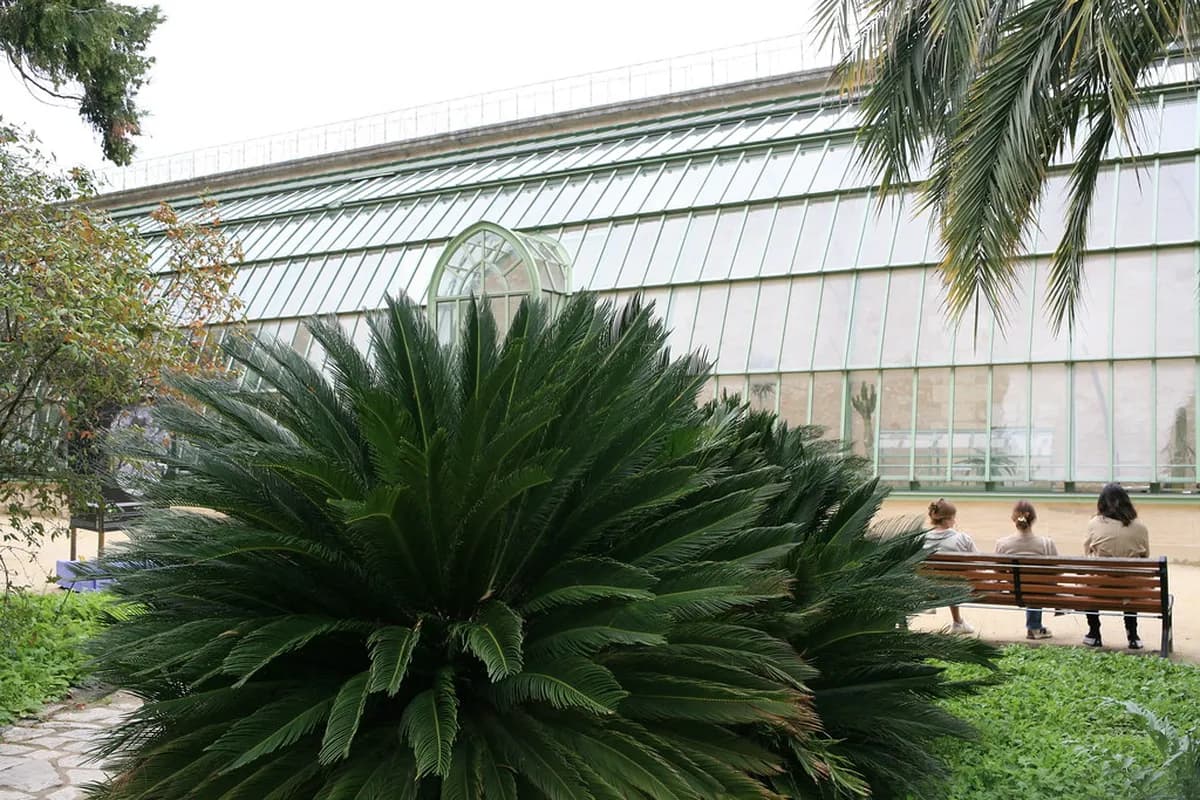
Established in 1593, the Jardin des Plantes is the oldest botanical garden in France, predating those in Strasbourg, Paris, and Caen. It was created to cultivate medicinal plants for the adjacent Faculty of Medicine — one of Europe's oldest medical schools — and today contains over 2,000 species of plants, ancient trees, and a tranquil carp pond.
Entry is free and the garden stays open daily except Monday. The shaded bamboo grove provides relief from the summer heat, and the central pond is a good spot to sit quietly for a few minutes. Look for the gnarled old Ginkgo biloba tree near the eastern wall — it dates to 1795 and is a classified historic monument in its own right.
The 'wishing tree', a hollow-trunked specimen near the main path, has long been a local tradition: visitors leave small folded notes tucked into the bark. It has no official explanation or signage, which makes finding it feel like a genuine discovery rather than a tourist stunt. The garden is a five-minute walk from the Place de la Comédie.
Free Museums: Pavillon Populaire and Musée Fabre
The Pavillon Populaire on the Esplanade Charles de Gaulle is entirely free to visit and has been a dedicated photography gallery since 1999. It hosts three to four major exhibitions per year, typically focusing on a single photographer's career or a documentary series. The quality is consistently high — past retrospectives have covered work by Henri Cartier-Bresson and Sebastião Salgado. Check the city's tourism website for the current programme before visiting.
The Musée Fabre is not free on regular days — admission is €8 in 2026 — but entry is free on the first Sunday of every month. The collection is one of the most significant in southern France, covering Flemish masters, Italian Renaissance works, and an unusually strong 19th-century French painting collection. Frédéric Bazille, the Impressionist who was born in Montpellier, has an entire room dedicated to his work. If your visit aligns with a first Sunday, this is worth planning around.
The Musée du Vieux Montpellier in the Hôtel de Varenne (Place Pétrarque) is free on all days and covers the city's history through maps, prints, and objects. It is small and takes about 45 minutes, but the building itself — a 17th-century hôtel particulier with a courtyard — justifies the detour even if museums are not your priority.
The Musée Fabre is free to enter on the first Sunday of every month. Plan your visit around this date if you want to see one of southern France's most significant art collections without paying the usual €8 entry fee.
Street Art, Courtyards, and the Quartier Saint-Roch
The winding alleys of the Quartier Saint-Roch are the main canvas for Montpellier's street art scene. Building facades carry trompe-l'œil murals that create visual depth where there is only a flat wall. Look for the painted bicycles bolted to stone walls and the scattered ceramic Space Invader tiles that the artist Invader has been placing on building facades in French cities since the late 1990s — Montpellier has several, hidden at roof level.
The street art is concentrated between the Rue de l'Ancien Courrier and the Rue des Trésoriers de France, but the entire Écusson rewards a slow walk with no fixed route. Pick a direction and double back when a lane dead-ends. The free 10 Hidden Gems in Montpellier: A Local's Secret Guide that most visitors miss are in these back streets, not on the main squares.
The Antigone District: Ricardo Bofill's Open-Air Architecture
The Antigone district offers a striking contrast to the medieval centre. Designed by Catalan architect Ricardo Bofill in the 1980s and 1990s, the neighbourhood is a Neo-Classical urban project of unusual scale — wide colonnaded avenues, symmetrical apartment facades, and monumental squares all modelled loosely on ancient Greek and Roman precedents. It is entirely walkable and costs nothing to explore.
Start at the Place du Nombre d'Or, directly east of the old town, and walk the main axis toward the Lez river. The terminal point, Place du Millénaire, opens onto the riverbank where a pedestrian bridge crosses to the Odysseum shopping and leisure complex. The walk takes about 20 minutes at a relaxed pace. Architecture students and urban planners come specifically for this district — it remains one of the most debated social housing projects in French architectural history, which makes it more interesting to look at, not less.
Mediterranean Beaches by Tram: The Cheapest Beach Day in Southern France
Montpellier is about 12 kilometres from the Mediterranean coast, and the city's tram network makes it genuinely easy to reach the sea without a car. Tram Line 3 runs southwest from the city centre toward the coastal communes and connects to bus services that continue to Palavas-les-Flots, one of the closest sandy beaches to any major French city. A single tram ticket costs €1.70 in 2026, and a return journey stays under €4.
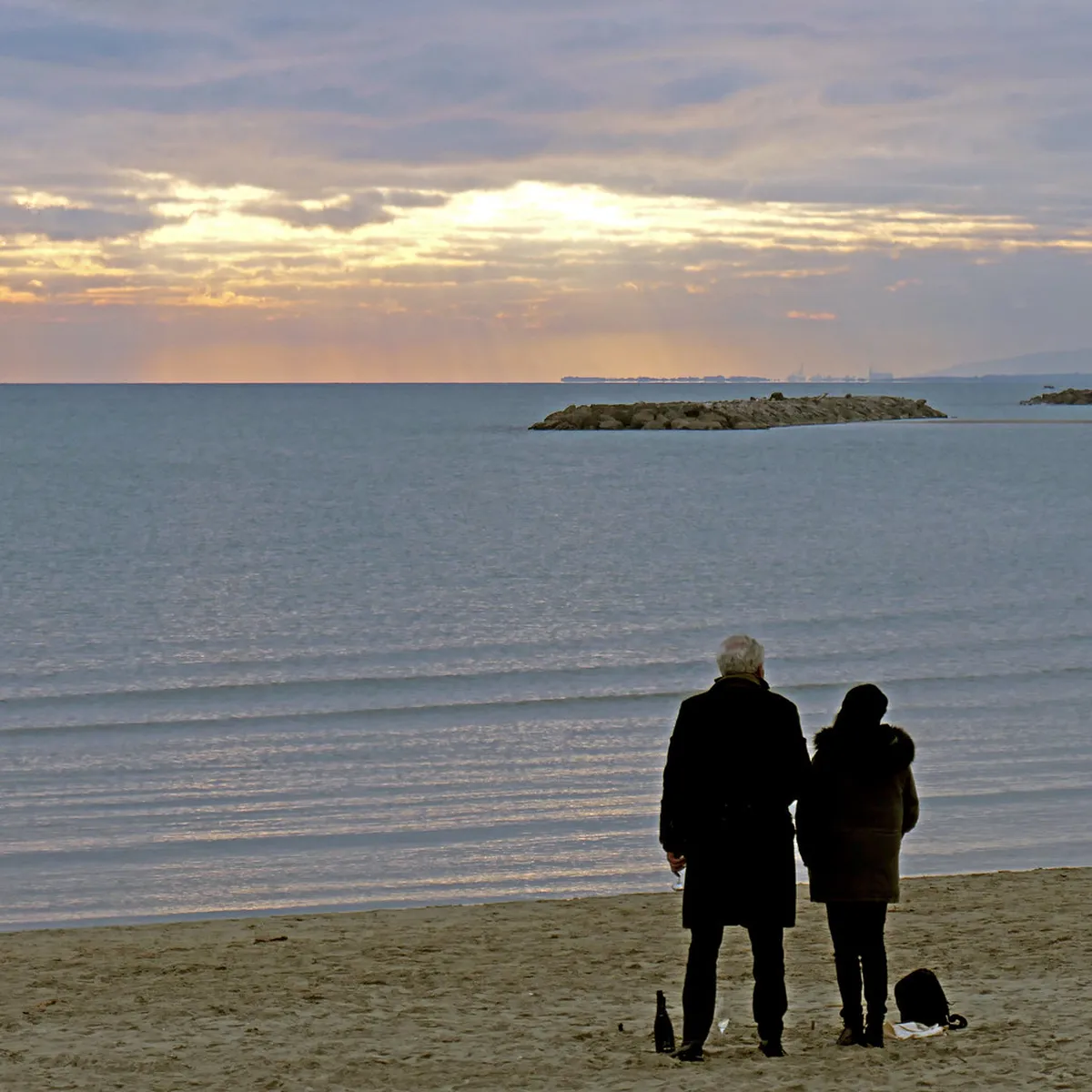
The beaches at Palavas, Carnon, and La Grande-Motte are entirely free to use. There are no entry fees, no reserved zones, and no charges for the basic stretches of sand. Sunbeds and parasols at private beach clubs cost extra, but the public beach beside them is always open. Carnon tends to be quieter than Palavas in July and August, which matters if you are visiting during peak summer.
This tram-to-beach combination is genuinely unusual for a city of Montpellier's size. Most Mediterranean cities with equivalent beach access — Nice, Marseille, Toulon — require a car, a bike hire, or an expensive suburban train. Montpellier's urban tram running directly toward the coast is a practical advantage that gets underplayed in most travel guides. The beaches near Montpellier are the reward for a day that has already been spent entirely for free in the city.
A single tram ticket to the coast costs €1.70 and a return journey stays under €4, making it one of the cheapest ways to reach Mediterranean beaches from any major French city. The beaches themselves are entirely free — no entry fees, no reserved zones, and no charges for public sand.
Free Markets and the Lez Riverbank
The Marché du Lez, on the banks of the Lez river in the Figuerolles neighbourhood, is one of the most enjoyable free things to do in Montpellier on a weekend. The weekend market runs Friday evening and all day Saturday and Sunday, covering vintage clothing, independent food stalls, local producers, and craft goods. There is no entry charge and browsing costs nothing. The street food vendors make it a natural lunch spot even if you are not buying goods.
The Lez riverbank itself has been developed into a cycling and walking corridor that extends several kilometres north and south of the city. The southern section toward the Antigone district is paved and easy to navigate. The northern stretch becomes more natural and quieter within about two kilometres. Flamingos are occasionally visible in the shallow lagoons along the lower Lez on winter and early spring mornings — they move between the Camargue wetlands and the coast, and Montpellier's river corridor falls within their range.
The free Parc de Lunaret zoo has its own visitor guide with hours and access.
Frequently Asked Questions
Is the Fabre Museum free to visit?
The Fabre Museum usually requires a ticket for its main collections and temporary exhibitions. However, the museum often offers free entry on the first Sunday of every month. It is a great way to see world-class art without any cost during your stay.
Are there free walking tours in Montpellier?
Several local organizations offer tip-based walking tours that cover the main historic sites of the city center. While the tours are technically free to join, it is customary to provide a small tip to the guide. These tours provide excellent context for the city's rich history.
Can I see the Montpellier Cathedral for free?
Yes, the Cathédrale Saint-Pierre is free for the public to enter and explore during its standard operating hours. This massive Gothic structure features unique twin pillars that look like a fortress. It remains one of the most impressive free landmarks in the historic district.
What are the best free events in Montpellier?
The city hosts many free festivals, including the Fête de la Musique in June and various summer night markets. You can also enjoy free outdoor screenings and concerts during the warm Mediterranean months. Check the local tourism office for a full schedule of upcoming free activities.
Montpellier proves that you do not need a large budget to enjoy a world-class European destination. A full zoo, France's oldest botanical garden, a free photography gallery, a free medieval district, and a tram line to the Mediterranean coast — all of it costs nothing, or close to it.
The city's student population keeps prices low and the public spaces generous. Plan your visit around a first-Sunday Musée Fabre visit and a morning at Parc de Lunaret, and you have a full day's itinerary without opening your wallet once.
Free guide: France's Hidden Gems
12 under-the-radar places across Provence, Alsace & Occitanie — with the best season to visit each and a local tip you won't find in the guidebooks.
You might also like


Continue reading
More guides you'll find useful