Marseille or Montpellier: 11 Key Differences to Help You Choose
Deciding between Marseille or Montpellier? Compare costs, beaches, nightlife, and culture with our expert guide to these two stunning Southern French cities.
On this page
Marseille or Montpellier: 11 Key Differences to Help You Choose
Marseille and Montpellier sit just 170 kilometres apart on the southern French coast, yet they feel like different worlds. Marseille is France's second-largest city — ancient, sprawling, and driven by one of Europe's busiest commercial ports. Montpellier is younger in spirit, compact, and shaped by its universities. Knowing which suits you is a decision worth making before you book.
This guide compares both cities across every dimension that matters to a traveller in 2026: atmosphere, attractions, beaches, food costs, safety, transport, and budget. You should also read Is Montpellier Worth Visiting Travel Guide if you want a deeper dive into one side of this comparison. By the end you will know exactly which city matches your travel style.
Marseille vs. Montpellier: At a Glance
Marseille has a population of roughly 870,000 — about three times that of Montpellier's 295,000. It covers a far larger urban footprint and takes more time to navigate. Montpellier's medieval center, L'Écusson, is almost entirely pedestrianised and can be crossed on foot in 20 minutes. You can find a detailed Montpellier Travel Guide: The Ultimate South of France Guide to help plan your logistics.
Both cities get over 300 days of sunshine annually. Summer temperatures hover around 24°C in Marseille and 23°C in Montpellier — near-identical. Marseille tends to receive slightly less rain than Montpellier across the year, particularly in autumn. The train between them takes 90 minutes and costs €15–€30 on a TGV, making a dual-city trip very practical.
| Factor | Marseille | Montpellier |
|---|---|---|
| Population | ~870,000 | ~295,000 |
| Average daily cost (per person) | €179 | €140 |
| Best for | Food, culture, coastal hikes | Walkability, nightlife, students |
| Time recommended | 3–4 days | 2–3 days |
| Nearest beach | 800 m from city centre | 12 km from city centre |
| Train from Paris | ~3 h 20 min | ~3 h 30 min |
Vibe and Atmosphere: Gritty Port vs. Elegant University Town
Marseille is raw and unapologetically itself. It is the most multicultural city in France, with North African, Italian, and Comorian communities all shaping the food, music, and street life. The city has an edge that some visitors find electric and others find overwhelming. Its historic neighborhoods — Le Panier, Noailles, Cours Julien — each have a distinct character and are nothing like what you find in a polished tourist city.
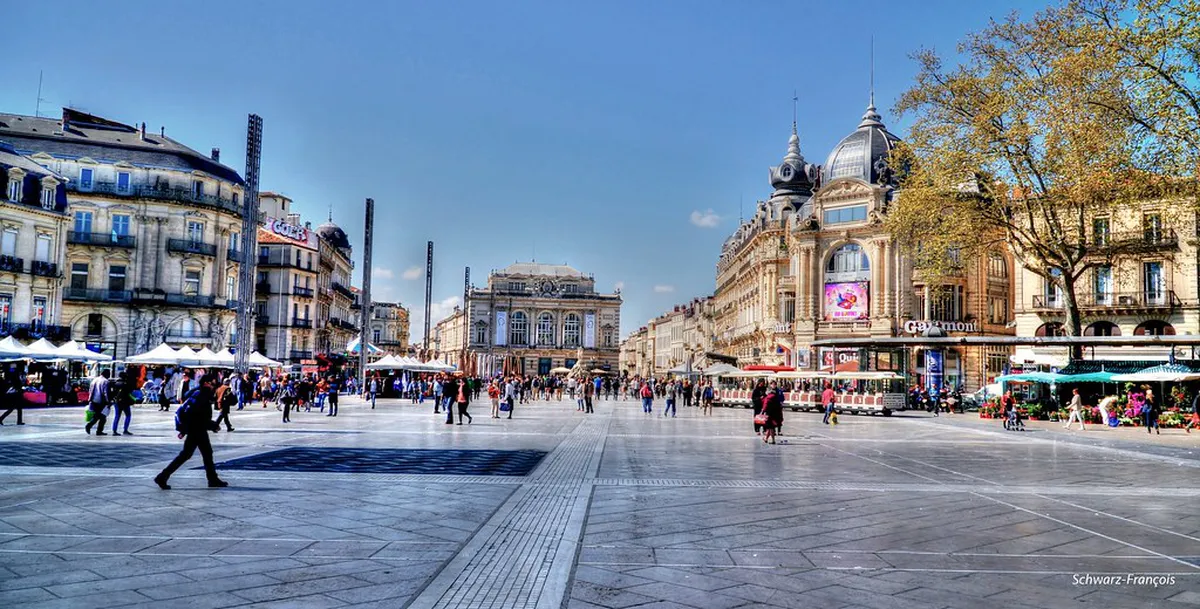
Montpellier has a very different energy. A third of the population are students, and the city's social life revolves around cafes, wine bars, and the great pedestrian square of Place de la Comédie. It feels safe, manageable, and easy to love from day one. The Antigone district — designed by Catalan architect Ricardo Bofill — adds a layer of striking neoclassical architecture that gives the city a modern self-confidence.
Neither city tries to replicate the other. If you want to feel like you have discovered something real and living, Marseille delivers it. If you want beauty, ease, and a lively but stress-free trip, Montpellier is the better fit.
Marseille suits explorers and foodies who thrive in cosmopolitan environments and enjoy unpredictability. Montpellier suits first-time France visitors, families, and comfort-seekers who value walkability and low stress over raw cultural immersion.
Montpellier and Marseille: Pros and Cons
Every city has trade-offs. Here is an honest summary of what each one gets right and where it falls short.
- Marseille pros: world-class food scene including bouillabaisse and North African street food; Calanques National Park on the doorstep; MuCEM museum; genuine multicultural energy; beaches within walking distance of the centre; strong nightlife and street art culture
- Marseille cons: heavy traffic; sprawling layout requires public transport; some neighborhoods feel unsafe at night; can be expensive in tourist areas; Mistral wind makes spring visits chilly
- Montpellier pros: almost entirely walkable historic center; excellent tram network; cheapest average daily costs of any major French city in the south; vibrant student-driven nightlife; gateway to Languedoc vineyards; very family-friendly
- Montpellier cons: no beach in the city proper (nearest is 12 km away); smaller than Marseille so fewer sights to fill 4+ days; less international name recognition; fewer budget hostels than Marseille
The key trade-off is scale versus ease. Marseille rewards the traveller who is happy to work a little harder to find its best moments. Montpellier hands them to you almost immediately.
Must-See Marseille Attractions
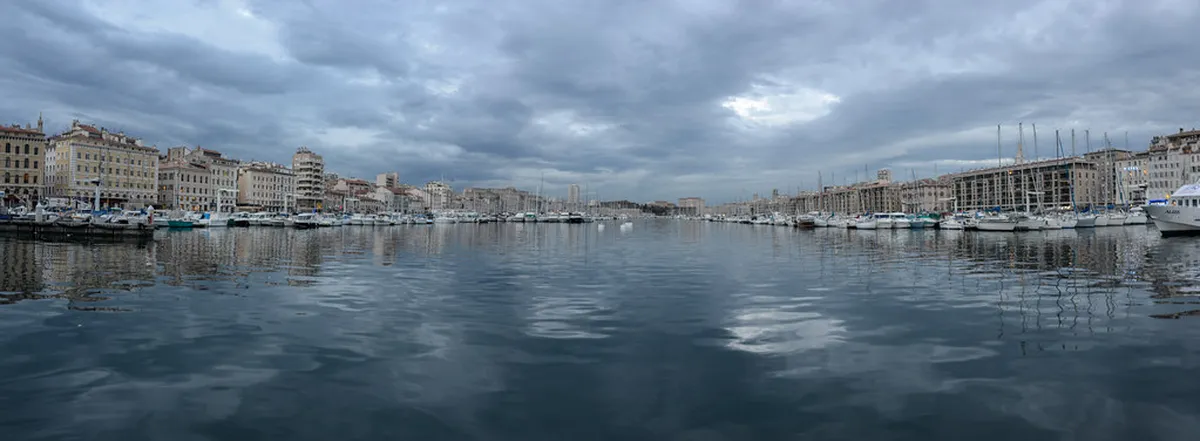
The Vieux-Port is the beating heart of Marseille and should be your first stop. Watch fishermen sell their catch on the docks every morning before 09:00. Nearby, the MuCEM museum sits at the entrance of the old port and features a stunning steel lattice exterior alongside exhibitions on Mediterranean civilisation. Entry costs €11 for adults and the views from the rooftop terrace alone are worth the price.
Notre-Dame de la Garde stands on the highest hill in the city and offers a 360-degree panorama of the sea, the islands, and the urban sprawl below. Take bus 60 from the Vieux-Port or walk the 30-minute uphill path. The Le Panier neighborhood is Marseille's oldest quarter — narrow lanes, street art by international artists, and the 17th-century Vieille Charité complex. Do not miss the Vallon des Auffes, a tiny fishing port tucked under the Corniche road, which looks like it belongs in a Pagnol novel.
For the Calanques, book a half-day boat tour or hike in from Cassis or the Luminy campus. The turquoise water in the coves like En-Vau or Port-Pin is some of the clearest in France. Entry to the national park is now managed via a reservation system from June to September — check the official park website before you go, as access on foot requires a free online booking during peak months.
Top Things to Do in Montpellier
Start at Place de la Comédie, one of the largest pedestrian squares in Europe. The square is at its best in the evening when terraces fill and the Opéra Comédie is lit up. From here, walk into L'Écusson and get deliberately lost in the lanes. The city is famous for its hôtels particuliers — private baroque mansions with courtyard gardens, several of which are open to the public.
The Jardin des Plantes is the oldest botanical garden in France, founded in 1593, and entry is free. For contemporary art, Mo.Co (Montpellier Contemporain) runs two spaces in the city and has one of the strongest exhibition programmes in southern France. Musée Fabre houses a major collection of European painting in a beautifully restored 18th-century mansion — entry costs €8.
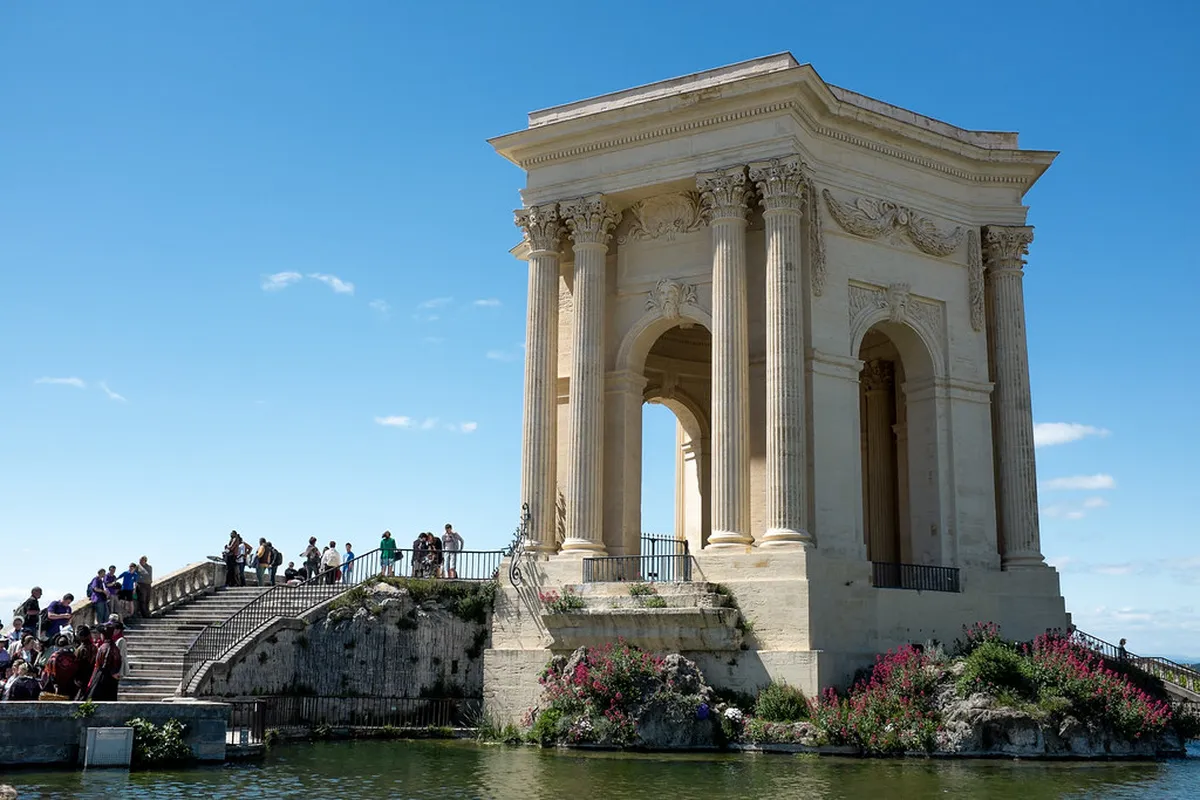
The Promenade du Peyrou is a wide esplanade with a triumphal arch at one end and the elegant Château d'Eau water tower at the other. There is a flea market beneath the aqueduct arches on weekday mornings. The Antigone district is a 10-minute walk east and is ideal for architecture enthusiasts — the scale and neoclassical detailing are genuinely impressive for a district built in the 1980s.
Beach Access: The Detail Most Guides Get Wrong
Marseille wins the beach comparison decisively, and not just because of the Calanques. Plage des Catalans is 800 metres from the Vieux-Port and accessible on foot. Plage du Prado, the city's largest public beach, is reachable on the number 83 bus in 15 minutes. If you want a swim after a morning at the MuCEM, you can be in the sea by early afternoon without any real effort.
Montpellier's beach situation is frequently misunderstood. The city has no beach. The nearest option is Palavas-les-Flots, 12 km to the south, reached by the number 28 bus in around 30 minutes or tram line 3 to its terminus plus a short walk. The beach there is long, sandy, and far less crowded than anything near Marseille in summer. But it requires planning — it is not a spontaneous afternoon swim.
For a beach-first holiday, Marseille is the obvious choice. If beach access is a secondary priority — say, one or two afternoons — Montpellier works fine and Palavas is genuinely pleasant. Travelers planning a summer trip who list beaches as their main reason for choosing a city should factor in this access difference before booking.
| Factor | Marseille | Montpellier |
|---|---|---|
| City size | ~870,000 (large port city) | ~295,000 (university town) |
| Atmosphere | Gritty, multicultural, energetic | Elegant, walkable, student-driven |
| Beach access | 800 m from city centre | 12 km away (Palavas) |
| Must-see attractions | MuCEM, Vieux-Port, Calanques, Notre-Dame | Place de la Comédie, Antigone, Jardin des Plantes |
| Walkability | Partial (hilly, needs tram/metro) | Excellent (fully pedestrian centre) |
| Food speciality | Bouillabaisse, North African street food | Languedoc wine, bistro cuisine |
| Average daily cost | €179 per person | €140 per person |
| Best for families | Yes, with transport planning | Yes, very manageable and safe |
| Ideal visit length | 3–4 days | 2–3 days |
Safety and Neighborhoods: What to Know Before You Arrive
Montpellier is one of the safer large cities in France for tourists. The historic center is well-lit, busy at all hours, and patrolled regularly. The area around Place Jean Jaurès gets lively late at night but remains largely good-natured. As a solo traveler or first-time visitor to France, you will feel comfortable here.
Marseille has a more complicated safety picture. The majority of the city is fine for tourists, including the Vieux-Port, Le Panier, Notre-Dame de la Garde, and Cours Julien. The parts of the city that attract negative press — primarily the northern arrondissements around the Cité de la Castellane and parts of the 3rd and 14th — are not tourist areas and most visitors never encounter them. The Noailles market area (1st arrondissement) can feel chaotic and pickpocketing is reported near busy bus stops, but violent crime targeting tourists is rare.
A sensible rule for Marseille: stay aware at busy transit hubs like Gare Saint-Charles and the main bus exchange at Castellane, especially with luggage. In the tourist zone between the Vieux-Port and the Corniche, you are as safe as in any large European city.
Both cities are tourist-friendly with standard big-city precautions. Avoid valuables on crowded buses in Marseille; in Montpellier, the walkable center means you will rarely need transit after dark. Pickpocketing is rare but reported in crowded market areas — use crossbody bags and keep phones secure.
How Much is Food and Drink?
Marseille is famous for bouillabaisse, a seafood stew with a complex rouille and crouton accompaniment. A proper bowl at a traditional restaurant on the Vieux-Port costs €50–€80 per person. It is a celebratory meal, not everyday eating. The daily food reality is much more affordable: a Pastis at a bar costs €2.50–€4.00, a merguez sandwich from the Noailles market runs €3–€5, and a sit-down lunch menu with wine is €12–€18 at bistros outside the port area.
Montpellier benefits from its position at the heart of Languedoc wine country. A glass of Picpoul de Pinet or a local Faugères red at a wine bar on Place de la Comédie costs €4–€6. Three-course dinner menus at Écusson restaurants typically run €28–€45. Street food around the university area is cheaper than Marseille on average — budget around €8–€12 for a midday meal.
| Item | Marseille | Montpellier |
|---|---|---|
| Pastis / glass of wine | €2.50–€4.00 | €4.00–€6.00 |
| Street food / lunch snack | €3–€8 | €6–€12 |
| Sit-down lunch menu | €12–€18 | €14–€20 |
| Dinner (3-course) | €30–€55 | €28–€45 |
| Coffee (espresso) | €1.80–€2.80 | €2.00–€3.00 |
Overall, Marseille street food is cheaper but sit-down dining skews more expensive, especially near the waterfront. Montpellier is more consistent in pricing across the board. Both cities offer good value compared to Paris or Nice.
How to Spend Three Days in Marseille
Day one is for the historic core. Start at the Vieux-Port fish market before 09:00, then walk to the MuCEM for two hours. Cross the fortified bridge to Fort Saint-Jean for the harbour views, then spend the afternoon in Le Panier. End the day at the Vallon des Auffes for a grilled fish dinner — La Grotte and Chez Fonfon are the benchmark restaurants here.
Spend day two on the water. Take a morning boat tour to the Calanques — most depart from the Vieux-Port around 09:00 and run 3–4 hours. Return for lunch in the Noailles market area, then head up to Notre-Dame de la Garde on bus 60. The late afternoon light on the basilica is extraordinary. You can find a similar Montpellier 3-day itinerary for comparison if you are planning both cities.
Use day three to explore Cours Julien, the bohemian neighborhood south of the center. The street art here changes constantly and the independent cafes open early. In the afternoon, visit Plage du Prado for a swim. End with dinner in the increasingly trendy La Plaine district, which has the best value restaurants in the city for serious cooking at moderate prices.
Getting Around and Transportation
Montpellier is famous for its tram network, whose lines were designed with distinct visual identities — Line 1 by Christian Lacroix. The city has four tram lines covering most destinations, including the beach at Palavas (via the number 3 line extension). Read the Getting Around Montpellier Travel Guide before you arrive. A single tram ticket costs €1.70 and a 24-hour pass is €4.20. Because the center is pedestrianised, you will walk to most attractions and use the tram only for the outskirts.
Marseille has two metro lines (M1 and M2), three tram lines, and an extensive bus network. The layout is complex and the city is hilly — walking between the Vieux-Port and Notre-Dame de la Garde is a serious uphill climb. A single ticket costs €2.00 and a 24-hour pass is €5.20. The metro is the fastest way to cross the city. You can browse train schedules here. for journeys between the two cities. Gare Saint-Charles in Marseille is central and walkable to the Vieux-Port, while Montpellier's Gare Saint-Roch is equally well-placed for the historic center.
Cost of Living and Travel Budgeting
Montpellier is significantly cheaper than Marseille by every measure. The average daily travel cost per person — including accommodation (shared), food, transport, and one paid activity — is €140 in Montpellier vs €179 in Marseille, according to aggregate traveler data. That is a 28% difference, which adds up to around €117 per person over a three-night stay.
Accommodation drives the biggest gap. Mid-range double rooms in Montpellier's historic center typically run €70–€110 per night, while equivalent rooms near Marseille's Vieux-Port cost €100–€160. Budget hostels exist in both cities, but Marseille has more options in the €25–€40 dorm range, including the well-reviewed Vertigo Vieux-Port near the old port. You can book it directly at the Vertigo Vieux-Port link.
| Budget type | Marseille / day | Montpellier / day |
|---|---|---|
| Backpacker (hostel + street food) | €55–€75 | €45–€60 |
| Mid-range (2-star hotel + bistros) | €120–€160 | €90–€130 |
| Comfortable (3-star + restaurants) | €180–€250 | €140–€200 |
For expats or digital nomads evaluating a longer stay, Montpellier has become a popular choice in 2026 thanks to its French Tech ecosystem, strong university networks, and rents that are 15–20% lower than Marseille for comparable apartments in the center. Marseille's port economy supports more industrial and logistics roles, while Montpellier draws biotechnology, software, and environmental research companies.
Marseille vs. Montpellier: The Verdict
Choose Marseille if you want raw cultural depth, a world-class food scene, immediate beach access, and the drama of a proper port city. It rewards travelers who are comfortable in big, busy urban environments and want more than three days' worth of things to do. The Calanques alone justify a trip.
Choose Montpellier if you want a stress-free stay in a beautiful, walkable city with excellent wine, a lively nightlife, and a more relaxed pace. It is the better choice for first-time visitors to the south of France, for families, and for anyone who does not want to spend half their day navigating public transport. You can find excellent options for eating and drinking in the Montpellier Food Guide: 7 Essential Dining Experiences guide.
| You should pick... | Marseille | Montpellier |
|---|---|---|
| Best for foodies | Yes — bouillabaisse, markets, diversity | Good — Languedoc wine and bistros |
| Best for walkability | Partial — hilly, needs transport | Yes — entirely pedestrian centre |
| Best for beach access | Yes — walking distance | No — 12 km to nearest beach |
| Best for nightlife | Yes — Cours Julien, rooftops | Yes — Place Jean Jaurès, student bars |
| Best for families | Good — with planning | Yes — easy, safe, manageable |
| Best value overall | No — 28% more expensive | Yes — lowest daily cost in South France |
| Best for 2–3 day trip | Possible but rushed | Yes — ideal duration |
If you have five days or more, visit both. They are 90 minutes apart by train and complement each other almost perfectly. Start with Montpellier to ease into the south, then take the train to Marseille for the final two or three days.
For the full picture, see our complete guide to things to do in Montpellier.
Frequently Asked Questions
Is Marseille or Montpellier safer for tourists?
Montpellier is generally considered safer and more relaxed for tourists. You should still check an is Montpellier safe guide for neighborhood advice. Marseille has a grittier reputation, but most tourist areas are perfectly fine during the day.
Which city is cheaper to visit?
Marseille is often slightly cheaper for accommodation and street food. You can find many budget-friendly hostels and markets. Montpellier can be more expensive in the historic center due to its popularity with students and upscale diners.
How far is Marseille from Montpellier?
The two cities are about 170 kilometers apart. The high-speed train takes roughly 90 minutes. Driving takes about two hours depending on the traffic around Marseille.
Both Marseille and Montpellier offer incredible experiences in the south of France. Marseille will thrill you with its coastal beauty and multicultural energy. Montpellier will charm you with its medieval streets and youthful spirit. Whichever you choose, you are guaranteed plenty of sunshine and great Mediterranean food.
You might also like


Continue reading
More guides you'll find useful