Frioul Islands Travel Guide: Visiting Marseille's Archipelago
Discover the Frioul Islands near Marseille: hiking trails, turquoise coves, and Château d'If on this scenic archipelago day trip from the Old Port.
On this page
Frioul Islands Travel Guide
The Frioul Islands offer a rugged escape just a short boat ride from the bustling Old Port of Marseille. This limestone archipelago consists of four main islands that feature dramatic cliffs and hidden turquoise coves. Visitors often start their journey at Ratonneau, which serves as the primary hub for arrivals and local services. Exploring these islands allows you to experience the wild beauty of the Mediterranean coast without traveling far.
Travelers seeking 15 Best Things to Do in Marseille should prioritize a full day for this coastal adventure. The islands provide a stark contrast to the urban energy of France's second-largest city. You will find pristine nature, historical ruins, and some of the clearest water in the region. Proper planning ensures you maximize your time while navigating the sun-drenched trails and rocky paths.
Must-See Frioul Attractions
Ratonneau is the first island you reach by ferry and anchors most visits. Walking along the waterfront from the port reveals a cluster of restaurants and cafes, and the historic Caroline Hospital sits just inland, a 19th-century quarantine building that once shielded Marseille from yellow fever and today hosts occasional open-air theater events. The Digue de Berry — a massive stone causeway — links Ratonneau to the neighboring Pommègues and provides panoramic views of the Marseille coastline and the distant city skyline.
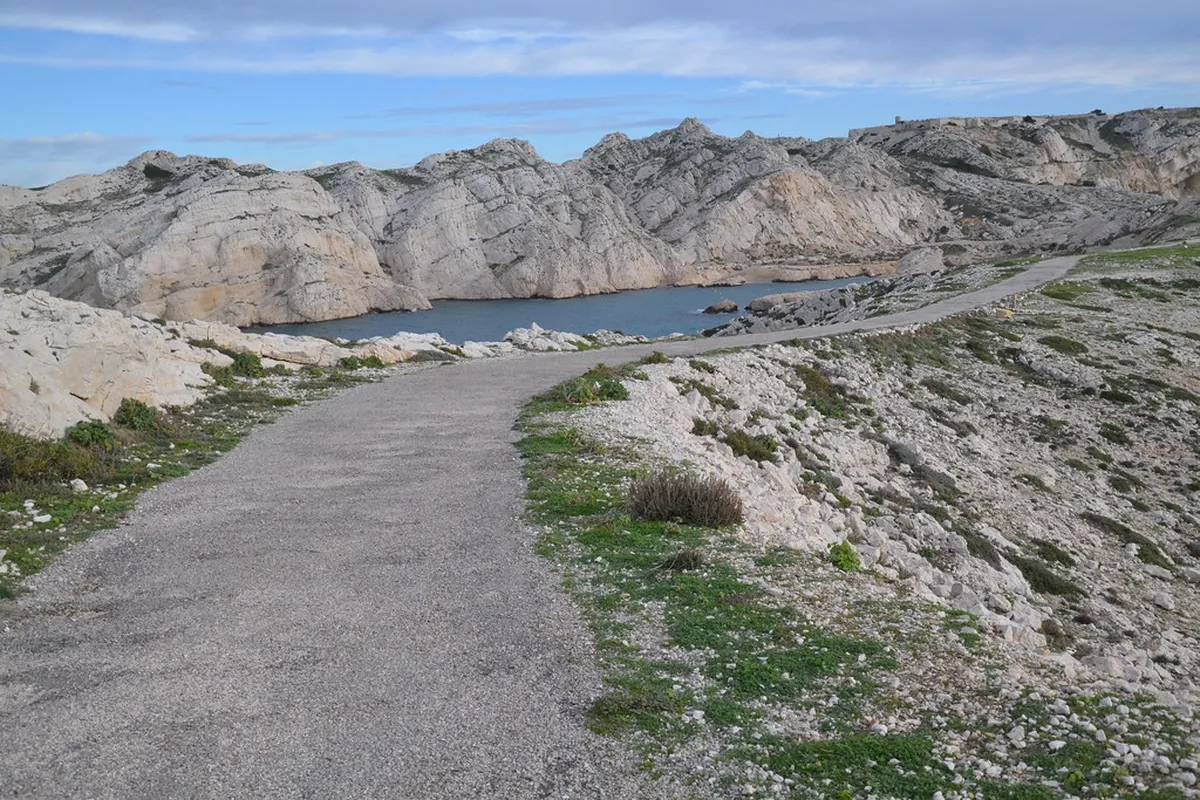
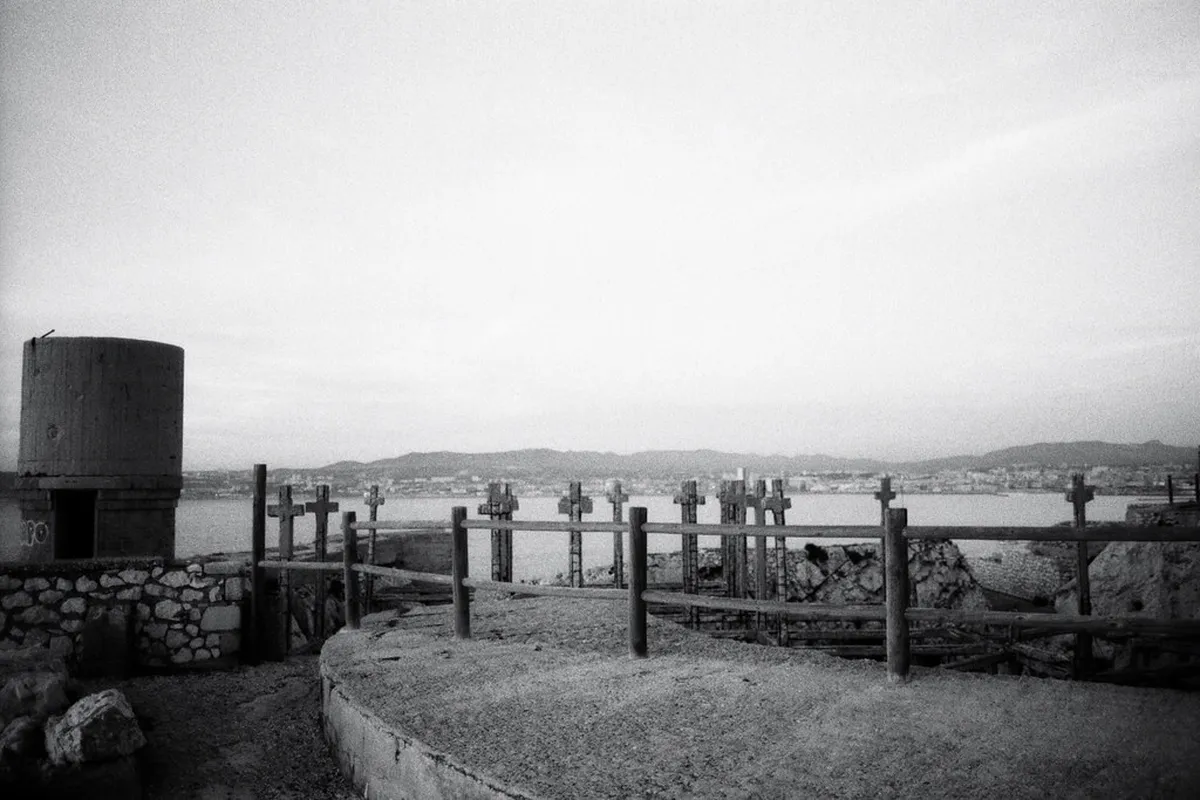
Pommègues is significantly wilder and more rugged than its northern neighbor. A long winding trail leads south toward the Semaphore and the ruins of the Batterie de Cavaux, fortifications the German military reinforced during the occupation and which Allied bombing largely destroyed in August 1944. The lack of any commercial development here makes it the preferred island for hikers who want solitude. Prepare for uneven terrain and no facilities once you leave the port area.
The archipelago as a whole sits inside the Calanques National Park, established in 2012 as France's tenth national park. About 100 people live permanently on the islands; children take the ferry every morning to reach school on the mainland. That permanent-resident fabric gives the port village a genuine, unhurried atmosphere that contrasts sharply with the tourist-heavy Old Port you departed from.
Ratonneau or Pommègues: Choosing Your Island
Most first-time visitors assume they can easily cover both islands in one day on foot. In practice, the two islands together demand around five to six hours of walking once you factor in the Digue de Berry crossing (about 15 minutes each way) and the full southern loop on Pommègues (roughly 3 miles round trip from the causeway). If you move at a relaxed pace and stop to swim, you will struggle to do both justice before the last ferry.
Ferry tickets to Frioul cost approximately €11 per adult round trip (2026 pricing). A combined Frioul + Château d'If ticket runs €16, plus a separate €5.50 entrance fee at the fortress. Buying online through the Frioul If Express website avoids queues and guarantees your spot, especially critical during July and August peak season.
The smarter approach is to pick one island per day, or to rent a bicycle. Several operators at the Port of Frioul hire out bikes in summer, which makes crossing the Digue de Berry and reaching the southern tip of Pommègues in under an hour a realistic proposition. On a bike you can comfortably cover both islands and still make time for a swim. If you are walking, choose Pommègues for wilder scenery and more solitude, or stick to Ratonneau if you have children or prefer easy access to facilities.
One practical detail that competitors rarely mention: the Digue de Berry path gets very exposed and the limestone underfoot is polished smooth in places. It feels manageable in calm weather but turns genuinely slippery after rain or when the Mistral picks up. Cross it in the morning before temperatures climb and before the afternoon wind strengthens.
Ratonneau is the developed, accessible island featuring restaurants, the historic Caroline Hospital, and Saint-Estève beach—best for families and those seeking facilities. Pommègues is dramatically wilder and more rugged, with uneven terrain, no services beyond the port, and fortress ruins at its southern tip—ideal for solitude-seeking hikers willing to handle exposed limestone paths. Choose based on energy level and your tolerance for rough terrain, not just scenic preference.
Museums, Art, and Culture in Frioul
The Caroline Hospital is the most significant cultural landmark on Ratonneau. Built in the 19th century as a maritime quarantine station, its architecture was deliberately designed to prevent the spread of disease, with separate pavilions and open-air corridors that allowed sea breezes to circulate. Restoration work is ongoing, but the building is accessible and occasionally hosts concerts and theater in summer — check Marseille listings before you visit.
Maritime history runs throughout the entire archipelago. Old fortifications mark the ridgelines on both islands, testament to the strategic importance of controlling the approaches to Marseille's harbor across several centuries. The Fort de Pommègues and the Batterie de Cavaux ruins are reachable by trail and reward the walk with elevated views over the calanques below.
Local art occasionally finds a home in the landscape. Temporary installations appear along the walking paths during the summer cultural season. The stark white limestone provides a dramatic natural gallery setting, and the light conditions — intense and shadowless — give even casual photography an almost cinematic quality.
Parks, Gardens, and Outdoor Spots in Frioul
The Frioul archipelago lies within a protected zone of the Calanques National Park, and that status shapes how you experience the landscape. Visitors must stay on marked paths to avoid damaging the fragile semi-arid ecosystem. Almost 350 plant species have been catalogued here, most of them low-growing bushes and succulents that root themselves in limestone crevices. The salty atmosphere and dry microclimate have encouraged endemic species found almost nowhere else in Provence.
Birdwatchers will find the islands rewarding. The cliffs host large colonies of Gabians — the western yellow-legged gull (Larus michahellis) that Provençals have given a local name. They nest on the high ledges and fill the air with a constant chatter that becomes part of the island soundtrack. Rare lizards and endemic insects also thrive in the limestone cracks; the rule is simple — observe without touching.
Hiking is the main activity once you arrive. Trails are generally well-marked but can be rocky, exposed, and disorienting in the heat. You should wear sturdy footwear for the paths toward the southern tip of Pommègues. The complete absence of trees means you are fully exposed to the sun from the moment you step off the ferry — a point that most travel guides note in passing but that genuinely matters when temperatures exceed 32°C in July and August.
Family-Friendly and Budget-Friendly Options in Frioul
Families will appreciate that the main beaches on the islands are free to access. Saint-Estève is the most popular choice for parents because it offers relatively shallow entry water and seasonal toilet and snack facilities. The path to this beach is paved and wide enough for a pushchair, making it the most accessible beach on either island. You can find more swim spots in our 12 Essential Marseille Beaches and Swimming Spots if you want to compare options before deciding.
Picnicking is the best way to control costs. Many visitors buy supplies at the markets in Marseille before boarding the ferry — a baguette, charcuterie, fruit, and two liters of water per person will cover you for the whole day. Flat rocky areas near the port provide scenic outdoor dining spots. Carry all packaging back to the port with you; bins are scarce beyond the village, and the national park rules are enforced.
Budget-conscious travelers can enjoy a full day for just the price of a ferry ticket, which runs around €11 for an adult round trip to the islands alone in 2026. Walking the trails, swimming in the coves, and exploring the historic ruins costs nothing beyond that. Visiting mid-week rather than at the weekend makes the beaches noticeably quieter, especially in the shoulder months of May, June, and September.
How to Plan a Smooth Frioul Day
Preparation is the key to a successful trip because the islands offer almost no shade at all. The white limestone reflects sun, significantly increasing the risk of heat exhaustion on a warm day. Pack at least two liters of water per person before leaving the mainland, wear a wide-brimmed hat, and apply high-SPF sunscreen before you board the ferry rather than waiting until you arrive. None of the few shops on the island are reliably stocked with sunscreen, so do not count on buying it there.
The Mistral wind can dramatically change the experience. Strong gusts may lead to ferry cancellations or rough crossings. Check the weather forecast before booking — our Best Time to Visit Marseille in 2026: 9 Essential Tips guide covers seasonal wind patterns in detail. Low-wind days are far more pleasant for swimming and for the exposed ridge walks on Pommègues.
Walking times on the islands are consistently longer than they look on a map. Allow at least 45 minutes to reach the southern end of Pommègues from the port, not counting stops. Give yourself a buffer of at least 30 minutes before the last evening ferry. Missing the last boat means a very expensive private water taxi back to the city — an outcome easily avoided by keeping an eye on the posted timetable at the port.
The Château d'If: History and Literary Legacy
The Château d'If occupies a tiny island roughly 20 minutes by ferry before the main Frioul archipelago. King François I commissioned it in 1529 to defend the port from sea-based attacks. It became a state prison in 1580 and held political prisoners, Protestant detainees, and prisoners of war for over three centuries. The isolated location and the sheer stone walls made escape almost impossible — the real prisoners had almost no chance of surviving their stay given the cramped, unsanitary conditions.
Alexandre Dumas immortalised it in The Count of Monte Cristo, and the fictional prisoner Edmond Dantès is now more famous than any real inmate. Cells display screens running various film adaptations, including a French TV miniseries with Gérard Depardieu and even a Japanese anime of the story. Dantès has his own dedicated cell. The displays admit freely that the imaginary prisoner outranks the historical ones in public consciousness.
From a practical standpoint, the Château d'If visit adds roughly 90 minutes and a separate €5.50 entry fee on top of your ferry ticket. Literary fans and history enthusiasts will find it thoroughly worthwhile. If you are primarily there for hiking and swimming, skipping the fortress and taking the direct ferry to Frioul is a legitimate choice — particularly on a hot summer day when you will want maximum time at the coves. Note that like many French monuments, the Château is closed on Mondays.
Exploring the Port of Frioul and Saint-Nicolas Church
The Port of Frioul feels like a miniature village transplanted onto a rocky island. It was developed in the 1970s and built in a Mediterranean vernacular style — white rendered buildings arranged around a sheltered marina that fills with pleasure yachts in summer. The restaurants here serve fresh seafood and Provençal classics; a slow lunch on the waterfront terrace before or after hiking is one of the small pleasures the island provides.
Saint-Nicolas Church stands near the port on Ratonneau and is immediately striking for its resemblance to a Greek temple — simple white columns and a triangular pediment that looks slightly out of place against the rugged limestone backdrop. It serves the small permanent population and provides a quiet, cool refuge on hot afternoons. It is also the clearest sign that permanent community life here predates the national park designation.
The port area is the only reliable place on the islands for public toilets and bin facilities. The sea wall just beyond the church gives you an open view toward the open Mediterranean — it is a good spot to orient yourself before heading out on trail, and a welcome place to rest on the return.
Best Coves: From Saint-Estève to 'Small Tahiti'
Saint-Estève is the most accessible beach on the islands — a mix of sand and pebbles on Ratonneau, about 15 minutes' walk from the ferry landing along a paved path. The water is usually calm and clear enough for snorkeling around the rocks, and a small seasonal snack bar operates nearby in July and August. It is the right choice for families or anyone who wants a straightforward swim without a strenuous approach.
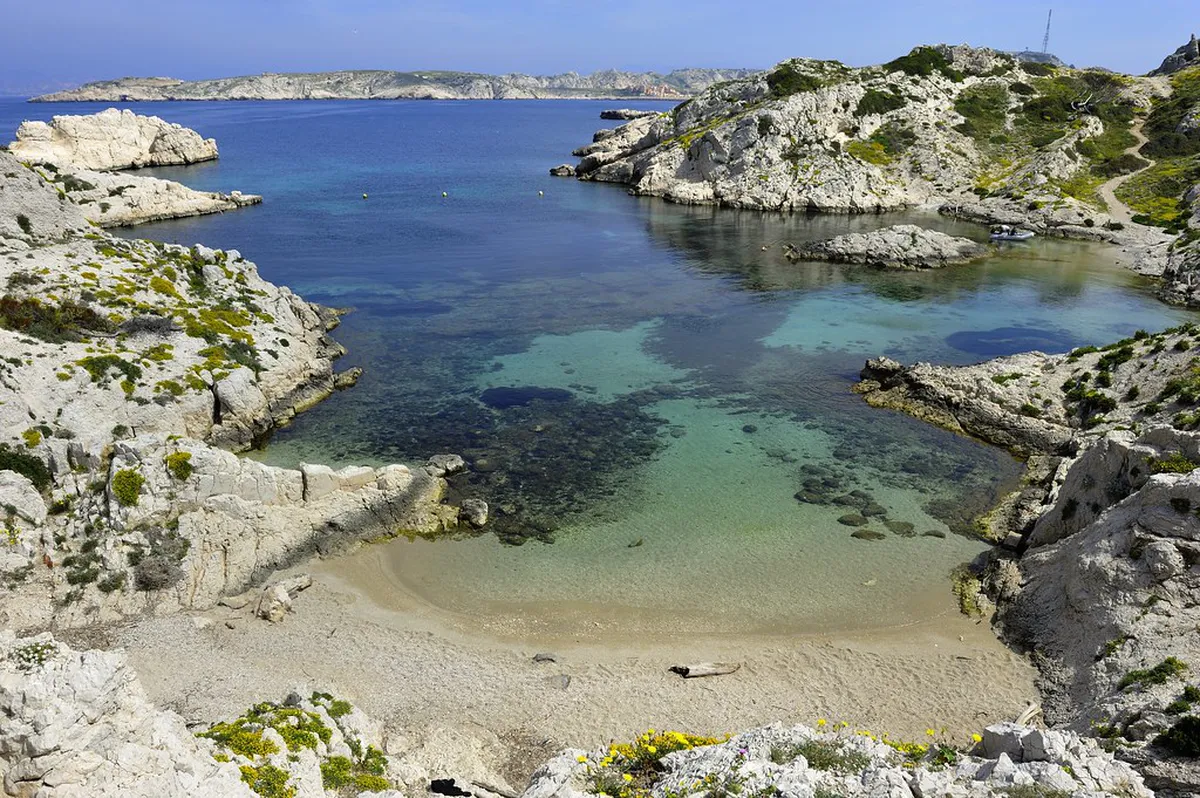
Calanque de la Crine earns its nickname "Small Tahiti" through genuinely turquoise water that photographs more Caribbean than Mediterranean. Reaching it requires crossing the Digue de Berry and then following a rough, unmarked path on the far side of Pommègues — roughly 30 minutes of rocky hiking from the causeway, longer if you take wrong turns. The trail is not suitable for anyone with mobility issues and has no facilities at the end. The payoff is a wild, enclosed cove that on weekdays in shoulder season feels entirely private.
Morgiret beach sits close to the port and offers a more rugged alternative for visitors who do not want to hike far. The water is deeper and bluer than Saint-Estève, the rocks are larger, and the crowd levels are typically lower even in peak season. It is a natural spot to end the day before catching the evening ferry back to the Old Port.
Navigation Guide: Ferry Logistics from the Old Port
The Frioul If Express operates the only regular ferry service from the Quai de la Fraternité in the Old Port. Boats run roughly every hour during the day, with increased frequency in July and August when demand peaks. In 2026 a standard adult round-trip to the Frioul islands alone costs approximately €11. The combined "Frioul If" ticket — which adds a stop at the Château d'If — costs approximately €16 for adults, on top of which you pay a separate €5.50 monument entry fee at the fortress itself. Children typically travel at a reduced rate; confirm current pricing at the ticket office or online before you go.
| Ferry Option | Duration | Adult Price (2026) | Best For |
|---|---|---|---|
| Frioul Islands Only (Round Trip) | 25 min each way | €11 | Hikers, swimmers, budget travelers |
| Frioul + Château d'If (Round Trip) | 20 min to If, 15 min to Frioul | €16 + €5.50 entry | History and literature enthusiasts |
| Château d'If Only (Round Trip) | 20 min each way | €5.50 entry only | Literary fans with limited time |
Queues at the terminal become genuinely long in July and August, particularly on weekend mornings. Buying your ticket online through the Frioul If Express website is the most reliable way to avoid waiting 45 minutes or more in full sun on the quay. Arrive at the boarding gate at least 20 minutes before departure regardless; the boats load quickly and the crew will not hold departures. The crossing to Château d'If takes about 20 minutes; the onward leg to Frioul takes another 15. For a smooth connection see our Marseille boat tour and calanques guide which covers the full range of departure options.
Keep your ticket for the return journey — you must show it to board. The boats are stable and large, but the open sea between the islands and the Old Port can be choppy when the Mistral is running. If you are sensitive to motion, sit toward the stern on the lower deck rather than at the bow. The return journey feels shorter psychologically, partly because you can see the Notre-Dame de la Garde basilica growing larger on the hill above the city throughout the crossing.
Beyond Frioul: Comparing the Islands of Provence
The Frioul archipelago is the most convenient island destination for visitors staying in central Marseille. Its landscape — arid, rocky, treeless — is unlike the lush Mediterranean islands you may have seen in photographs. If you enjoy desert-coastal scenery and rugged hiking, Frioul will be your first choice. If you want pine forests, sandy beaches, and cycling on flat paths, you will need to travel further east.
Porquerolles and Port-Cros, both off the coast near Hyères, offer a dramatically different experience. Porquerolles has sandy beaches and pine-shaded cycling tracks; Port-Cros is a fully protected marine park where even underwater fishing is forbidden. Both require roughly a two-hour drive from central Marseille before you board a separate ferry. They are excellent for a multi-day stay but impractical as a day trip from the city.
The Embiez archipelago near Six-Fours-les-Plages is a privately managed island known for its vineyard, salt marshes, and more resort-like atmosphere. It suits travelers who prefer developed amenities over raw wilderness. For most visitors with a single day in Marseille and no car, the ease of walking from the Old Port directly to the Frioul If Express terminal makes Frioul the clear practical choice.
Frequently Asked Questions
How do I get to the Frioul Islands from Marseille?
You can take the Lebateau ferry from the Old Port of Marseille. The boats depart regularly throughout the day from the Quai de la Fraternité. The journey takes about 25 minutes. It is a great addition to a one day Marseille itinerary.
Is the Château d'If worth visiting?
Yes, especially for fans of history and literature. The fortress offers a fascinating look at prison life and the legend of the Count of Monte Cristo. It also provides some of the best views of the Marseille skyline. Allow at least 90 minutes for the stop.
How much does the ferry to Frioul cost?
A round-trip ticket to the Frioul Islands typically costs around 11 euros for adults. If you want to include a stop at the Château d'If, the combined ticket price is approximately 16 euros. Prices may vary slightly by season, so check the ticket office for updates.
Can you stay overnight on the Frioul Islands?
There are no traditional hotels on the islands, but some short-term apartment rentals are available. Most visitors choose to visit as a day trip from the mainland. The village has a small permanent population, but services are limited after the last ferry departs.
Which is the best beach on the Frioul Islands?
Saint-Estève is the best beach for families due to its easy access and facilities. For those who prefer a wilder setting, Calanque de la Crine offers stunning turquoise water. It requires a longer hike but provides a more secluded and natural swimming experience.
The Frioul Islands are a must-visit destination for anyone exploring the coast of Southern France. They offer a unique blend of literary history, rugged hiking trails, and crystal-clear Mediterranean waters. Planning ahead for the sun and wind will ensure you have a comfortable and memorable day. Pack your camera and your walking shoes to discover this spectacular limestone archipelago for yourself.
You might also like


Continue reading
More guides you'll find useful