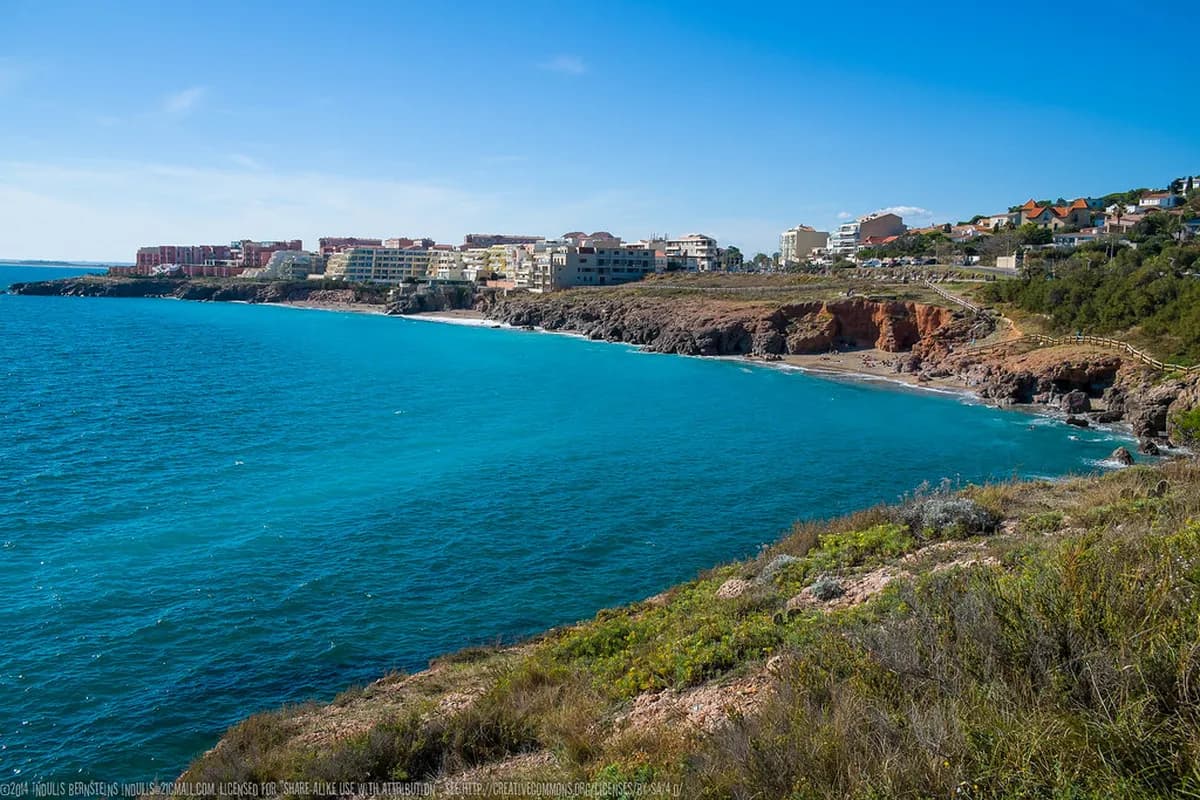
12 Essential Marseille Beaches and Swimming Spots (2026)
Discover the best Marseille beaches, from the urban sands of Prado to the turquoise Calanques. Expert tips on reservations, transport, and the Mistral wind.
On this page
12 Essential Marseille Beaches and Swimming Spots
Marseille offers something no other French city can match: world-class Mediterranean swimming a single metro stop from a UNESCO heritage waterfront. The coast splits cleanly into two worlds. City beaches from Catalans to Prado have lifeguards, showers, and bus access. The Calanques to the south are wild limestone fjords inside a national park — no water, no toilets, no mobile signal, and some of the clearest water in the entire Mediterranean. Deciding Is Marseille Worth Visiting? 10 Honest Pros and Cons for a beach trip comes down to how much effort you are willing to invest.
This guide covers all twelve essential swimming spots for 2026, from the easiest urban sand to the most remote inlets accessible only by a two-hour hike. Each entry includes the bus number or boat shuttle to take, what facilities to expect, and a realistic assessment of the crowds. For the Calanques in particular, knowing the rules before you arrive is not optional — the park closes trails and issues fines when fire risk is high.
City Beaches vs the Calanques: Which Should You Choose?
The urban beaches — Catalans, Prophète, Prado, and Pointe Rouge — are free to access and served by the RTM bus network. They have lifeguards from 10:00 to 19:00 in July and August, public showers, toilets, and snack bars within walking distance. The seabed is mostly sand and fine gravel, making entry easy for children and non-swimmers. Water quality is monitored daily and posted at each beach entrance.
The Calanques are a different proposition entirely. Saint-Estève, Sormiou, Sugiton, En-Vau, Port-Pin, Morgiou, and Figuerolles are all difficult to reach, small, and severely overcrowded on summer weekends. There are no water points, no toilets, no bins, and no shops anywhere inside the national park. You carry in everything you need and carry out every wrapper and bottle when you leave.
Only Sormiou and Saint-Estève have supervised swimming in summer. All other Calanque beaches are unsupervised — currents around the southern headlands between Mont Rose and Cap Croisette are genuinely dangerous, and fatal accidents occur every year. If you have children or are not a strong swimmer, stay with the city beaches or book a Marseille boat tour that brings you to the inlets by sea.
Plage des Catalans
Catalans is the closest sandy beach to the Old Port — a 15-minute walk west through the 7th arrondissement or a short ride on bus 83. It is a small crescent of fine sand backed by a low retaining wall, free to access, and supervised daily from 10:00 to 19:00 in season. Local families treat it as a neighbourhood pool, and the shallow entry makes it suitable for young children.
The beach fills completely by 09:00 on summer weekends. Arriving before 08:30 on a Saturday gives you space on the sand; arriving at noon means perching on the rocks beside it. There is a small snack kiosk and a shower block, but no private beach clubs — every centimetre of sand is genuinely public and free.
Plages du Prado
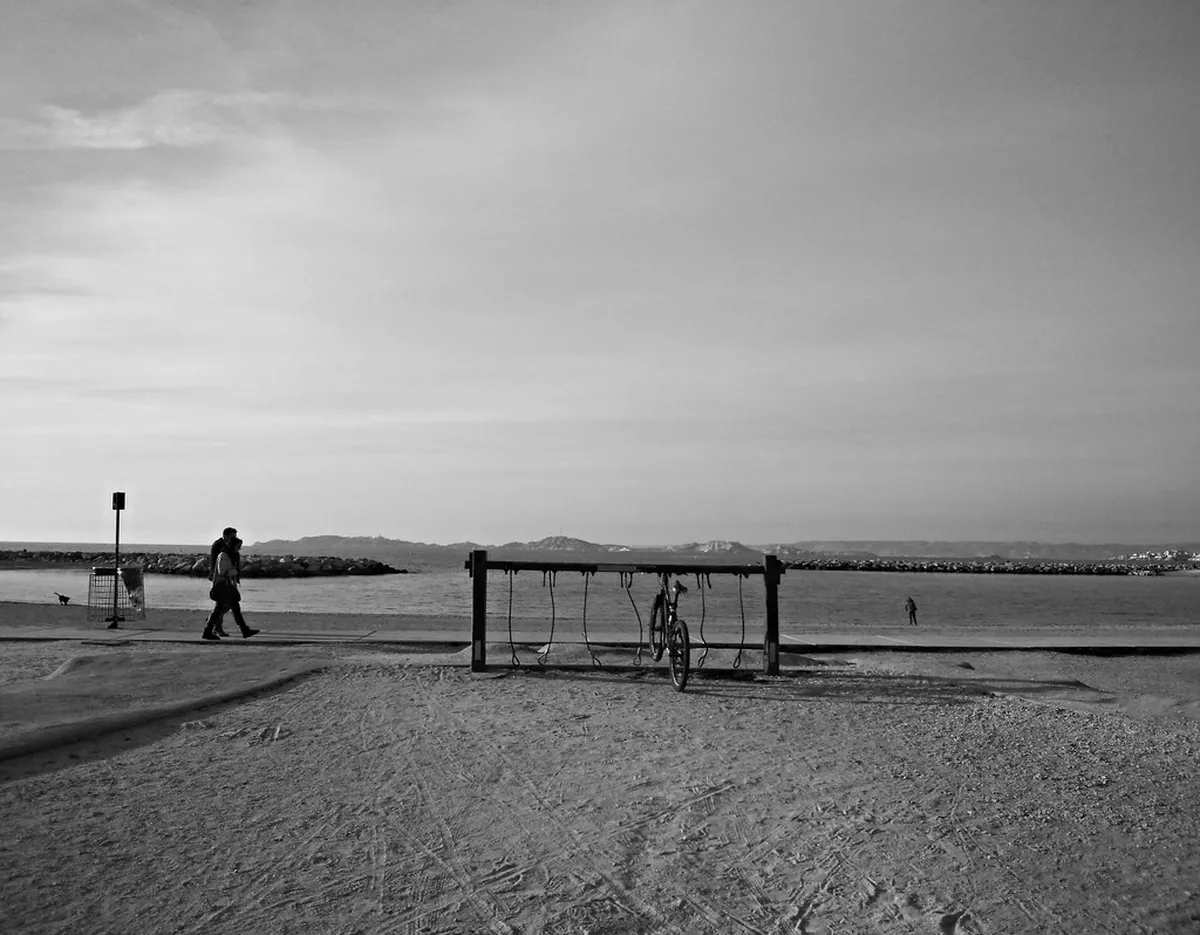
The Prado complex is the largest urban beach in Marseille: a series of artificial sand and gravel stretches built on reclaimed land in the 8th arrondissement, running south from the iconic copy of Michelangelo's David statue. The area is open 24 hours, free to access, and reached by bus 19 or 83 (stop Plage du Prado). Facilities include toilets, showers, a skate park, volleyball courts, and a dozen seaside snack bars.
RTM buses run until approximately 21:00 year-round. If you plan an evening beach session, check the RTM website for the final departure time from Prado — evening buses are less frequent than daytime service, and late buses fill quickly on summer weekends.
The section closest to the city bus stop is the busiest and noisiest. Walk five to ten minutes further south, past the second sculpture, and the beach opens up considerably. The far southern end near Pointe Rouge tends to attract a calmer, more local crowd. Water quality here is reliably good outside of the 48 hours following heavy rain.
Plage de la Pointe Rouge
Pointe Rouge is a sheltered sandy bay in the 8th arrondissement with a small marina and a row of beachside restaurants — some of the 10 Best Restaurants In Marseille Travel Guide for a post-swim lunch are right on this waterfront. The bay's protective piers keep the water calm and shallow, which makes it the best city beach for families with toddlers. Most of the sand is public and free; private clubs rent sunbeds for around €12–15 per day.
The seasonal Navette Maritime water shuttle from the Old Port (Quai de la Fraternité) runs to Pointe Rouge every 30–40 minutes from mid-June to mid-September, departing from roughly 09:30 until 18:30. The one-way fare is around €5. It is a far more pleasant way to arrive than taking a bus through summer traffic, and the approach by sea gives you a genuine sense of the coastline.
Pointe Rouge's shallow bay is the safest option for families with very young children — depth is under 1 metre for the first 20 metres from shore, and the calmer water rarely experiences the sharp temperature swings common at other urban beaches during Mistral events.
Plage du Prophète
Prophète is one of the oldest established beaches in Marseille, sitting on the Corniche Kennedy between Catalans and Prado. It is free, supervised, and has shallow water that remains calm even when the open sea is choppy. The beach is favoured by morning swimmers who want laps before the heat peaks. Take bus 83 to the Prophète stop or walk south along the Corniche from Catalans in about 20 minutes.
A small volleyball court and basic showers are the only facilities. The beach itself is narrow and pebble-heavy at the waterline but opens to more comfortable rock terraces on both sides. It is one of the best options for arriving by bike, as the Corniche cycle path passes directly in front.
Calanque de Sormiou
Sormiou is the largest and most accessible of the Calanques from central Marseille. The inlet has a small sandy beach, traditional cabanon fishing huts, and a restaurant that serves fresh fish — book ahead and bring cash. Swimming is supervised in summer, making it the safest of the natural calanques for less experienced swimmers. The water is clear and turquoise but can be significantly colder than city beaches.
The road to Sormiou is closed to non-resident vehicles from June to September. From Luminy or the Route des Calanques, the hike down takes roughly 45 minutes on a well-marked but steep path. Check the Calanques National Park's fire risk level the evening before your visit — trail access is legally banned when the risk is elevated, and wardens issue fines. The official source for access conditions is the Calanques National Park website.
Calanque de Sugiton
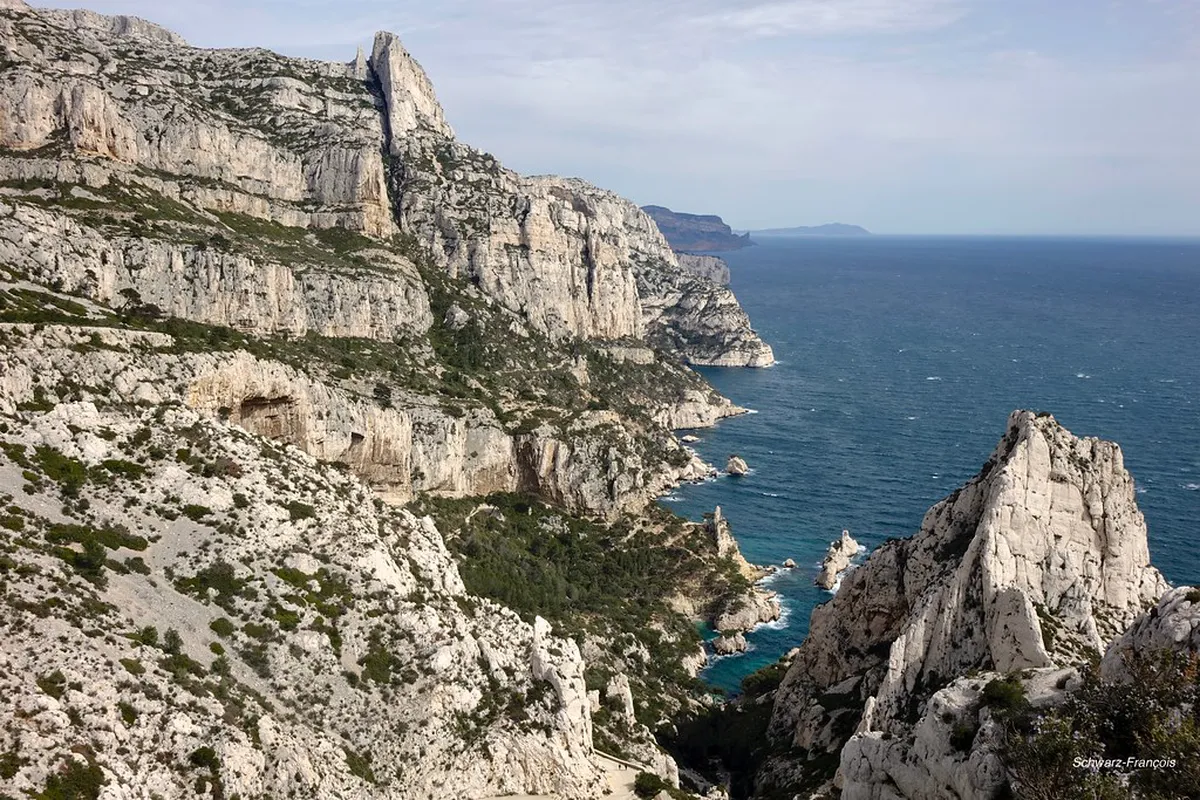
Sugiton is the most photographed calanque: a narrow slot of blue-green water framed by vertical white limestone, with the flat 'Torpedo' rock sitting in the centre of the bay. The hike from the Luminy university campus takes 45 to 60 minutes on a well-marked path. You can also reach Luminy directly on bus 21 from the Rond-Point du Prado metro stop, making it the most transit-friendly of the remote calanques.
A mandatory reservation system operates for Sugiton from late June through August to limit the number of daily visitors and prevent further soil erosion. The reservation is free. To book, download the Mes Calanques app (available on iOS and Android) or visit the reservation page on the Calanques National Park website. You select your date and estimated arrival time window — typically 08:00–10:00, 10:00–12:00, or 12:00–14:00. A QR code is sent to your email and wardens scan it at the trailhead. Slots for July and August open on 1 June each year and fill within hours. Set a reminder and book the morning they open.
Carry at least two litres of water per person — there is no water source anywhere on the trail or at the beach. The park also bans single-use plastic packaging inside the Calanques boundary, so pack food in reusable containers.
Calanque d'En-Vau
En-Vau is widely considered the most dramatic calanque: a deep slot gorge with near-vertical 200-metre cliffs dropping to a small pebble beach at the waterline. The light is extraordinary in the morning when the sun hits the white rock directly. The beach itself falls into shade by mid-afternoon due to the height of the surrounding walls.
The standard approach from Cassis via the Col de la Gardiole takes about two hours each way on technical limestone terrain. Wear hiking boots — the scree is slippery and flip-flops cause ankle injuries every week. Alternatively, kayak rentals are available from Cassis port for those who prefer to approach by sea. There is no reservation system at En-Vau currently, but this may change — check the park website before you go.
Calanque de Port-Pin
Port-Pin is the most manageable of the deep Calanques for casual hikers. The 30-minute walk from the Port-Miou parking area in Cassis passes through Aleppo pine forest that provides shade unavailable at most other calanques. The pebble beach is free, unsupervised, and popular with kayakers. Rocky platforms on the flanks of the bay offer comfortable sunbathing spots away from the crowded shoreline.
The water at Port-Pin is clear enough for snorkelling around the boulders. Because the inlet faces northeast, it gets morning sun and afternoon shade — which actually makes it more comfortable in the peak heat of July and August than the fully exposed urban beaches.
Plage de Sainte-Estève
Sainte-Estève is the southernmost beach reachable by public transport from Marseille: take bus 20 toward Les Goudes and get off before the village. It is technically inside the national park boundary but accessible without a long hike. Swimming is supervised in summer — one of only two supervised beaches in the entire Calanques. The pebble beach sits at the base of low cliffs with views back toward the Marseille skyline.
Water quality is monitored and posted online by the City of Marseille. The beach has no facilities beyond a basic toilet block. There are no restaurants — bring your own water and food. It is considerably less crowded than Sormiou on weekends, partly because it is less well-known.
Plage de la Baie des Singes
Baie des Singes sits at the tip of the Les Goudes peninsula, a rocky cove that feels genuinely remote despite being within Marseille's city limits. Take bus 20 to the very last stop at Les Goudes village, then walk 15 minutes past the fishing harbour along the coastal track. The small private beach club rents sunbeds for around €25, but the surrounding flat rocks are free and equally comfortable for snorkelling.
The water here is often calmer and cleaner than the open Prado beaches because the bay is sheltered from the southwest swell. Octopus, sea bream, and sea urchins are common just below the surface. Do not touch the urchins — their spines break off and are painful to remove. Water shoes are strongly recommended on this rocky shore.
Frioul Island Beaches
The Frioul archipelago sits four kilometres offshore from the Old Port, reached by ferry from Quai de la Fraternité in around 25 minutes. The return fare is approximately €12. Plage de Sainte-Estève on the island of Ratonneau offers exceptionally clear water and direct views back toward the Notre-Dame de la Garde basilica on the city skyline. A small seasonal snack bar operates near the beach.
The islands have no permanent residents, no cars, and minimal infrastructure. Bring all your own water and food. The ferry runs regularly throughout the day in summer, roughly every 30–60 minutes, so missing one boat is not a disaster. Combine the visit with Château d'If on the neighbouring Île d'If — entry is around €9 and the ferry stops at both islands on the same ticket.
| Beach Name | Type | How to Reach | Facilities | Best For |
|---|---|---|---|---|
| Plage des Catalans | Urban sand | 15-min walk from Old Port or bus 83 | Showers, toilets, snack kiosk | Families, non-swimmers |
| Plages du Prado | Urban sand/gravel | Bus 19 or 83 (stop Plage du Prado) | Toilets, showers, volleyball, snack bars | Groups, water sports |
| Plage de la Pointe Rouge | Urban sand | Bus 83 or Navette Maritime shuttle (€5) | Showers, toilets, restaurants, sunbed rental | Toddlers, dining |
| Plage du Prophète | Urban pebble/rock | Bus 83 or 20-min walk from Catalans | Volleyball court, basic showers | Cyclists, lap swimmers |
| Calanque de Sormiou | Natural inlet, sandy beach | 45-min hiking from Luminy (Route des Calanques) | Restaurant (cash), no public toilets | Moderate hikers, fish dining |
| Calanque de Sugiton | Natural inlet, scenic | 45–60 min hike from Luminy (bus 21) | None (bring water) | Photographers, experienced hikers |
| Calanque d'En-Vau | Natural gorge, dramatic | 2-hour hike from Cassis or kayak | None (bring water, food) | Serious hikers, kayakers |
| Calanque de Port-Pin | Natural inlet, pine forest | 30-min walk from Port-Miou (Cassis) | None (bring supplies) | Snorkellers, nature lovers |
| Plage de Sainte-Estève | Calanques, pebble beach | Bus 20 toward Les Goudes | Basic toilet block only | Quieter crowds, supervised swimming |
| Plage de la Baie des Singes | Rocky cove, sheltered | Bus 20 to Les Goudes + 15-min walk | Private beach club, no public facilities | Snorkellers, octopus viewing |
| Frioul Island (Ratonneau) | Island beach, clear water | 25-min ferry from Old Port (€12 return) | Seasonal snack bar only | Day trips, island escapes |
Marseille Beaches Visual Guide
For a visual overview of Marseille's top beaches, watch this comprehensive guide covering the city beaches and Calanques basics:
Essential Tips: Mistral Wind, Transport, and the Mes Calanques App
The Mistral is the single biggest variable in any Marseille beach day. This cold, dry north wind blows cold water out of the bay and draws up colder water from depth — a process called upwelling. During a strong Mistral event lasting two or three days, the sea temperature can drop from 24°C to 14°C. The water may be 14°C in late July even with blue skies and 30°C air temperature. Always check the sea temperature forecast alongside the weather forecast; the two are often completely different.
For getting around, the Marseille transport guide explains the full RTM network. The key lines for beaches are: bus 83 (Catalans → Prophète → Prado), bus 19 (Prado), bus 20 (Sainte-Estève → Les Goudes), and bus 21 (Luminy for Sugiton). The Navette Maritime boat shuttle is the most pleasant option in summer — it runs from Quai de la Fraternité to Pointe Rouge and to Les Goudes from mid-June to mid-September, roughly 09:30 to 18:30, every 30–40 minutes. Check the RTM website for the current season's timetable and stops.
Download the Mes Calanques app before you leave home. It shows real-time trail access conditions, daily fire risk levels (which determine whether the massif is legally open), crowd indicators per beach, and the reservation portal for Sugiton. Park access can be banned by 18:00 the evening before your planned hike if fire risk rises overnight — the app sends a push notification when this happens. This makes it genuinely useful rather than optional for any visit to the southern inlets.
Safety and Regulations in the Calanques National Park
The park enforces access closures from June through September when fire risk reaches elevated levels. These closures are legally binding — entering a closed massif results in a fine. Check the risk status each evening for the following day rather than in the morning, as the decision is typically published after 18:00. The Calanques National Park website and the Mes Calanques app both display the current status.
On the water, currents around the southern coast of Marseille between Mont Rose, Cap Croisette, and Les Goudes are genuinely unpredictable. Rock entries are steep and slippery from algae. Most Calanques have no lifeguard presence. Wear water shoes, never swim alone, and keep children within arm's reach at all times. Underground springs below the limestone mean water temperature can be startlingly cold even in fully calm conditions.
Environmental rules apply throughout the park boundary. Stay on marked paths to avoid trampling rare plants. Do not pick flora, move stones, or feed wildlife. Respect the natural regeneration zones marked with stakes and wire — these are off-limits for both walking and swimming. Smoking is banned inside the park. Pack a zero-waste picnic: the park has banned single-use plastic packaging, and bins are absent from all trail and beach areas. Carry out everything you carry in.
Frequently Asked Questions
Which Marseille beaches are easiest to reach from the Old Port?
Plage des Catalans is the most accessible, located just a 15-minute walk from the Old Port. Alternatively, take the 83 bus to reach Plage du Prophète or the Prado beaches within 20 minutes.
Do I need a reservation to visit the Calanques beaches?
Reservations are only required for Calanque de Sugiton during peak summer weeks to limit environmental damage. Most other inlets are free to access without a booking, though fire risk closures may apply.
Why is the water so cold in Marseille during summer?
The Mistral wind blows warm surface water out to sea, causing colder water to rise from the depths. This process can drop the temperature to 15°C even during a heatwave.
Marseille beaches offer a rare blend of urban accessibility and wild, rugged Mediterranean beauty. By understanding the impact of the Mistral and the importance of the reservation system, you can ensure a successful trip. Whether you choose the easy sands of the city or the challenging trails of the Calanques, the water is waiting. Pack your sunscreen, check the official app, and enjoy one of the most unique coastlines in all of France.
You might also like


Continue reading
More guides you'll find useful