11 Best Things to Do in Strasbourg in Summer | Travel Guide
Plan your perfect trip to Strasbourg in summer. Discover the best pop-up terraces, cathedral light shows, biking routes, and essential summer travel tips.
On this page
11 Best Things to Do in Strasbourg in Summer
Strasbourg in summer is a different city from the one most tourists picture. The Christmas-market crowds are gone, the timber-framed façades of La Petite France are draped in geraniums, and the cathedral glows with free light shows every evening from late June through August. Mid-June to mid-July is the sweet spot — warm enough for terrace dining, long enough days for evening strolls, and still manageable in terms of crowds before the full August peak. If you are already familiar with the Strasbourg Christmas Market Guide: 8 Things to Know Before You Go, think of summer as the city's second, quieter, and arguably more local season.
Temperatures run 20–30°C / 68–86°F through the core summer months, with occasional thunderstorms in the evenings that clear quickly and cool things down. The Alsace plain can feel humid in July, so mornings and evenings are prime time for walking. This guide covers every major summer activity — from the nightly cathedral illuminations to the 600 km cycling network, day trips into wine country, and the pop-up terraces that only exist for a few months each year.
Must-See Strasbourg Sites in Summer
The Grande-Île — the UNESCO-listed island at the historic core of Strasbourg — is the non-negotiable starting point. Strasbourg Cathedral anchors everything: at 142 metres it was the world's tallest building from 1647 to 1874, and climbing the platform gives you unobstructed views across the Rhine valley on clear summer mornings. Arrive before 10:00 to beat the tour groups. The astronomical clock inside strikes at 12:30 — worth timing your visit around it.
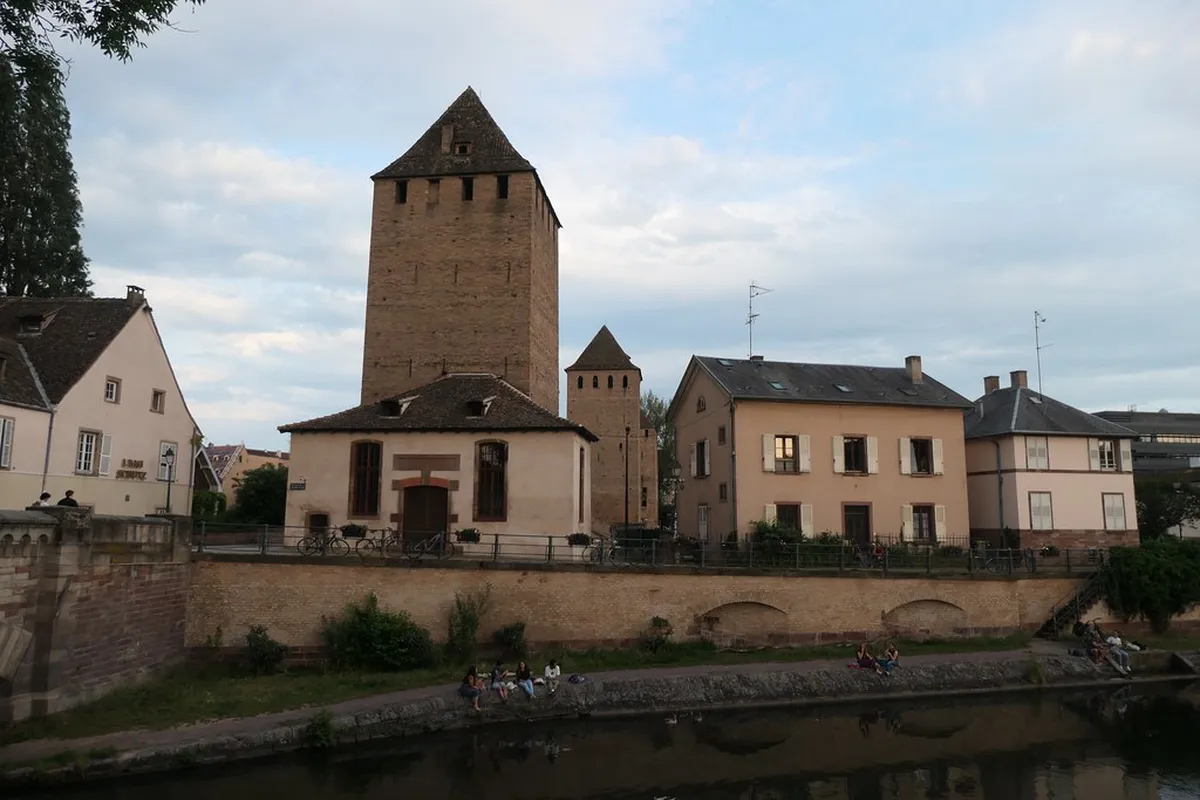
From the cathedral, cross south to La Petite France, where the Ill River splits into five arms around half-timbered houses from the 16th and 17th centuries. Summer is when the flower boxes are in full bloom and the café terraces spill onto the cobblestones. Walk past the Ponts Couverts — the medieval towers and bridges — and climb the Barrage Vauban for a panoramic view over the entire district. Entry is free and the roof terrace catches a reliable river breeze even on hot afternoons.
The Neustadt district to the northeast is less visited but equally impressive. Its mix of Italian Neo-Renaissance, Neo-Gothic, and Art Nouveau architecture was added to the UNESCO list as a separate zone in 2017. A Strasbourg boat tour on the Ill river ties the Grande-Île and Neustadt together in about 70 minutes, and the covered boats offer shade during the midday heat. Tours depart regularly from the landing stage beside the Palais Rohan.
Evening Magic: Cathedral Illuminations and Video Mapping
Every evening from late June through late August, the west façade of Strasbourg Cathedral becomes the screen for a free video-mapping show that lasts approximately 25 minutes. The show begins at around 22:15 once full dark falls, and a second showing runs at 23:00 on weekends at peak season. There is no ticketing, no booking, and no fence — you simply arrive and watch. This is one of the most spectacular free experiences in France and it is almost entirely absent from mainstream travel guides.
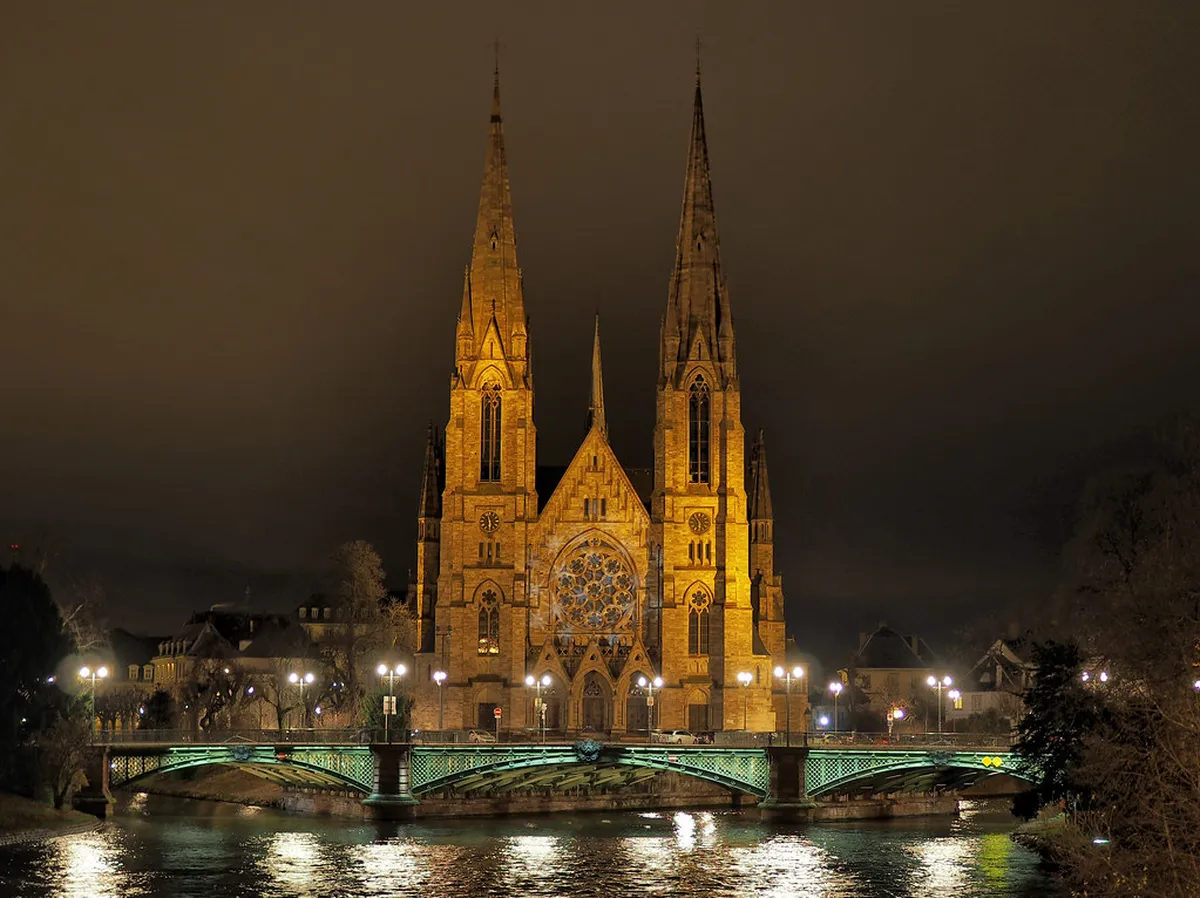
For the best vantage point, position yourself on Place du Château, the open square directly in front of the façade. The projection covers all three portals and the full rose window. Rue Mercière, the narrow street running from Place Gutenberg toward the cathedral, also gives an excellent slightly elevated angle if the square fills up. Arrive 15–20 minutes early on weekends in July and August — the area fills quickly, especially after 22:00 when the terrace bars empty out. Bring a thin jacket: temperatures drop noticeably after dark even in midsummer.
The cathedral video-mapping show runs nightly from late June through late August, starting at approximately 22:15 once full dark falls. A second showing runs at 23:00 on weekends during peak season. There is no ticketing or booking required — the show is completely free and viewable from the open square in front of the cathedral.
The show content changes each season. The 2026 programme was confirmed in early June via the Strasbourg Office de Tourisme website, where you can verify exact nightly start times. On Bastille Day (14 July), the standard show is replaced by an extended fireworks and projection event around Place de la République — check the tourism office calendar for the updated schedule that week.
Summer Docks and Pop-Up Terraces
Every July and August, the Malraux Peninsula on the eastern bank transforms into the Summer Docks (Les Docks d'Été). The area around the Médiathèque Malraux — a striking glass-and-steel building right on the water — fills with deckchairs, a sandy zone, paddleboard hire, and a casual outdoor bar. It is genuinely local in feel: families, students, and office workers on lunch breaks mix easily. The setup is free to enter; you pay only for drinks or equipment hire.
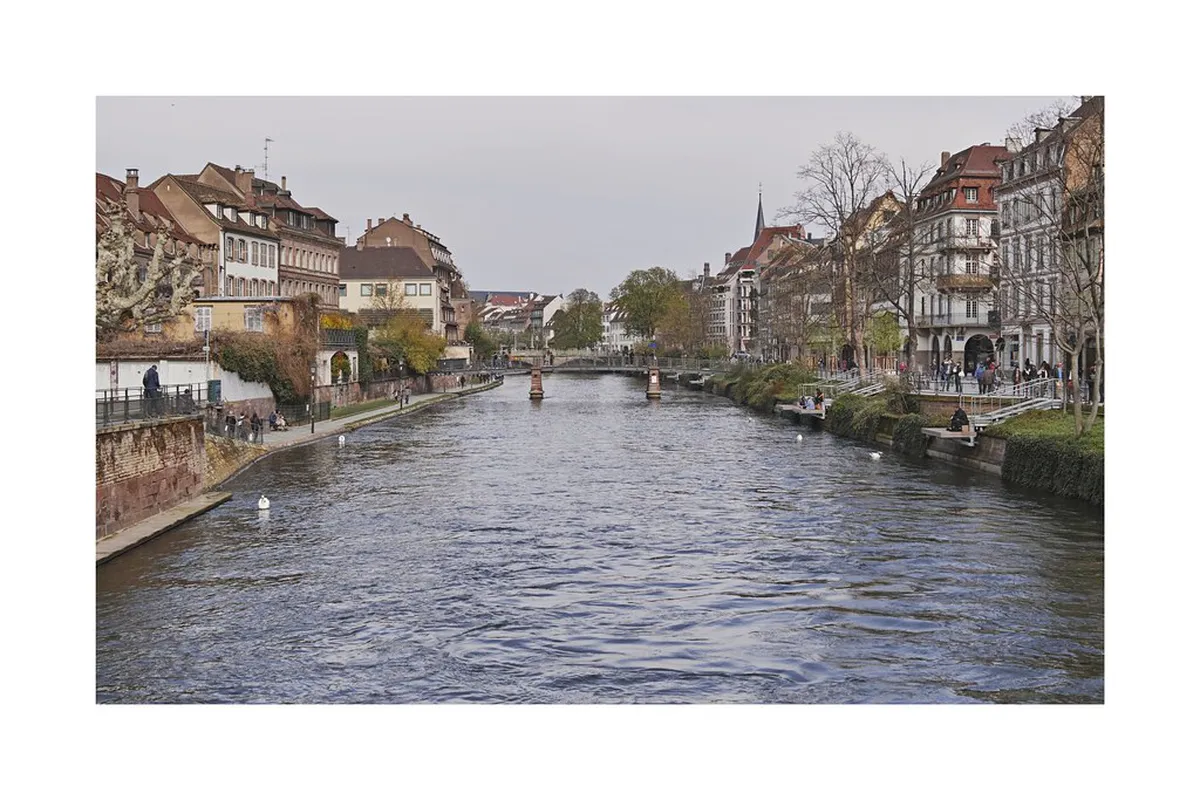
Le Lavoir is the most interesting of the seasonal terraces. It floats on a converted barge moored near La Petite France and operates from late May through September. Drinks are mid-range priced (around €5–8 for a beer or glass of Alsatian Pinot Gris), the deck sways very gently with river traffic, and on warm evenings it fills quickly after 19:00. Phare Citadelle, a few kilometres south near the Citadelle park, operates in a former industrial shed and hosts food trucks, DJs, and occasional live sets through the summer months — it draws a younger, more festival-minded crowd than Le Lavoir.
Quai des Bateliers, in the Krutenau neighbourhood, is the everyday terrace strip. Cafés run their outdoor seating along the riverside walkway from morning coffee through late-night drinks. It is quieter than the pop-up venues and ideal for a long Alsatian lunch — flammekueche (tarte flambée) with a glass of local Riesling is the standard order. Café Atlantico sits right on the water here and stays open until 01:30, making it useful both as a daytime terrace and a later-evening option.
Parks and Gardens: Orangerie to Pourtalès
Parc de l'Orangerie is Strasbourg's oldest park and the obvious choice for a summer afternoon. It sits adjacent to the European Parliament buildings in the Neustadt area, roughly 20 minutes' walk from the cathedral. The park has a boating lake, a small zoo with Alsatian storks (the region's symbol), a miniature train for families, and a café terrace that fills on sunny weekends. It is a genuine neighbourhood park rather than a tourist attraction, which makes the atmosphere feel relaxed. Entry is free.
Parc de Pourtalès, about 3 km north of the centre, is significantly less visited and offers far more shade. Its 19th-century English-style landscaping means dense canopy cover on the main allées — useful in a genuine July heatwave when the Orangerie's open lawns feel exposed. The château at the centre is not open for interior visits, but the grounds are free to enter and largely crowd-free even in August. Locals run and cycle here on weekday mornings.
For a breeze rather than shade, the Barrage Vauban terrace mentioned earlier functions as a park annex: the long stone roof above the dam has benches and open views in both directions along the river. It is the best spot in the old town to feel moving air on a still day. Combine it with the walk along the canals of La Petite France for a two-hour loop that stays largely in shade until mid-morning.
Biking Strasbourg: 600 km of Cycle Routes
Strasbourg has the most developed urban cycle network in France — around 600 km of dedicated lanes covering the city and its suburbs. The entire Grande-Île is accessible by bike, and the riverside paths along the Ill and Rhine are flat, well-maintained, and largely car-free. A full circuit of La Petite France and back to Place Kléber takes under an hour at a casual pace.
The Vélhop bike-share scheme operates 40 stations across the city. Day passes cost around €5 and the first 30 minutes of each journey are free, making short hops between sights essentially costless. Weekly passes at around €10 are worth it if you plan to use bikes as your main transport. Alternatively, the Strasbourg City Card (from €24 for 24 hours) includes unlimited Vélhop use alongside free or discounted entry to 15 museums — a worthwhile combination if you plan to visit the Palais Rohan or the Historical Museum.
The EuroVelo 15 (Rhine Cycle Route) passes through Strasbourg and connects it directly to Kehl across the river in Germany via a dedicated bridge — a 30-minute round trip that many visitors use simply as a way to say they cycled into another country. Heading south, the cycle path toward Illkirch-Graffenstaden runs alongside the canal and makes for a pleasant 10 km morning ride before the city heats up.
Summer Festivals: FARSe, Bastille Day, and Live Music
The Festival des Arts de la Rue de Strasbourg, known as FARSe, runs across several days in July and turns the city's squares and courtyards into stages for street theatre, circus acts, and live performances. Most events are free and staged in public spaces — Place du Temple-Neuf, the courtyards of Neustadt, and the banks of the Ill all feature on the programme. The 2026 edition typically runs in mid-July; check the festival website or the tourism office calendar in June for exact dates.
Bastille Day (14 July) is marked throughout France, but Strasbourg does it with particular energy given its Franco-German history. The evening programme around Place de la République and Place Kléber includes an open-air concert followed by fireworks at around 23:00. The cathedral illumination show is replaced by a dedicated 14 July projection. The city is busy that evening but the atmosphere is genuinely festive and worth planning around rather than avoiding.
Live music runs informally throughout summer on the Place du Marché-Gayot — a small square in the university district that fills with outdoor tables and occasional buskers or organised concerts from June onwards. The Krutenau neighbourhood around Quai des Bateliers also runs music events through the summer, usually posted on local bar social media rather than centralised listings. Both areas are within 10 minutes' walk of the cathedral.
FARSe (Festival des Arts de la Rue de Strasbourg) typically runs in mid-July with street theatre, circus acts, and live performances staged in public squares and courtyards — most events are completely free. Bastille Day on 14 July features an open-air concert and fireworks at around 23:00 on Place de la République and Place Kléber, with the cathedral light show replaced by a dedicated 14 July projection. Check the Strasbourg tourism office calendar in June for exact festival dates and schedules.
Best Summer Day Trips: Alsace Wine Villages and Beyond
The Alsace Wine Route runs 170 km from Marlenheim (just west of Strasbourg) south to Thann. By car it takes about 25 minutes to reach the first wine villages. By train, Colmar is the most practical base — 35 minutes direct, trains run every 30–60 minutes from Strasbourg Gare Centrale, and fares are around €12–18 each way. From Colmar you can reach Riquewihr, Ribeauvillé, and Kaysersberg by local bus or bike hire in under an hour.
Ribeauvillé and Riquewihr are the two most photographed villages on the route. Both are compact enough to cover on foot in two to three hours, with medieval towers, flower-covered fountains, and winstubs (traditional wine taverns) serving Riesling and Gewurztraminer by the glass for around €4–6. In summer the villages get busy by 11:00 — arrive early or visit on a weekday. Kaysersberg, birthplace of Albert Schweitzer, is smaller and tends to feel less overrun.
Château du Haut-Koenigsbourg sits at 757 m above the Rhine plain and is most easily reached by car. Entry is around €12 for adults. On a clear summer day the panoramic view from the battlements stretches across to the Black Forest in Germany. The drive up through the Vosges forest provides natural air conditioning. If you are using public transport, a seasonal shuttle from Sélestat (30 minutes from Strasbourg by train) runs in July and August — check the Bas-Rhin departmental transport website for current schedules.
Where to Stay: Downtown, Petite France, or Neustadt
The Grande-Île and La Petite France area offer the shortest walking distances to all the main sites. Hotels here are concentrated around the cathedral and Place Kléber. Expect to pay €100–200 per night in summer for a mid-range double. Hotel Rohan (mid-range, right by the cathedral) and Hotel Beaucour (charming rooms, canal-adjacent) are well-reviewed options in this zone. Booking two to three months ahead is advisable for July and August.
Neustadt — the Art Nouveau district to the northeast — is a 15-minute walk from the cathedral and typically 20–30% cheaper than Grande-Île hotels. It is also closer to the Orangerie, the European Parliament, and the Vélhop cycling paths heading north. Hotel Régent Contades is the standout here: well-located, and sitting in an area with local bakeries and cafés rather than tourist restaurants. It makes a good base if you intend to cycle or take day trips.
For budget travellers, Ciarus hostel (Place de l'Université, 10 minutes' walk from the cathedral) offers mixed and female-only dorms alongside private rooms. Summer rates for dorms start around €30 per night. The location is near the Krutenau neighbourhood, which means easy access to the terrace bars and riverside cafés on Quai des Bateliers.
Summer Dining: Terraces, Alsatian Food, and Where to Eat
Alsatian food is built for summer eating: flammekueche (a thin-crust tarte flambée with crème fraîche, lardons, and onions) is best eaten outdoors with a carafe of Sylvaner. Choucroute strasbourgienne — sauerkraut with various smoked meats — is more of a winter dish, but traditional winstubs serve it year-round. A classic Alsatian dinner in La Petite France runs €20–35 per person with wine at a mid-range restaurant. Chez l'Oncle Freddy in La Petite France is a reliable traditional option in a 16th-century building.
For a more varied evening, the Krutenau neighbourhood around Quai des Bateliers has the best concentration of non-tourist restaurants at honest prices. East Canteen (Asian fusion) and Café Atlantico (French-international, riverfront) are local staples. Le Bistro d'Antoine serves classic French bistro food and is a neighbourhood favourite for special occasions. For a higher-end dinner, La Casserole near the cathedral offers upscale French cuisine — reservation required in summer.
Breakfast and bakeries deserve separate mention. Manufacture de la pâte, a Ukrainian-Georgian bakery, produces a triangle sandwich in Bretzel dough that makes an excellent on-the-go lunch. Coffee Stub, near Place Kléber, is consistently recommended for espresso drinks. If you are cycling or heading out early for a day trip, most boulangeries around the Neustadt open by 07:00 — a fresh croissant and Alsatian apple juice is the standard early-morning order.
Practical Planning: City Card, Transport, and Getting Around
The Strasbourg City Card covers free entry or discounts to 15 museums and cultural sites, unlimited use of the Vélhop bike-share, unlimited tram travel, and discounts on boat tours. It costs €24 for 24 hours, €30 for 48 hours, and €36 for 72 hours. If you plan to visit two or more museums and use the bikes, the card pays for itself. Buy it at the tourism office on Place de la Cathédrale or online in advance.
Strasbourg's tram network has six lines and covers the city centre and suburbs cleanly. A single ticket is €2; a 24-hour pass is €5.60. The central hub is Homme de Fer, one stop from the cathedral. From Strasbourg Gare Centrale (the main train station), tram line A runs directly to the cathedral in about eight minutes. For day trips, the station is well connected — TGV services reach Paris Gare de l'Est in under 2h 20min, and regional trains fan out across Alsace.
Driving inside the Grande-Île is heavily restricted. If you arrive by car, park at one of the peripheral park-and-ride lots (marked P+R on city maps) and take the tram in. Parking fees at P+R sites are low — around €1–2 per day — and the tram ride into the centre takes 10–15 minutes. Trying to park on the island itself in summer is frustrating and expensive.
See our main Strasbourg attractions guide for the broader overview.
Frequently Asked Questions
What is the best month to visit Strasbourg in summer?
Late June to early July is the best time for warm weather and manageable crowds. You can enjoy the full range of summer activities before the peak August heat. This window offers the longest daylight hours for exploring.
Is Strasbourg expensive in the summer?
Prices for hotels are higher in summer than in spring or fall. However, many outdoor activities and festivals are free to the public. Booking your stay several months in advance can help you find better rates.
Does it rain a lot in Strasbourg during summer?
Summer rain usually comes in the form of short, heavy evening thunderstorms. These storms often provide a welcome relief from the daytime heat and humidity. It is wise to carry a small travel umbrella just in case.
Strasbourg in summer earns its place as one of the most rewarding warm-weather city breaks in France. The cathedral light shows are free, the cycling infrastructure is unmatched, and the combination of Alsatian food, river terraces, and wine-village day trips makes a three-day trip feel effortlessly full. Use our Strasbourg 2-day itinerary to plan your perfect warm-weather escape. The Best Time To Visit Strasbourg 2026: 10 Essential Planning Tips guide has a fuller seasonal breakdown if you are weighing up other months. For a completely different experience of the same city, the Strasbourg Christmas Market Guide: 8 Things to Know Before You Go covers the winter season in detail — it is a useful counterpoint for planning.
The city rewards those who linger past the standard half-day tour. Stay two or three nights, ride out to the wine villages, and catch the cathedral show after dark — you will leave with a very different impression of Alsace than the Christmas-market reputation suggests.
You might also like


Continue reading
More guides you'll find useful