10 Best Free Things to Do in Strasbourg (2026)
Discover the best free things to do in Strasbourg, from the stunning Notre-Dame Cathedral to the historic wine cellars and the European Parliament.
On this page
10 Best Free Things to Do in Strasbourg
Strasbourg sits at the crossroads of French and German culture, and nearly all of its greatest attractions cost nothing to enter. The Grande Île — the entire historic island at the city's core — is a UNESCO World Heritage Site that you walk through rather than buy a ticket for. Budget travelers can fill two full days here without spending a single Euro on admission fees, as long as they know where to look. This guide covers every major free experience in the city for 2026, with practical timings and the lesser-known spots that most visitors walk straight past.
The city is compact enough to cover entirely on foot, which eliminates transport costs on top of the free entry. Most of the best viewpoints, neighborhoods, and cultural sites are clustered within a thirty-minute walk of each other. If you are wondering whether Strasbourg is worth visiting on a tight budget, the answer is unambiguously yes. The free experiences here rival what other European capitals charge thirty Euros to see.
Cathédrale Notre-Dame de Strasbourg
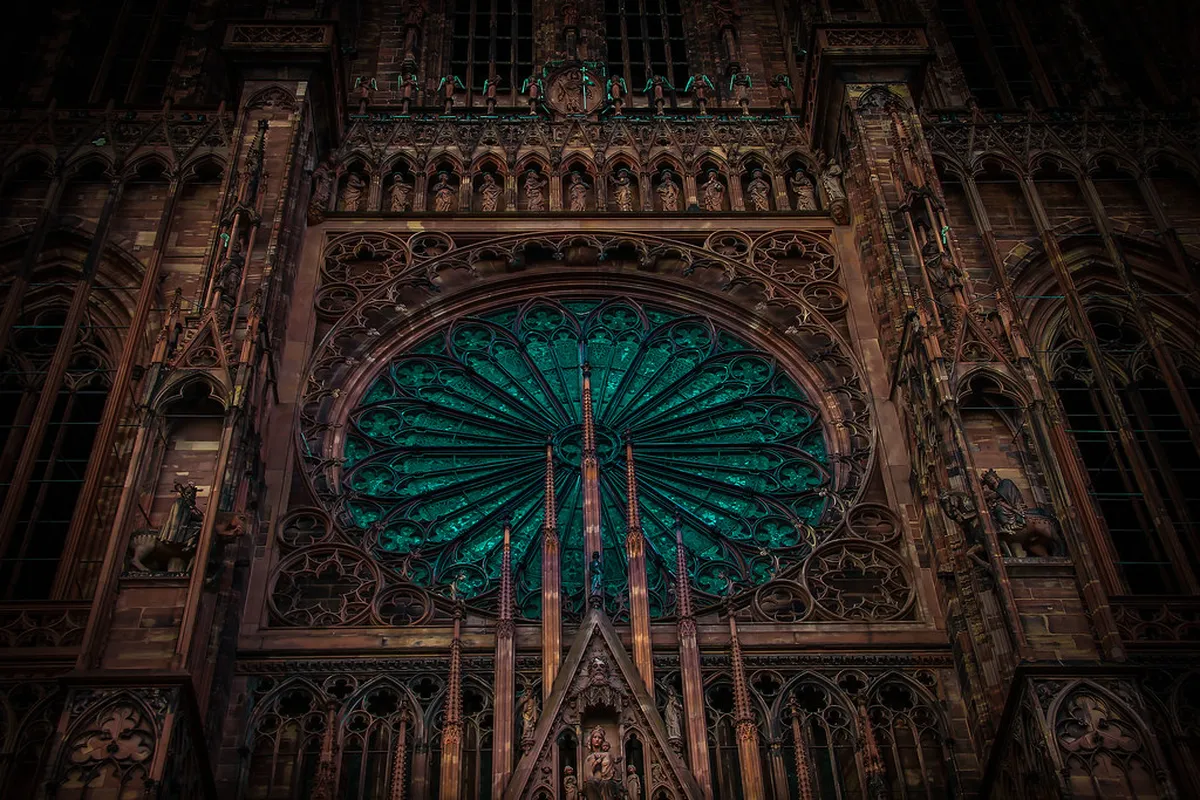
The cathedral is the undisputed heart of Strasbourg and entry to the nave is completely free. Built from pink Vosges sandstone over several centuries, it stood as the tallest building in the world from 1647 to 1874 — a distinction that still feels plausible when you stand beneath the 142-metre spire. The interior contains 12th-century stained glass windows that flood the nave with coloured light on sunny mornings, when the effect is at its most dramatic. Arriving before 09:30 puts you ahead of tour groups and gives you the quiet atmosphere the space deserves. The official cathedral website provides current opening hours and Mass schedules.
Before leaving Place de la Cathédrale, walk around to the adjacent Place du Château. Here, a bronze 3D model of the cathedral created by German sculptor Egbert Broerken sits at street level. The scale model reproduces every facade detail in tactile form, making it one of the more unusual free experiences in the city. It was designed partly for visually impaired visitors, but it is worth several minutes of anyone's time to understand the building's full geometry from ground level.
The astronomical clock is visible from the nave without a ticket — only the midday puppet show performance requires a separate fee. The carved stone pulpit near the entrance has a small dog figure at its base; local legend holds that petting it grants a wish. Closing times vary: the cathedral is generally open 08:30–11:15 and 12:45–17:45 daily, with brief closures for services. Plan for at least forty-five minutes inside if you want to appreciate the full length of the nave.
La Petite France Historic Quarter
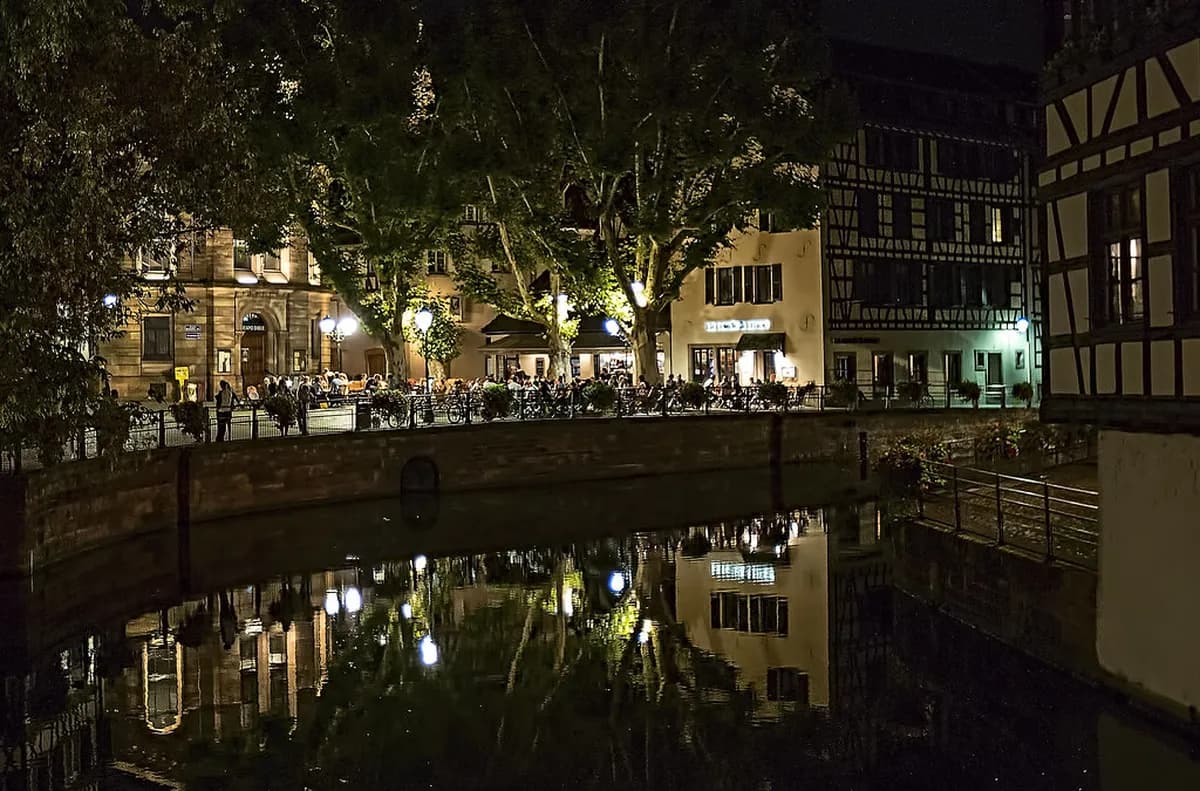
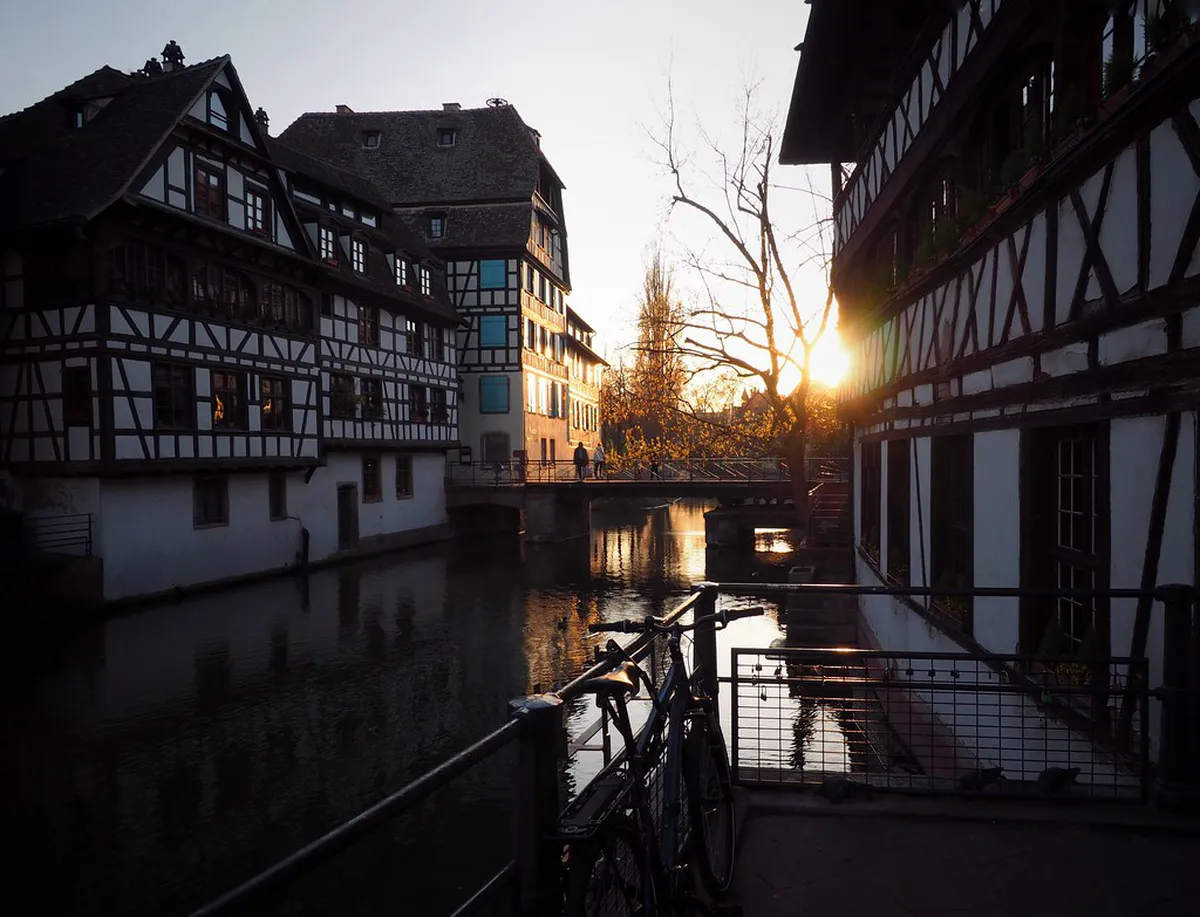
La Petite France is the most photographed neighborhood in Strasbourg and requires no ticket whatsoever. This former tanners' and millers' district spreads across five arms of the Ill River, with 16th- and 17th-century half-timbered houses leaning over the narrow canals. The best approach is from the Grande Île side, crossing the Pont du Faisan and then following Rue du Bain-aux-Plantes south. Early morning — before 09:00 — delivers the clearest canal reflections and the fewest other photographers in your shot. Strasbourg's Wikipedia entry covers the district's full medieval history.
The Kammerzell House at Place de la Cathédrale is technically on the edge of this district and is worth a close look for its extraordinary carved Renaissance facade dating from 1589. Just west of Petite France, the three medieval towers of the Ponts Couverts mark the old city boundary. Cross here to reach the Barrage Vauban, a 17th-century dam with a free panoramic terrace on top. The terrace opens at 07:30 daily and offers an unobstructed view of the cathedral spire rising above the Petite France rooftops — arguably the best free viewpoint in the city.
The ground floor gallery inside the Barrage Vauban holds a collection of rescued architectural statues from demolished Strasbourg buildings, displayed in an atmospheric vaulted space at no charge. Most visitors climb straight to the terrace and miss it entirely. Budget fifteen minutes for the gallery and twenty minutes for the terrace view. Together the Ponts Couverts, the dam, and Petite France form a logical ninety-minute walking circuit that stays entirely free.
Parc de l'Orangerie
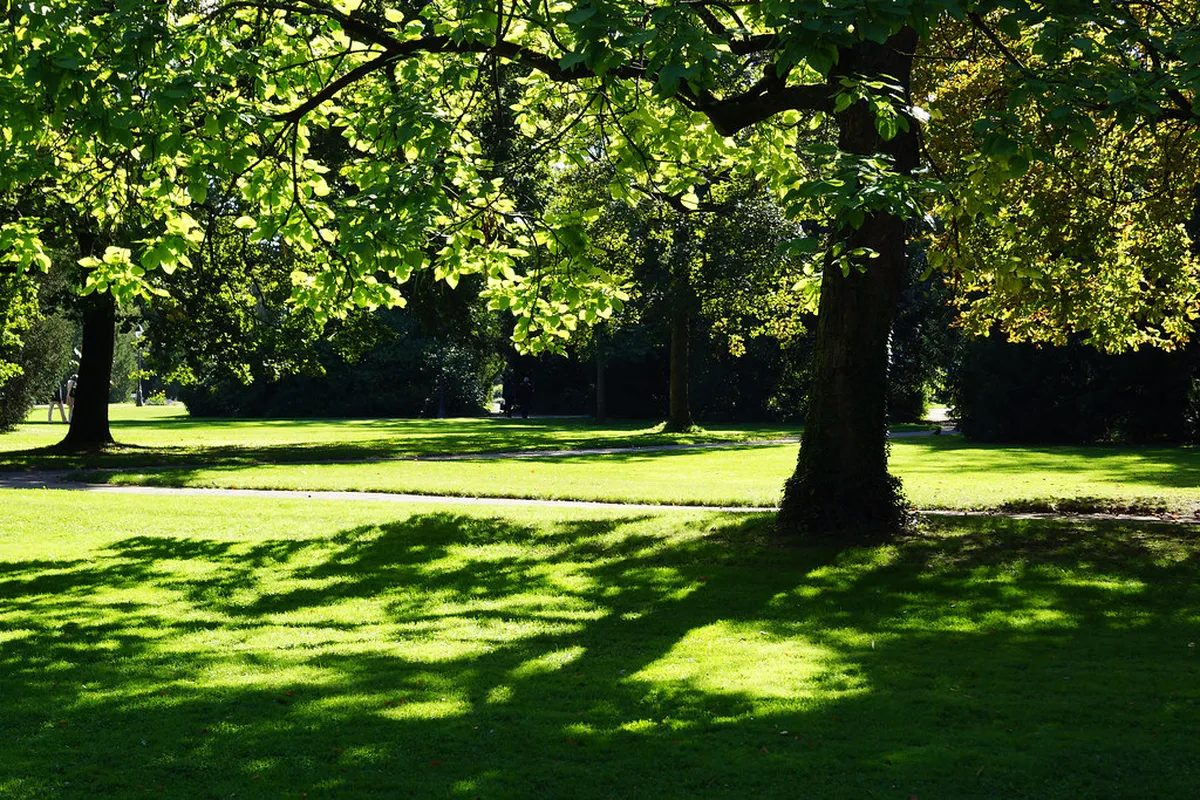
Strasbourg's oldest park was landscaped in the late 17th century and redesigned in English garden style in the 19th century. Entry is free from dawn to dusk every day of the year. The park is the symbol of the Alsace region made visible: white storks nest in the tall trees and can be spotted from the main paths throughout the spring and summer months. Storks were nearly extinct in Alsace by the 1980s and have been reintroduced through a breeding program centered partly on this park, making each sighting a small conservation story as well as a travel highlight.
The Josephine Pavilion at the western end of the park is a neoclassical structure that adds an architectural focus to the green space. A small lake in the center is popular with families and picnickers. There is a free mini-zoo on the eastern side of the park that houses deer, monkeys, and various birds — a detail that makes Parc de l'Orangerie particularly worthwhile if you are traveling with children. Allow two hours to walk the full perimeter, visit the zoo enclosures, and find a spot on the grass for a picnic.
The park sits about fifteen minutes on foot from the city center, just south of the European institutions district. Combining a visit here with the European Parliament (see below) makes for a logical morning itinerary that keeps you in the same part of the city. Spring — particularly May and June — is the best time to visit when the flower beds are in full bloom and the storks are actively nesting.
Neustadt UNESCO District
Neustadt — literally "new city" — was built between 1880 and 1918 during the period when Strasbourg was part of the German Empire. The German authorities intended it as a monumental showcase of imperial power, which means the district is full of grand Neo-Renaissance, Neo-Gothic, and Art Nouveau buildings that are free to admire from the sidewalk. UNESCO added Neustadt to the World Heritage List in 2017 as an exceptional example of urban planning from the Wilhelmine era. The contrast with the medieval Grande Île a few streets away is striking and historically instructive.
The best route starts at Place de la République, where the Palais du Rhin — the former imperial palace — dominates the square. Walk south along Avenue de la Liberté to see the National Library and the University of Strasbourg buildings, both in an imposing sandstone style. Rue du Général Rapp contains the Egyptian House, a private residence decorated with Egyptian Revival motifs that makes it the most unusual facade in the district. None of these buildings charge admission to view from outside, and several university buildings are open to the public during term time.
The Lycée International des Pontonniers is a school building so ornate that it has become one of the most photographed structures in the city. It sits at the northern edge of the district and is easily reached on a loop back toward the cathedral. Budget ninety minutes for a proper walk through Neustadt. The wide, quiet boulevards make it a pleasant contrast to the crowds concentrated around Petite France.
Historical Wine Cellar of the Civil Hospital
The Cave Historique des Hospices Civils is one of the most genuinely unusual free sites in France. Located beneath the Strasbourg Civil Hospital at 1 Place de l'Hôpital, this working wine cellar has been in continuous use since 1395. Its centerpiece is a 550-year-old oak barrel containing wine that has been aged since 1472 — making it the oldest barrel-aged wine in the world still in its original container. Entry to the cellar museum area is free, and the cellar also sells bottles of Alsatian wine at prices well below the tourist-area shops.
Finding it requires some persistence. There is no prominent street sign. Enter the hospital grounds, ask the porter at the main desk for directions to the cave, and follow the signs to the underground parking ramp. A narrow staircase leads down into the vaulted catacombs. The atmosphere — dark, cool, slightly musty, and genuinely centuries old — is something a museum exhibit cannot replicate. Spend thirty minutes reading the barrel histories and walking the full tunnel length.
Opening hours are Monday to Friday 08:30–12:00 and 13:30–17:30, and Saturday 09:00–12:20. The cellar is closed on Sundays and public holidays. It is a short walk from Place Gutenberg, making it easy to combine with a stroll through the central squares. This is consistently one of the sites that surprises visitors the most — budget travelers who skip it on the grounds that "it sounds like a wine shop" miss one of the city's authentic highlights.
The Cathedral nave is free to enter daily, though times vary (generally 08:30–11:15 and 12:45–17:45 with service closures). The wine cellar offers genuine 15th-century heritage at no cost, but visits are weekday mornings or Saturday only — plan ahead.
European Parliament Educational Visits
Strasbourg is the official seat of the European Parliament, and free educational visits to the hemicycle debating chamber are available to any member of the public. The visit includes access to the grand semicircular chamber where MEPs cast their votes, plus the Parlamentarium exhibition space that explains how the EU legislative process works. The self-guided tour takes approximately ninety minutes. Photography inside the hemicycle is permitted when Parliament is not in session.
Booking is mandatory and must be done in advance through the official European Parliament website. Availability varies by week depending on the plenary calendar — weeks when the full Parliament is in session from Strasbourg (typically four times per year) will have restricted access. Outside plenary weeks, booking a slot two to five days ahead is generally sufficient. Bring a passport or national ID card, as security checks are thorough. The building is located in the Wacken area near Parc de l'Orangerie, about twenty minutes on foot from the city center.
Even if you do not book an interior visit, the exterior of the Parliament and the adjacent Council of Europe building are free to approach and photograph. The surrounding European Quarter along the banks of the Ill offers a modern architectural counterpoint to the medieval city. Walking the perimeter of the Parliament from the riverside is itself a worthwhile thirty-minute detour that most city-center itineraries overlook.
Place Kléber and Place Gutenberg
Place Kléber is the largest public square in the city center and functions as its main gathering point. A statue of General Jean-Baptiste Kléber occupies the center, and the square is ringed by cafes, shops, and the imposing Aubette building. The square is free to use at any hour and hosts public events throughout the year, from seasonal markets to open-air concerts. It is also the site of the Great Christmas Tree, the centerpiece of the December festivities.
A five-minute walk south brings you to Place Gutenberg, named for Johannes Gutenberg, who lived and worked in Strasbourg before moving to Mainz to develop the printing press. A bronze statue of Gutenberg sculpted by David d'Angers in 1840 shows him holding a parchment inscribed with "Et la lumière fut" — a reference to the Book of Genesis. The Renaissance-style Chamber of Commerce building that frames the square is itself listed as a historic monument. Sitting in either square costs nothing and provides an excellent central orientation point for planning your walking route.
Both squares connect directly to the main tram lines, which makes them practical reference points even if you stay entirely on foot. The streets between Place Kléber, Place Gutenberg, and the cathedral contain the highest concentration of Alsatian specialty food shops in the city — pretzel bakeries, foie gras sellers, and wine merchants — making a slow stroll between them the most affordable form of food tourism in Strasbourg.
Église Saint-Thomas and Free Organ Music
Standing on the edge of Petite France, Église Saint-Thomas is free to enter and contains one of the most historically significant pipe organs in France. Mozart played this instrument during his visit to Strasbourg in 1778 — a detail recorded in his own correspondence. The church also houses the Mausoleum of Marshal de Saxe, a monumental 18th-century sculpture by Jean-Baptiste Pigalle that fills the transept with an operatic scene carved in white marble. Entry is free during visiting hours.
The organ at Saint-Thomas has been used for public recitals since the Reformation, and free concerts take place here on a regular basis throughout the year. The schedule varies by season, but summer months typically see recitals on Friday evenings and occasional Saturday afternoons. Check the church notice board or the Strasbourg city events calendar for current dates. This is a detail no major competitor guide to free Strasbourg activities currently highlights — the combination of free entry, world-class musical heritage, and outstanding sculpture makes it one of the best thirty-minute stops in the city.
The church is a Protestant church — Strasbourg's Reformation history is visible everywhere in the city — and its interior is quieter and less tourist-saturated than the cathedral. It sits on Rue Martin Luther, just a few minutes from the Barrage Vauban, and integrates easily into a Petite France circuit. Families will find the organ and the dramatic sculpture equally compelling for different reasons.
Strasbourg Christmas Markets
Strasbourg's Christkindelsmärik is the oldest Christmas market in France, with documented records dating to 1570. Walking through it is free for every visitor — there is no entrance fee for any of the markets spread across the city center. The main market occupies Place de la Cathédrale and Place Broglie from late November through 24 December, with smaller satellite markets on Place du Marché-aux-Cochons-de-Lait, Place Saint-Thomas, and Place des Meuniers. The light installations and decorated facades cost nothing to enjoy.
The best free experience at the markets is simply walking from square to square after sunset, when the illuminated Great Christmas Tree at Place Kléber is fully lit. Arriving on a weekday evening rather than a weekend reduces the crowd density considerably. The food stalls charge for items — local specialties like bredele biscuits, vin chaud, and Flammlachs (flame-grilled salmon) — but browsing is free. Our Christmas market guide covers timing, the best stall locations, and how to navigate the busiest weeks without queuing.
Outside December, the free market calendar continues year-round. On Saturdays, Place de l'Etal hosts a flea market from 07:00 to 16:00 where antique furniture, vintage postcards, silverware, and clothing appear alongside cheaper household goods. Place Broglie hosts a large general market every Wednesday from 07:00 to 18:00 with fruit, vegetables, and clothing. Both are free to browse and give a far more local and less tourist-oriented impression of everyday Strasbourg than the Christmas period does.
Free Museums and the First Sunday Rule
All municipal museums in Strasbourg offer free entry on the first Sunday of every month. This is a city-wide policy that applies to the Palais Rohan, the Museum of Modern and Contemporary Art (MAMCS), the Musée Alsacien, the Musée de l'Oeuvre Notre-Dame, the Musée Tomi Ungerer, and the Archaeological Museum. On any other day these same museums charge between €6.50 and €7.50 per person. Planning your visit to land on a first Sunday is the single most effective money-saving move available to a Strasbourg budget traveler.
The Palais Rohan at Place du Château is the most rewarding target on a first Sunday. The building houses three separate museums — Decorative Arts, Fine Arts, and Archaeology — and the former royal apartments themselves are as impressive as the collections. The Fine Arts museum holds "La Belle Strasbourgeoise," an early 18th-century portrait by Nicolas de Largillière whose subject has never been identified, giving the painting a minor Mona Lisa mystique. Budget two hours minimum for the Palais Rohan alone.
The Museum of Modern and Contemporary Art sits on the banks of the Ill at 1 Place Hans Jean Arp and is worth the first Sunday slot for its building alone: a light-filled glass structure by architect Adrien Fainsilber with coloured panel installations by Daniel Buren across the main windows. The full guide to Strasbourg museums lists current opening times and the specific conditions of the free Sunday policy. Arrive at opening time on a first Sunday — typically 10:00 — to avoid the queues that build by 11:00.
All municipal museums are free on the first Sunday of every month, including the Palais Rohan with three museums inside. This single-day strategy saves €6.50–€7.50 per person per museum — plan your visit to land on a first Sunday for maximum value.
How to Plan Your Free Day by Neighborhood
Grouping free activities by area eliminates unnecessary backtracking and keeps your day efficient. The Grande Île cluster — Cathedral, Bronze 3D model, Place Gutenberg, Kammerzell House, Place Kléber, and the wine cellar — is compact enough to cover in a four-hour morning. Start at the cathedral by 09:00, work east to Place Gutenberg and the wine cellar (open from 08:30 on weekdays), then loop back through Place Kléber. This sequence covers the five densest free-sights areas before lunch crowds arrive.
The Petite France cluster runs from the Ponts Couverts west to the Barrage Vauban, with Église Saint-Thomas on the eastern approach. Afternoon light hits the canal facades in Petite France from the west, making 14:00–16:00 the best photography window. The Barrage Vauban terrace faces east toward the cathedral, so morning light is better there. A focused two-hour afternoon walk covers both without doubling back.
The European Quarter cluster — Parc de l'Orangerie, the Parliament exterior, and the Neustadt district — sits north-east of the center and works well as a half-day on its own. Tram line D from Place Kléber reaches the Orangerie stop in under ten minutes if you prefer not to walk. Combining this cluster with a pre-booked Parliament interior visit fills a morning comfortably. The 18 Best Restaurants and Food Spots in Strasbourg guide covers affordable eating options in each of these three zones, so you can refuel without straying far from the free sights.
| Free Attraction | What You'll See | Notes |
|---|---|---|
| Cathédrale Notre-Dame | Gothic nave, 12th-century stained glass, 142m spire interior | Open 08:30–11:15, 12:45–17:45 daily; astronomical clock visible without ticket |
| La Petite France | Half-timbered houses, canal reflections, medieval streets | Best at dawn; free to walk. Kammerzell House (1589) architectural detail on edge |
| Barrage Vauban Terrace | Panoramic view of cathedral and Petite France roofscape | Opens 07:30 daily. Ground-floor gallery of rescued architectural statues also free |
| Parc de l'Orangerie | English garden, white storks (May–Aug), free mini-zoo | Entry dawn to dusk, year-round. 15 min walk from center |
| Neustadt UNESCO District | Wilhelmine Neo-Gothic and Art Nouveau facades, grand boulevards | All exterior viewing free. University buildings open during term |
| Historical Wine Cellar (Cave Historique) | 550-year-old oak barrel with 1472 wine, 600+ years of barrel history | Mon–Fri 08:30–12:00, 13:30–17:30; Sat 09:00–12:20. Closed Sun/holidays |
| European Parliament Exterior | Modern architecture, European Quarter riverside walk | Hemicycle interior requires advance free booking; exterior always free |
| Place Kléber & Place Gutenberg | City center squares, statuary, architecture, cafés | Kléber hosts markets and events; Gutenberg birthplace of printing press tradition |
| Église Saint-Thomas | Historic pipe organ (Mozart played 1778), Marshal de Saxe mausoleum | Free entry. Free organ recitals summer Fridays; check notice board |
| Christmas Markets (Nov–Dec) | Festive light installations, decorated facades, Great Christmas Tree at Kléber | Walking free; food stalls charge. Weekday evenings quieter than weekends |
| Year-Round Markets | Saturday flea market, Wednesday general market vegetables/antiques/clothing | Place de l'Etal (Sat 07:00–16:00), Place Broglie (Wed 07:00–18:00) |
| Municipal Museums (First Sunday) | Palais Rohan (3 museums + royal apartments), Modern Art Museum, Alsatian Museum | All free 1st Sunday monthly; €6.50–€7.50 other days. Arrive 10:00 for queues |
See our main Strasbourg attractions guide for the broader overview.
Several are free attractions: the Barrage Vauban terrace, the Ponts Couverts and Parc de l'Orangerie.
Frequently Asked Questions
Is Strasbourg very expensive to visit?
Strasbourg is very affordable if you focus on free attractions like the cathedral and public parks. You can see most major sights without spending a single Euro on entry tickets. Food costs are also manageable if you visit local bakeries and markets instead of tourist restaurants.
Which museums in Strasbourg are free?
All municipal museums in Strasbourg offer free admission on the first Sunday of every month. This includes the popular Palais Rohan and the Museum of Modern and Contemporary Art. On other days, you can still visit the historical wine cellar of the hospital for free.
How can I see the European Parliament for free?
You must book a free educational visit online through the official European Parliament website in advance. These self-guided tours include access to the hemicycle and the Parlamentarium. The visits are available most days when the parliament is not in full plenary session.
Strasbourg is one of the most rewarding free-travel destinations in France. The cathedral nave, Petite France, the Barrage Vauban terrace, the wine cellar, the Neustadt district, Parc de l'Orangerie, and the European Parliament interior together make up a genuinely world-class free itinerary. Add a first-Sunday museum visit and a Saturday flea market and you have a full weekend without spending a single Euro on admission. In 2026 the city remains as walkable and as free as it has always been — the challenge is not finding free things to do but deciding which ones to prioritize.
You might also like


Continue reading
More guides you'll find useful