12 Best Free Things to Do and Travel Tips for Colmar (2026)
Discover the best free things to do in Colmar, France. From Little Venice to the Statue of Liberty trail, plan your budget-friendly trip today.
On this page
12 Best Free Things to Do in Colmar (2026)
Colmar may be one of the most visually spectacular towns in France, and the best part is that the main attraction — the city itself — costs nothing to enjoy. The half-timbered houses, canal-side streets, and centuries-old squares are all open-air, free, and best experienced at walking pace. Our editors have combed every corner of the city to produce this budget-focused guide, updated for 2026. If you want deeper historical context before you go, our guide to Little Venice covers the Krutenau district in detail.
The historic center is compact enough to cover on foot in a single full day, yet rich enough to reward a two or three-day stay. You can move from the canals of Little Venice to the Tanner's District to the covered market to the Dominican church without once opening your wallet. This guide gives you a specific walking logic so you are not simply wandering — you are reading the city like a local. Check the Official Colmar Tourism Office website for any event closures before you arrive.
Wander Through Little Venice (La Petite Venise)
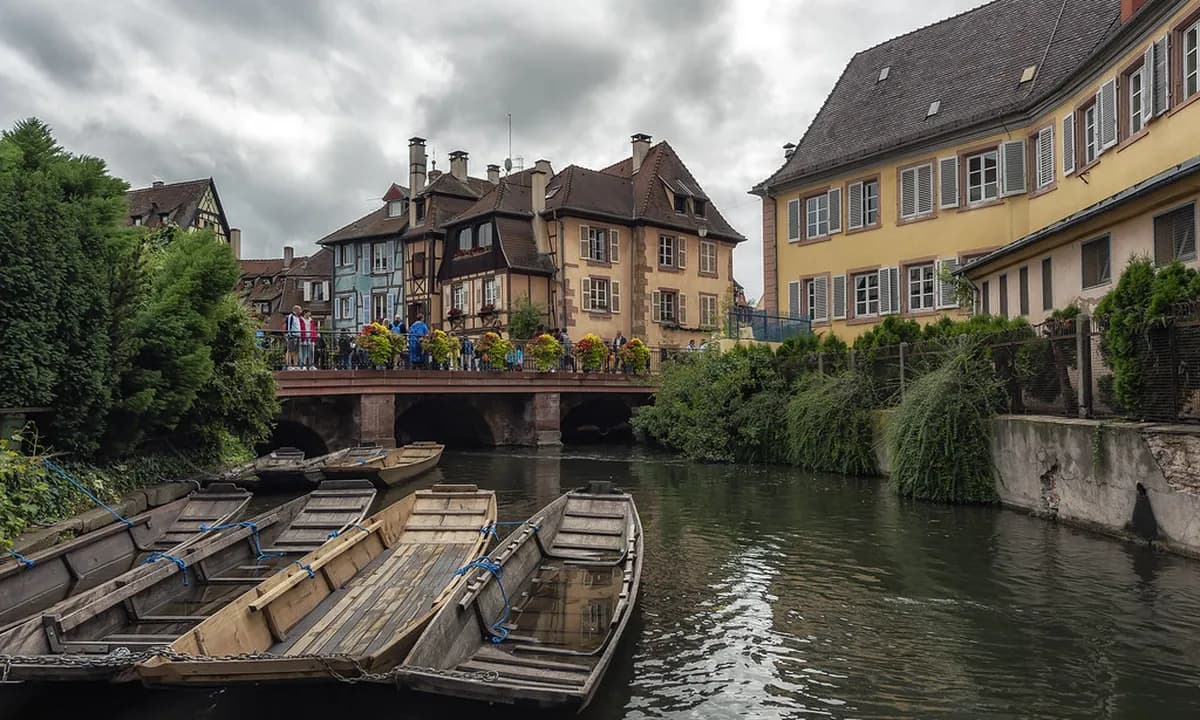
Little Venice is the image that sells Colmar to the world, and it lives up to every photograph. The narrow Lauch River flows past rows of painted half-timbered houses in the old Krutenau fishermen's quarter, with flower boxes on every window and stone bridges arching over the water. Entry is free, the area is open around the clock, and the best vantage point is the Rue des Écoles bridge at the southern end of the district.
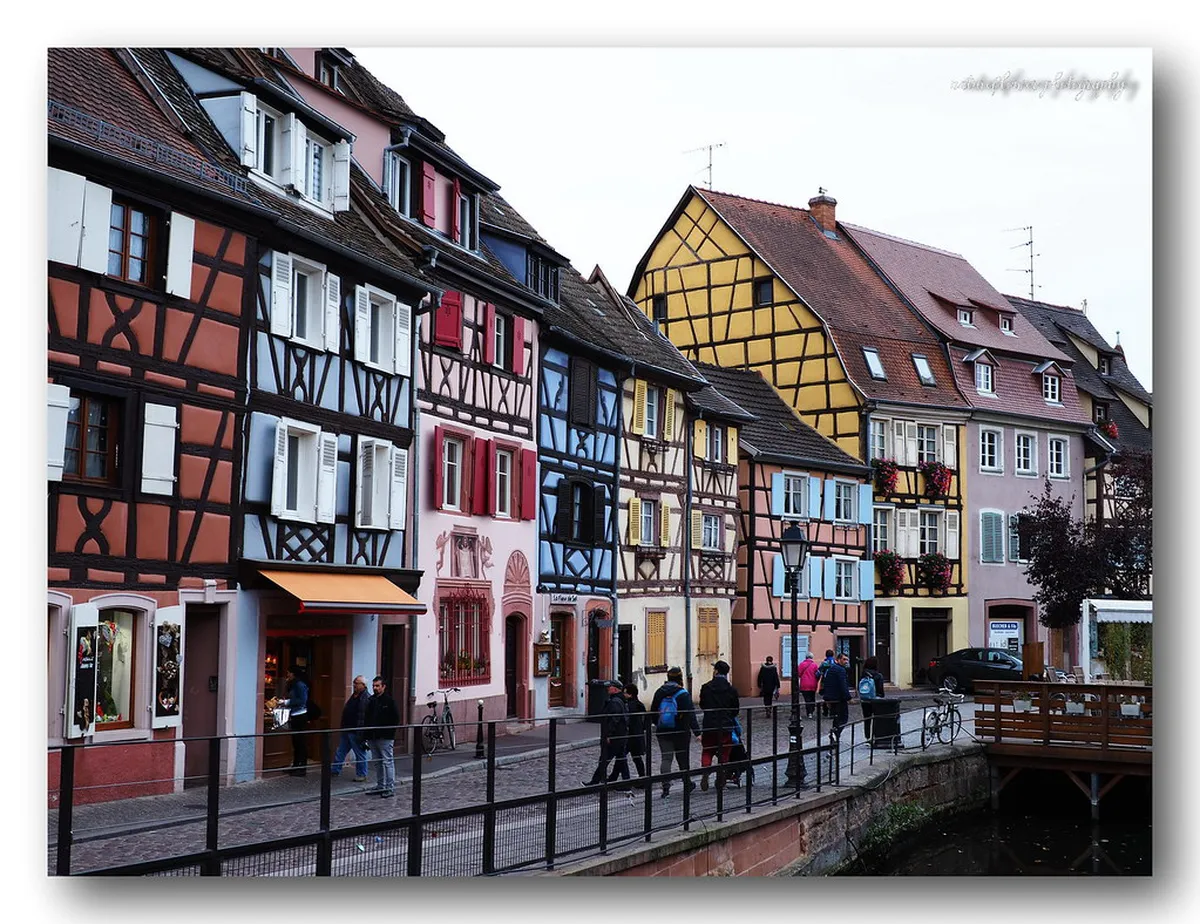
Arrive before 09:00 to photograph the reflections without boat tours in the frame. The guided canal boats launch from around 10:00 and cost roughly 7 EUR per person — pleasant, but the same views are available for free from any of the four pedestrian bridges. Budget 45 minutes to walk both banks and the small lanes that run behind the houses toward the covered market.
The season changes the experience noticeably. Spring fills the window boxes with geraniums. December brings the Christmas market stalls right to the canal edge, creating a lantern-lit scene you can enjoy entirely without spending money. In summer, the evening light hits the facades just after 19:00 and the crowds thin out — this is the most photogenic hour of the day.
Follow the Statue of Liberty Trail
Frédéric Auguste Bartholdi, who designed New York's Statue of Liberty, was born in Colmar in 1834. The city has embedded his legacy into the pavement itself: small bronze triangles stamped with the image of Lady Liberty are set into the cobblestones throughout the historic center. Following them forms a self-guided walking route that hits every major landmark, takes about two hours at a relaxed pace, and is completely free.
Pick up the free paper trail map at the tourist office on Rue Unterlinden, or simply look down and follow the triangles. The route begins near the train station and loops through the Place de la Cathédrale, the Rue des Marchands, the Tanner's District, and back through Little Venice. Each stop has a bilingual sign in French and English explaining the site's significance.
One practical note worth managing: the actual 1:1 scale replica of the Statue of Liberty that Bartholdi made as a study model stands in the Musée Bartholdi, which charges an entrance fee. A second, larger replica stands on an island in the Rhine about 12 km south of the city in Huningue — it is visible from the riverbank for free but requires transport to reach. What you follow in the city center are the pavement triangles and the outdoor sculptures, not a full-size statue.
Explore the Old Town (Vieux Colmar)
The Old Town is Colmar's greatest free asset. The entire pedestrian zone is a living museum of Alsatian architecture spanning the 14th to 17th centuries, and not a single entrance fee is required to walk it. Start at the Place de la Cathédrale and radiate outward through Rue des Marchands, Grand Rue, and the smaller connecting lanes. Most visitors spend two to three hours here without exhausting it.
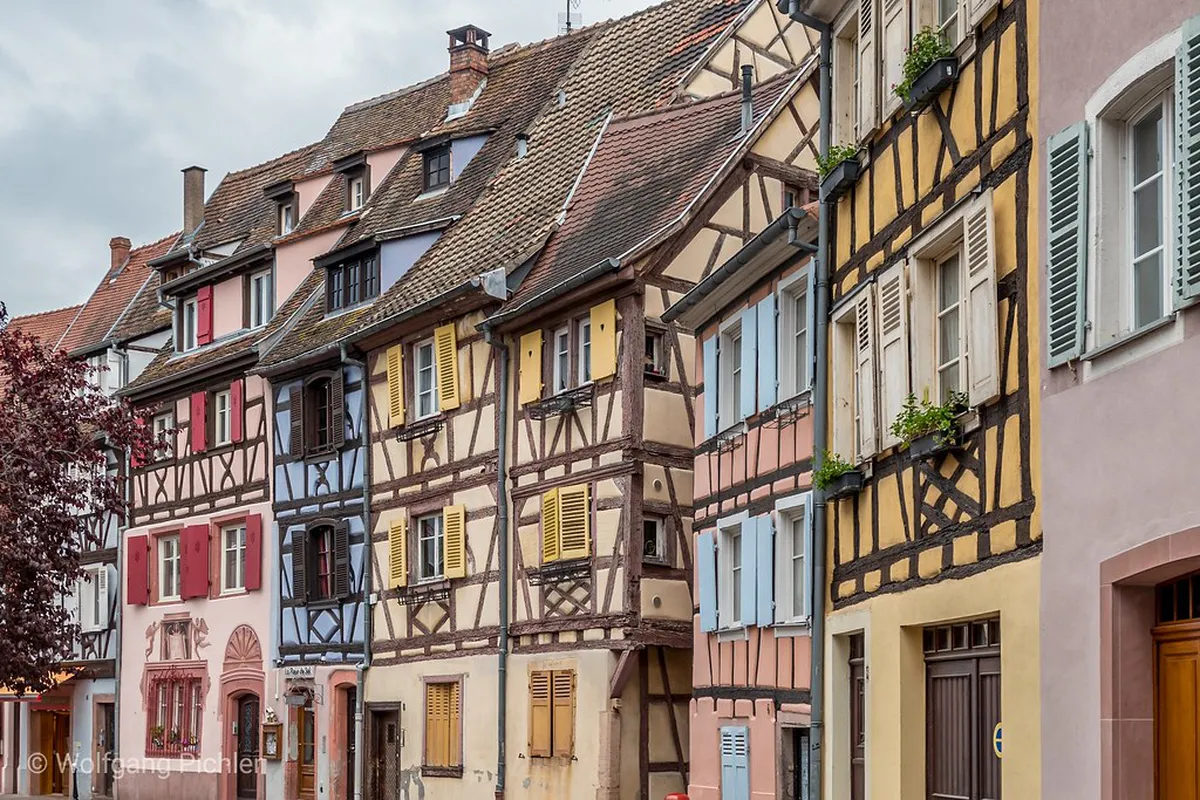
One of the least-known ways to read the neighborhood is through the house colors. Historically in Alsace, the color of a half-timbered house signaled the owner's trade: blue was associated with fishermen, yellow with bakers, and green with market gardeners. The painted details on doorways and shutters often told neighbors whether a daughter was of marriageable age. None of the competing travel guides make this a focus, but it turns an aimless wander into a genuinely informative one. Look for these color cues particularly along Quai de la Poissonnerie and the lanes behind the covered market.
The Maison Pfister on Rue des Marchands is the most decorated house in the city, built in 1537 with a wooden loggia, painted biblical scenes, and medallion portraits of Holy Roman emperors on the facade. The Maison des Têtes on Rue des Têtes has over 100 carved stone faces — including a Bartholdi-crafted cooper on the gable — watching visitors from its Renaissance facade. Both are free to admire from the street and require no more than ten minutes each.
The entire historic Old Town is a free pedestrian zone accessible 24 hours a day. The best time to explore is early morning (before 09:00) to avoid crowds and capture clean photographs of the half-timbered houses and narrow streets.
The Tanner's District and Fishmonger's Quarter
Two of the most photogenic free streets in Colmar sit just north and south of the covered market, and most first-time visitors miss at least one of them. The Tanner's District (Quartier des Tanneurs) dates from the 17th and 18th centuries. Its houses are unusually tall because the upper floors were built as open-air drying lofts where animal hides were hung after tanning. Look up at the timber-framed upper stories and you can still see the wide open galleries designed for airflow — a architectural detail no other street in town shares.
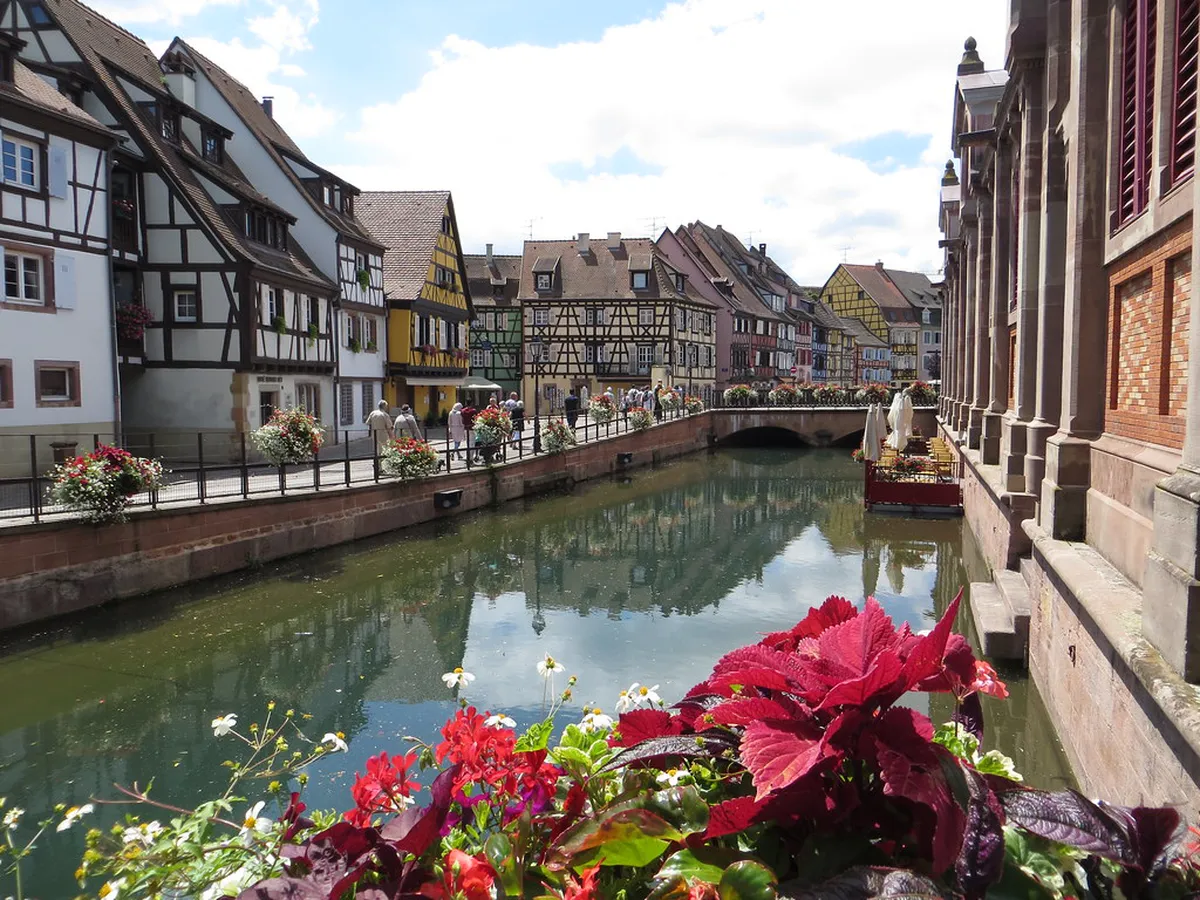
The Fishmonger's Quarter runs along Quai de la Poissonnerie, a short walk south toward Little Venice. This is the street that most people photograph when they think they are in Little Venice — the row of houses here is the most densely colored in the city, with facades in ochre, terracotta, and sage green packed tightly along the Lauch. Stand at the bridge at the east end of the quay for what is genuinely the best single-frame shot in Colmar. Both districts are free and open 24 hours.
Visit the Colmar Covered Market (Marché Couvert)
The covered market on Place de l'Ancienne Douane is a handsome brick and cast-iron hall built in 1865, and entry is free whether you buy anything or not. Inside you will find stalls selling Munster cheese, local charcuterie, fresh Alsatian bread, smoked fish, and a rotating seasonal produce. The building itself is worth the walk in — the ironwork roof structure and worn tile floor give it a different atmosphere from the street markets outside.
The market is open Tuesday through Sunday, usually from 08:00 to 13:00 on weekdays and until around 14:00 on Saturday. Walk through the back exit and you reach a small terrace overlooking the canal — a useful free resting point after an hour of walking the historic center. If you are assembling a picnic, this is the right place: buy a baguette, some Munster with cumin spice, and a slice of Munster tart, then take it to Parc du Champ de Mars ten minutes away.
Saint-Martin's Church and the Dominican Church
Collégiale Saint-Martin is the dominant church of the old town, visible from most of the historic center by its polychrome tile roof — the same Alsatian glazed-tile pattern used on the Strasbourg Cathedral and the Hôtel de Ville in Beaune. The exterior is 13th-century Gothic with a later Renaissance portal. Entry is free daily from roughly 08:00 to 18:30, except during services. Budget 20 minutes inside to see the nave and the stained glass in the transept. Stork nests often appear on the upper masonry during spring and early summer.
The Église des Dominicains on Place des Dominicains is smaller and less visited, but it holds one of the most famous paintings in Alsace: Martin Schongauer's Madonna in the Rose Garden (La Vierge au Buisson de Roses), painted in 1473. The church charges a small fee of around 2 EUR to enter and view the painting — almost nothing, but worth flagging if you are on a strict zero-spend day. The exterior, the Gothic facade, and the square itself cost nothing. A short detour through Place des Dominicains also gives you one of the quieter corners of the old town, away from the main tourist flow along Rue des Marchands.
Both Collégiale Saint-Martin and Église des Dominicains are free to enter and view from the outside. Saint-Martin is open roughly 08:00 to 18:30 daily (except during services), making it one of Colmar's most accessible free religious attractions. The polychrome tile roof is visible from most of the historic center.
Champ de Mars Park and Bartholdi's Outdoor Sculptures
Parc du Champ de Mars is the largest green space near the city center, about a ten-minute walk from the train station. It has shaded paths, a fountain, and the Bruat Monument — another Bartholdi work, commemorating Admiral Armand-Joseph Bruat. The park is free, open all day, and a sensible place to sit after the morning's walking circuit. In summer, it also hosts the Alsace Wine Fair (Foire aux Vins d'Alsace), which draws crowds in late July and early August with free public areas around the main concert tent.
Bartholdi's public sculptures are scattered across several squares and cost nothing to see. The Schwendi Fountain in Place de l'Ancienne Douane shows a Rittmeister (cavalry captain) holding a wine jug — cast in bronze and illuminated at night, it is the single best free evening photo spot in the city center. The Roesselmann Fountain near the old Dominican convent depicts a local hero from the 13th century. A tourism office map marks all the outdoor Bartholdi works; collecting them on foot takes about 90 minutes and forms a natural extension of the Statue of Liberty trail.
Best Free Photo Spots and When to Go
The three bridges that matter for photography are the Rue des Écoles bridge in Little Venice, the bridge at the end of Quai de la Poissonnerie, and the small footbridge on Rue de Turenne that looks back toward the Tanner's District. All three are free, accessible around the clock, and best shot in the 30 minutes after sunrise or in the hour before sunset. The canal water reflects the facades most cleanly when the surface is calm — typically early morning before the foot traffic and boat tours start.
The Rue des Marchands offers the classic street-level shot: walk to the intersection with Rue Mercière and look north to see the Pfister House loggia framed by the narrowing street. The interior of the covered market shoots well in the flat morning light when vendors are setting up but before the crowd arrives. Champ de Mars is best in late afternoon when the Bruat Fountain is lit by low western sun. None of these locations charge a fee and none require permits for personal photography.
| Attraction | What to See | Cost & Notes |
|---|---|---|
| Little Venice (Petite Venise) | Canals, half-timbered houses, flower boxes, four pedestrian bridges | Free, open 24 hours. Best before 09:00 for clear views. |
| Old Town (Vieux Colmar) | 14th–17th century Alsatian architecture, Maison Pfister, Maison des Têtes, house colors signifying trades | Free. 2–3 hours to explore the main streets. |
| Tanner's District (Quartier des Tanneurs) | 17th–18th century houses with open-air drying lofts visible in upper stories | Free, open 24 hours. Near the covered market. |
| Statue of Liberty Trail | Self-guided route marked by bronze triangles in pavement, hits all major landmarks | Free. 2 hours at relaxed pace. Map available at tourist office. |
| Collégiale Saint-Martin | 13th-century Gothic church, polychrome tile roof, stained glass, possible stork nests in spring | Free entry. Open 08:00–18:30 daily (except during services). |
| Colmar Covered Market (Marché Couvert) | Brick and cast-iron hall (1865), Munster cheese, local charcuterie, fresh produce, small terrace overlooking canal | Free entry. Open Tues–Sun, 08:00–13:00 weekdays, to 14:00 Saturdays. |
| Champ de Mars Park | Green space, shaded paths, fountain, Bruat Monument by Bartholdi, free outdoor concerts in summer | Free, open all day. 10 minutes from train station. |
| Bartholdi Outdoor Sculptures | Schwendi Fountain (Place de l'Ancienne Douane), Roesselmann Fountain, scattered public sculptures | Free. Schwendi Fountain is best lit at night. 90 minutes to see all. |
Best Time to Visit Colmar
Spring (April to June) and early autumn (September to October) are the best times for a free-focused visit. Prices for accommodation are meaningfully lower than in July and August, crowds are thinner on weekdays, and the flower boxes on the half-timbered houses are in full bloom. The canals reflect cleaner color when the light is softer and less harsh than mid-summer. Temperatures are pleasant for all-day walking — typically 14–22°C in May and September. For detailed seasonal advice and local events, consult the Colmar Wikipedia page, which covers climate patterns and regional history.
December is Colmar's most famous month. The Christmas markets run from late November through late December across five separate market sites in the historic center, and browsing them costs nothing. The main market fills Place de la Cathédrale, while a smaller artisan market occupies Place des Dominicains. The entire old town is illuminated after dark, and the effect on the canals is extraordinary. The downside: accommodation prices spike sharply in December, particularly on weekends, and the crowds are at their densest. Book well in advance if you visit in December 2026 and consider arriving on a Tuesday or Wednesday.
July and August are fully viable but expect queues at popular viewpoints and peak hotel rates. The Wine Fair in late July brings additional crowds but also free outdoor concerts in the park. Winter outside the Christmas market window (January to mid-November) sees the quietest streets and lowest prices, though some smaller shops and winstubs may keep reduced hours.
How to Get to Colmar
The most practical route is by train. Colmar's station sits about a ten-minute walk from the edge of the historic center, and regional TER trains run frequently from Strasbourg (30 minutes, around 12 EUR each way) and Basel (40 minutes, similar fare). From Paris Gare de l'Est, direct TGV services reach Colmar in around 2 hours 20 minutes; advance booking via SNCF Connect reduces the fare significantly. From Cologne by train the journey takes about 3 hours 30 minutes via Strasbourg.
By air, the two nearest airports are Strasbourg-Entzheim (roughly 45 minutes by shuttle and train combined) and EuroAirport Basel-Mulhouse-Freiburg, which is about a 45-minute drive or bus ride. Neither airport offers a direct shuttle to Colmar; you connect through Strasbourg or take a regional bus or taxi from Basel. If flying from North America, Frankfurt is the most connected hub — from there, a train via Strasbourg or Basel takes around two hours.
Colmar's historic center is car-free. If you are driving, free and low-cost parking is available on the ring road surrounding the old town, most of it within a five-minute walk of Little Venice. Check our Colmar parking guide for specific lots and current rates. A car is useful if you plan day trips to the wine villages, but unnecessary for the city itself.
Is Colmar Worth Visiting on a Budget?
Colmar is one of the most budget-friendly destinations in eastern France if you focus on its outdoor charm. Because the primary attraction is the architecture itself, you do not need to pay for many indoor sights. A visitor can have a genuinely fulfilling day here for under 20 EUR by self-catering and skipping the paid museums. For current event schedules and tourism services, the official Colmar tourism office provides comprehensive planning resources. If you are wondering is Colmar worth visiting, the answer for architecture and atmosphere lovers is straightforwardly yes.
Most major landmarks are grouped closely together, eliminating any need for local transport. You can walk from the train station to the furthest edge of Little Venice in about 20 minutes. Free public restrooms are available in the covered market and near the Unterlinden Museum. Water fountains throughout the city provide clean drinking water.
For food on a budget, avoid the canal-side cafes in the heart of Little Venice — they charge a location premium. Walk two streets back from the water to find local bakeries and winstubs with more honest prices. A Tarte Flambée (Flammekueche) at a backstreet winstub typically runs 10–13 EUR and is far more satisfying than the tourist-menu equivalents. A fresh pretzel (Bretzel) from a bakery costs around 1.50 EUR and makes an excellent walking snack.
Where to Stay in Colmar
Staying inside the Old Town is the most convenient choice but also the most expensive. Properties directly on or adjacent to Rue des Marchands and the canal charge a premium, particularly from June through August and in December. A more budget-conscious option is to stay near the Gare de Colmar, which puts you within a 10–15 minute walk of every sight in this guide and typically saves 20–40% on nightly rates. Our where to stay in Colmar guide breaks down the best neighborhoods for every budget.
Hostels are limited in Colmar. Budget travelers are better served by small guesthouses (chambres d'hôtes) or self-catering apartments with a kitchen — the latter lets you buy cheese and charcuterie from the covered market and avoid restaurant markups entirely. Booking three months ahead is necessary for July, August, and any December weekend. Spring and autumn bookings are more flexible and prices remain reasonable with 2–3 weeks' notice.
For the full picture, see our complete guide to things to do in Colmar.
The Collégiale Saint-Martin and La Petite Venise both have free-to-visit attraction guides.
Frequently Asked Questions
Can you walk around Colmar for free?
Yes, Colmar is exceptionally walkable and the entire historic center is a free pedestrian zone. You can see all the major half-timbered houses and canals on foot without paying any entrance fees. Most visitors find that our things to do in Colmar guide is best explored by walking.
Are the museums in Colmar free?
Most major museums like the Unterlinden charge an entrance fee of around 13 to 16 Euros. However, the city offers plenty of free outdoor art and historic architecture that costs nothing to view. Some museums offer free entry on the first Sunday of the month during the low season.
What is the best free thing to do in Colmar at night?
The best free evening activity is the 'Magic of Lights' show which illuminates the city's landmarks. This light display runs year-round on weekends and nightly during the Christmas season and summer months. It highlights the architectural details of the Old Town and Little Venice beautifully.
Colmar proves that you do not need a large budget to experience one of the most beautiful small cities in France. The architecture, the canals, the public sculptures, and the market hall are all yours without paying a single euro. The trick is knowing where to look and when to arrive — early mornings and shoulder seasons reward the budget-conscious traveler most.
Whether you follow the golden triangles through the old town, read the house colors along the canal, or simply sit in the Champ de Mars with a bakery lunch, the best of Colmar is reliably free. Take your time and let the city's layers reveal themselves at walking pace.
You might also like


Continue reading
More guides you'll find useful