

Eguisheim Travel Guide: 8 Best Things to Do & Planning Tips
Eguisheim, an easy day trip from Colmar, is Alsace's fairytale wine village: circular medieval streets, 33 wineries, and Christmas markets.
On this page
Eguisheim Travel Guide: 8 Best Things to Do & Planning Tips
Eguisheim is one of the most rewarding stops on the Alsace Wine Route, sitting just seven kilometres south of Colmar in the Grand Est region. The village's three concentric rings of half-timbered houses, its papal birthplace story, and 33 active wineries make it a destination worth at least half a day on its own. Most visitors include it while exploring the best day trips from Colmar. In 2026 it continues to rank among France's most visited small villages, yet early mornings still reward those who arrive before the tour coaches.
The village sits within the Les Plus Beaux Villages de France network and was voted Village Préféré des Français in 2013. That combination of accolades is unusual — most beautiful-village designations are awarded by regional committees, whereas the Préféré title comes from a national public vote broadcast on France 2 television. Understanding both honours helps set expectations: Eguisheim genuinely earns the attention.
Why Eguisheim is France's Favorite Village
The Village Préféré des Français title awarded in 2013 came from a nationwide audience vote, not a tourism board committee. It reflects how deeply the French public connects with Eguisheim's identity: small-scale, flower-covered, and untouched by large commercial development. The village also holds a four-star Ville Fleuri designation, meaning the municipality funds professional planting schemes across every street each spring. By June the window boxes, climbing roses, and hanging geraniums are dense enough to soften even the most photogenic facade.
The birthplace connection to Pope Leo IX adds a layer of history that goes beyond pretty houses. Bruno of Egisheim-Dagsburg was born here in 1002, went on to reform the medieval Catholic Church, and became the first pope to lead military forces into battle. A statue on Place du Château marks the spot and the castle complex around it dates to the same era. Most visitors spend a few minutes here before realising the scale of influence this small village had on eleventh-century Europe.
The concentric layout was not an accident of aesthetics. Medieval planners built three successive rings of houses around the central castle as a passive defence system: attackers who breached the outer wall found themselves trapped between tightly packed buildings rather than in open space. Walking the Rue du Rempart Sud today follows the outer ring almost exactly, and the defensive logic becomes legible once you understand the geometry from above.
Top Things to Do in Eguisheim's Old Town
The single most useful orientation tip is to walk the Rue du Rempart in a clockwise direction from the main car park entrance. This takes you along the outer ring first, where the houses are widest and most elaborately decorated, then spirals you inward toward Place du Château. The inner ring tends to be shadier and more intimate, and it is where most of the wine shop doorways open directly onto the cobblestones.
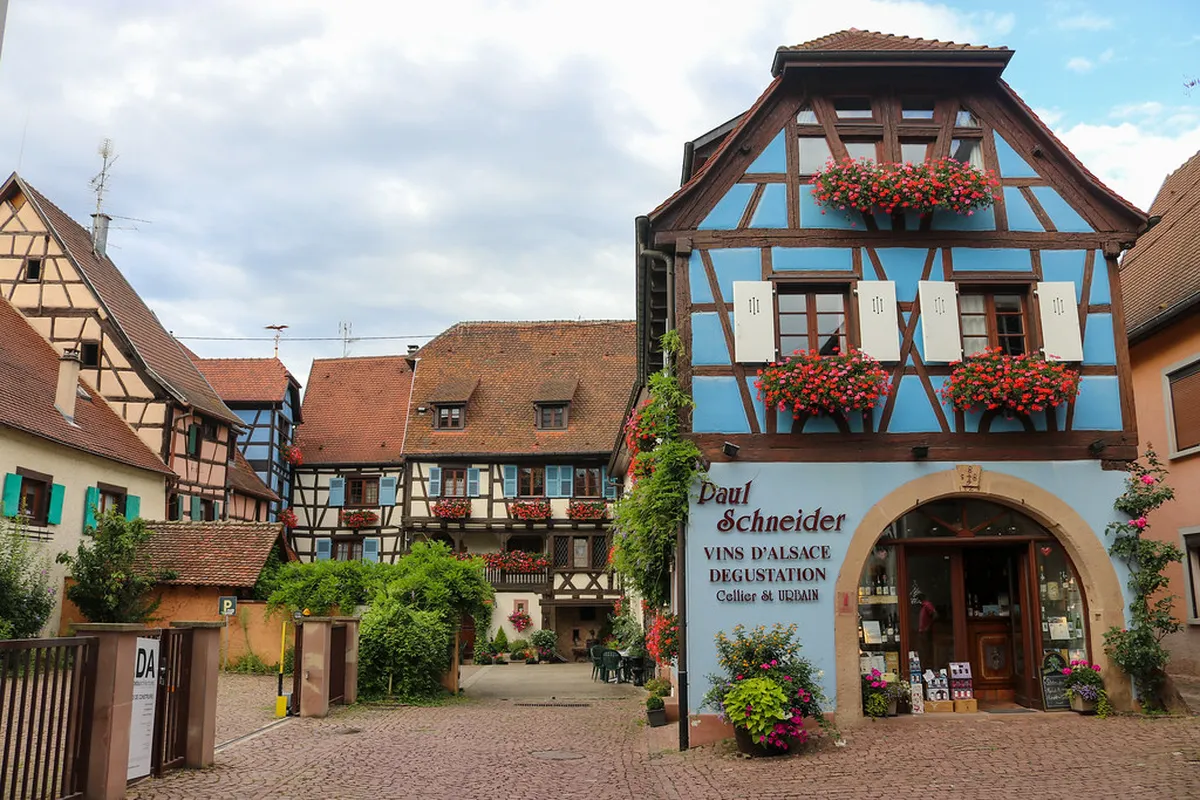
Arrive before 09:00 for the best light and the fewest people. The outer ring faces roughly east in its northern arc, meaning early morning sun illuminates the coloured facades without harsh shadow. By 10:30, tour groups from Colmar and Strasbourg start filling the main lanes, and the postcard-perfect fork in the road near Le Pigeonnier house becomes impossible to photograph without other visitors in frame.
The Saint Léon chapel sits alongside the castle ruins on Place du Château and is worth a few minutes inside for its painted ceiling vault. More practically, the rooftops of the chapel complex are one of the best places in Alsace to spot white stork nests. Storks are a regional emblem and return to the same nesting sites annually from late March through August. A pair typically occupies the east-facing chimney stack; look up rather than around.
The cobblestone surface is beautiful but genuinely uneven. Wheelchair users and parents with prams should know that the outer Rue du Rempart has the widest passages and the fewest step-changes between pavement and road. The inner rings narrow considerably and some sections are effectively impassable for wheeled mobility aids. The central square itself is flat and accessible.
The Best Wineries and Tasting Rooms in Eguisheim
Wine production is the economic backbone of the village. With 33 producers operating within the commune, Eguisheim is one of the densest concentrations of small-scale winemakers anywhere on the Alsace Wine Route. Riesling, Gewürztraminer, and Crémant d'Alsace are the three styles most visitors leave with. You can explore tasting packages and combine this with a wider area tour via Colmar wine tasting tours.
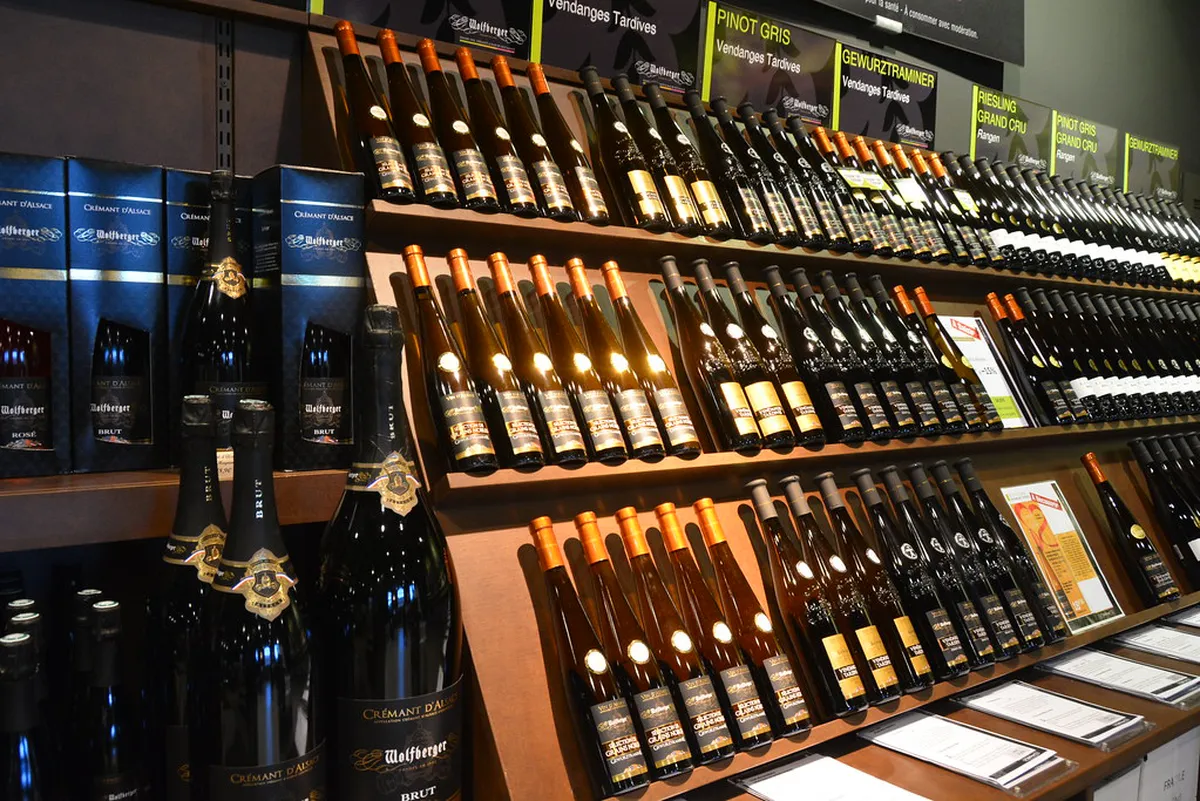
Wolfberger is the largest operation and the easiest entry point. Their cave and tasting room on Rue du Rempart Ouest is open daily and no reservation is required for a walk-in tasting of three to five wines. Prices typically run €5 to €8 per tasting flight in 2026. They produce a particularly reliable Crémant that outperforms many bottles twice the price in supermarkets.
Domaine Emile Beyer has been making wine here since 1580 and the family atmosphere inside the stone-walled tasting room is noticeably different from a larger cooperative. Ask specifically about their Gewürztraminer Grand Cru Pfersigberg — the vineyard sits on a south-facing slope just outside the village and the wine carries a distinctive lychee and rose character that Gewürztraminer from flatter ground does not replicate. Weekday visits between 10:00 and 17:00 rarely require a booking.
Independent producers without international distribution are worth seeking out precisely because you cannot find their bottles elsewhere. Look for small handwritten panels on house doors throughout the inner ring — many residents sell their own wine directly from the cellar, sometimes for as little as €7 a bottle for a Riesling that has never seen a retail shelf.
Fête des Vignerons and the Best Time to Visit
The Fête des Vignerons (Wine Growers' Festival) is held each August across a single long weekend and is one of the most overlooked reasons to time a visit to Eguisheim specifically rather than just passing through. Producers set up tasting stations along the Rue du Rempart and inside the central square. Entry is free and the atmosphere is local rather than tourist-facing — you are likely to share a table with the winemakers themselves. Most guidebooks covering the Alsace Wine Route mention the Colmar and Ribeauvillé festivals but skip this one entirely, which keeps it genuinely uncrowded by comparison.
Outside the festival calendar, late spring (May and June) delivers the fullest floral displays alongside comfortable temperatures for walking. September is the harvest month and most domaines welcome visitors to watch the grape-picking, though the roads around the village can be busy with tractors. December brings the Christmas market, which is smaller than Colmar's but deliberately intimate. The village cordons off Place du Château and fills it with a handful of carefully selected artisan stalls rather than mass-produced merchandise.
May through June offers the best combination of weather and floral beauty — Ville Fleuri window boxes are at their peak. Early morning visits (before 09:00) reward photography with clean light and minimal crowds year-round.
January and February are genuinely quiet. Some wine shops close for the winter break between late December and mid-February, so check individual producer websites before visiting out of season. The village itself remains beautiful in frost or snow, and the absence of crowds makes it the easiest period for photography.
Exploring the Three Castles of Eguisheim
Active visitors should build in time for the hike up to Les Trois Châteaux on the forested ridge above the vineyards. The three ruins — Wahlenbourg, Weckmund, and Herzogbourg — are the remains of fortifications that defended the same count's territory as the village castle below. The trail starts from the southern edge of the village where the last houses give way to vine rows and is marked throughout with red rectangles on trees and stones.
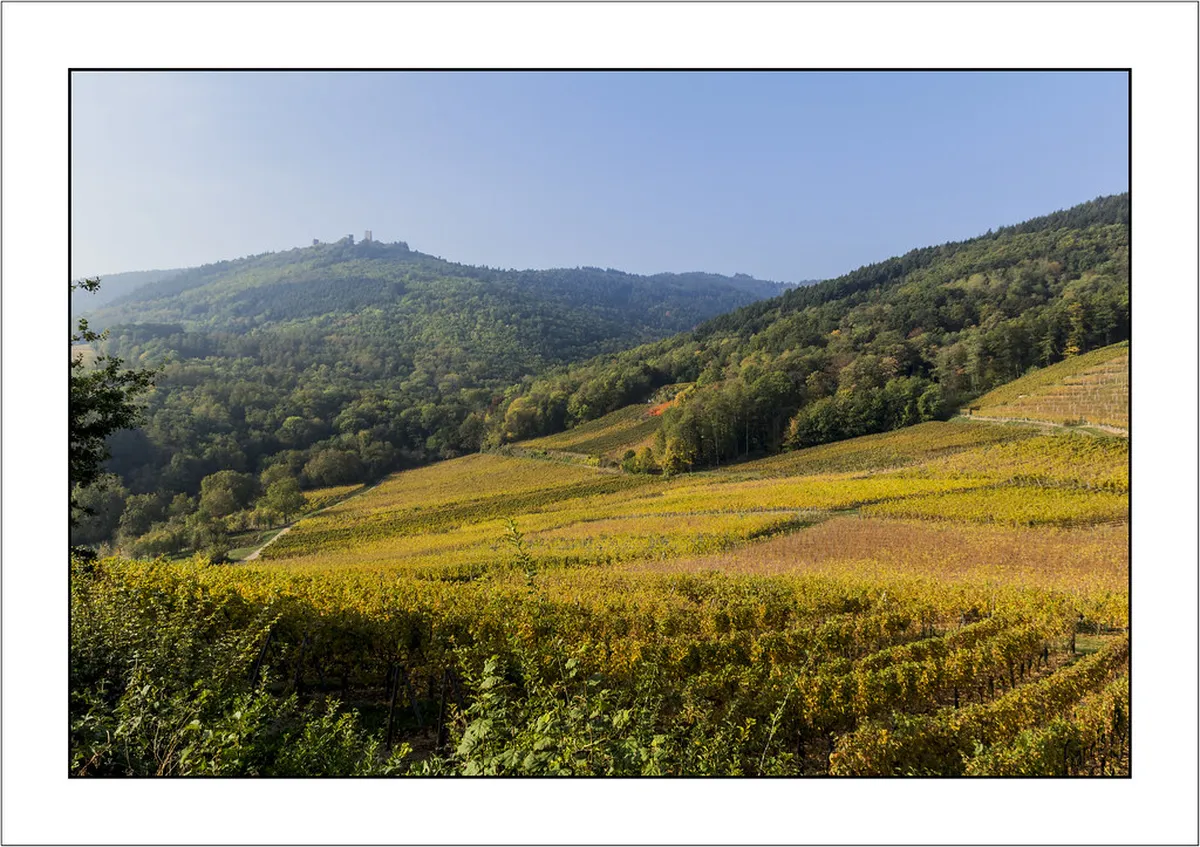
The ascent takes about 45 minutes at a comfortable pace and gains roughly 200 metres in elevation. The summit view across the Alsace plain toward the Rhine and the Black Forest on clear days is the best available panorama in this part of the region. Entry to the ruins is free and unguarded. Pack water and wear shoes with ankle support — the final section before Wahlenbourg is on loose stone.
The return via the vineyard path rather than the forest trail is shorter and provides a ground-level view of the concentric village layout that makes the defensive geometry visible. Returning this way also brings you past several small domaines that are not on the main tourist circuit, and stopping for a glass of wine at 11:00 before the trail-leg fatigue fully sets in is entirely acceptable in Alsace.
Eguisheim at Christmas: A Fairytale Atmosphere
The Eguisheim Christmas market is a specific kind of experience: deliberately small, deliberately local, and run with the same attention to the village's visual identity as the floral programme. Local artisans sell handmade Alsatian ornaments, wax candles, ceramic storks, and gingerbread from wooden chalets placed around Place du Château. You will not find the same vendors here as in Colmar's larger market. For broader context and opening dates across the region, the 10 Best Alsace Christmas Markets & Planning Guide covers the full calendar.
The market typically runs from the last Saturday of November through Christmas Eve. Weekday evenings between 18:00 and 20:00 are the least crowded and most atmospheric window — the village lights come on, the mulled wine stalls fill the square with steam, and the tour coaches have already left for the day. Arriving on a Tuesday or Wednesday afternoon avoids the weekend peak from Colmar, Strasbourg, and cross-border German visitors.
One practical detail many visitors overlook: the €4 all-day car park fills by 10:00 on December weekends. Arriving before 09:30 or after 16:00 is the most reliable strategy during the Christmas period. The village closes the inner lanes to cars entirely during market weeks, so do not attempt to drive through.
Where to Eat: Best Restaurants in Eguisheim
Dining in the village is part of the experience rather than a practical necessity. Le Pavillon Gourmand on Rue du Rempart Sud takes the most serious approach to Alsatian cuisine — tarte flambée is on the menu but so are properly executed dishes like baeckeoffe (the slow-cooked meat and potato casserole that is rarely done well outside home kitchens) and foie gras from local suppliers. Reservation is recommended for lunch in summer and essential at dinner. Check the 14 Best Restaurants in Colmar if you prefer more variety in the evening.
Caveau d'Eguisheim sits in a stone-walled cellar and specialises in the tarte flambée format most visitors want after a morning of wine tasting. The classic version with crème fraiche, lardons, and onion is €10 to €12 and is best shared alongside a carafe of Pinot Blanc. The cellar atmosphere is genuinely historic rather than designed, which makes a significant difference in a village where some restaurants have leaned hard into the fairytale aesthetic at the expense of the food.
Many restaurants in the village close between 14:00 and 18:00. If you arrive outside lunch service, the wine shops along the Rue du Rempart offer cheese and charcuterie plates to accompany a tasting. Au Vieux Porch, just outside the inner ring, maintains more flexible hours and has a shaded terrace for the summer period.
Practical Travel Tips: Parking, Getting There, and Timing
Driving is the most flexible option for the Eguisheim visit. The main car park is immediately outside the village walls on the western approach and costs €4 for all-day access in 2026. It holds several hundred vehicles on a flat tarmac surface, so arriving before 10:00 on summer weekends is the only reliable way to secure a space. Do not attempt to drive inside the village walls — the lanes are pedestrian-only from 09:00 onward and the turning radius in the inner ring is too tight for standard cars regardless.
From Colmar, the Ritmo bus network serves the route to Eguisheim. The correct line is the 440, which departs from the Colmar train station forecourt and runs every hour or two depending on the day. Journey time is under 20 minutes and a single ticket costs under €2 in 2026. Timetables are available at the tourist office on Rue Unterlinden in Colmar or through the Ritmo app. The Official Tourism Site also lists current seasonal shuttle services during summer and the Christmas market period.
| Transport Mode | Duration | Cost (2026) | Best For |
|---|---|---|---|
| Car | 15 minutes | €4 car park | Flexibility, group travel |
| Bus (Line 440) | 20 minutes | €2 single ticket | Budget travelers, no driving |
| Bike | 30 minutes | €12 half-day rental | Active travelers, scenic route |
Cycling from Colmar takes approximately 30 minutes each way and the route through the vineyard back-roads south of the city is more pleasant than the main D83 road. Bike rental from Colmar Vélo near the train station runs €12 for a half-day hybrid bike. The terrain is flat throughout and the path passes through working vine rows for most of the journey, which makes the agriculture of the region feel immediate rather than decorative.
Book accommodation or car park spaces online if visiting during August's Fête des Vignerons or December's Christmas market — both draw large crowds. The €4 car park fills by 10:00 on summer weekends and holidays.
Cobblestones cover the entire historic centre. They are well-maintained but uneven in the inner rings. Wheelchairs and prams can navigate the outer Rue du Rempart and Place du Château without major difficulty, but the narrower inner lanes require significant effort and some sections have raised kerbs with no dropped crossing.
Combining Eguisheim with Colmar and Nearby Villages
Most visitors base themselves in Colmar and treat Eguisheim as a morning or afternoon addition. The practicalities support this: spend the first half of the day in Eguisheim before the coaches arrive, then transfer to Colmar for the afternoon when the village starts filling and the old town's canals and museums become the focus. A structured Colmar 2-day itinerary works well with Eguisheim slotted into Day 1 morning.
If you have a car and want to extend into other wine villages, the obvious pairing is Riquewihr — roughly 15 kilometres north of Eguisheim on the D10 road through the vines. Riquewihr has a different character: it is slightly larger, more commercially developed, and the architecture leans toward the fortified-merchant-town aesthetic rather than the circular defensive layout of Eguisheim. For the full picture on how the two villages compare as day trips, the 12 Best Things to Do in Colmar 2026: A Fairy Tale Guide guide covers the Wine Route context.
Combining three villages in one day is possible but risks doing all three poorly. Eguisheim plus one other village — whether Riquewihr, Kaysersberg, or Turckheim — is a more considered pace that leaves time for a proper lunch and a winery visit in each location rather than a rapid photo-and-move format. The Alsace Wine Route works best when treated as a reason to slow down, not speed up.
Frequently Asked Questions
How much time do you need in Eguisheim?
Most visitors find that three to four hours is enough to see the main sights. This allows time for a walk through the old town and a wine tasting. If you plan to hike to the castles, you should budget for a full day. Check our Colmar practical tips for more regional timing advice.
Is Eguisheim worth visiting?
Yes, it is absolutely worth visiting for its unique circular architecture and floral displays. It offers a more intimate feel than the larger towns in the Alsace region. The proximity to Colmar makes it an easy addition to any travel itinerary. You will find some of the best wine producers in France here.
How do you get from Colmar to Eguisheim?
The easiest way to travel is by car or the local bus line 208. The drive takes about fifteen minutes and follows a very straightforward route. During the summer, a special shuttle bus often runs between the most popular wine villages. Cycling is also a popular option for active travelers using the vineyard paths.
What is the best time of year to visit Eguisheim?
Late spring and early summer offer the best weather and the most beautiful floral displays. December is also a peak time for those who want to see the Christmas markets. Fall is ideal for wine lovers who want to witness the annual grape harvest. Winter outside of the holiday season is very quiet and peaceful.
Eguisheim remains a must-see destination for anyone traveling through the beautiful Alsace region. Its unique circular layout and historic charm provide a travel experience like no other. You will leave with wonderful memories of colorful houses and world-class local wines. Plan your visit today to see why this village is a favorite for so many.
You might also like


Continue reading
More guides you'll find useful


